
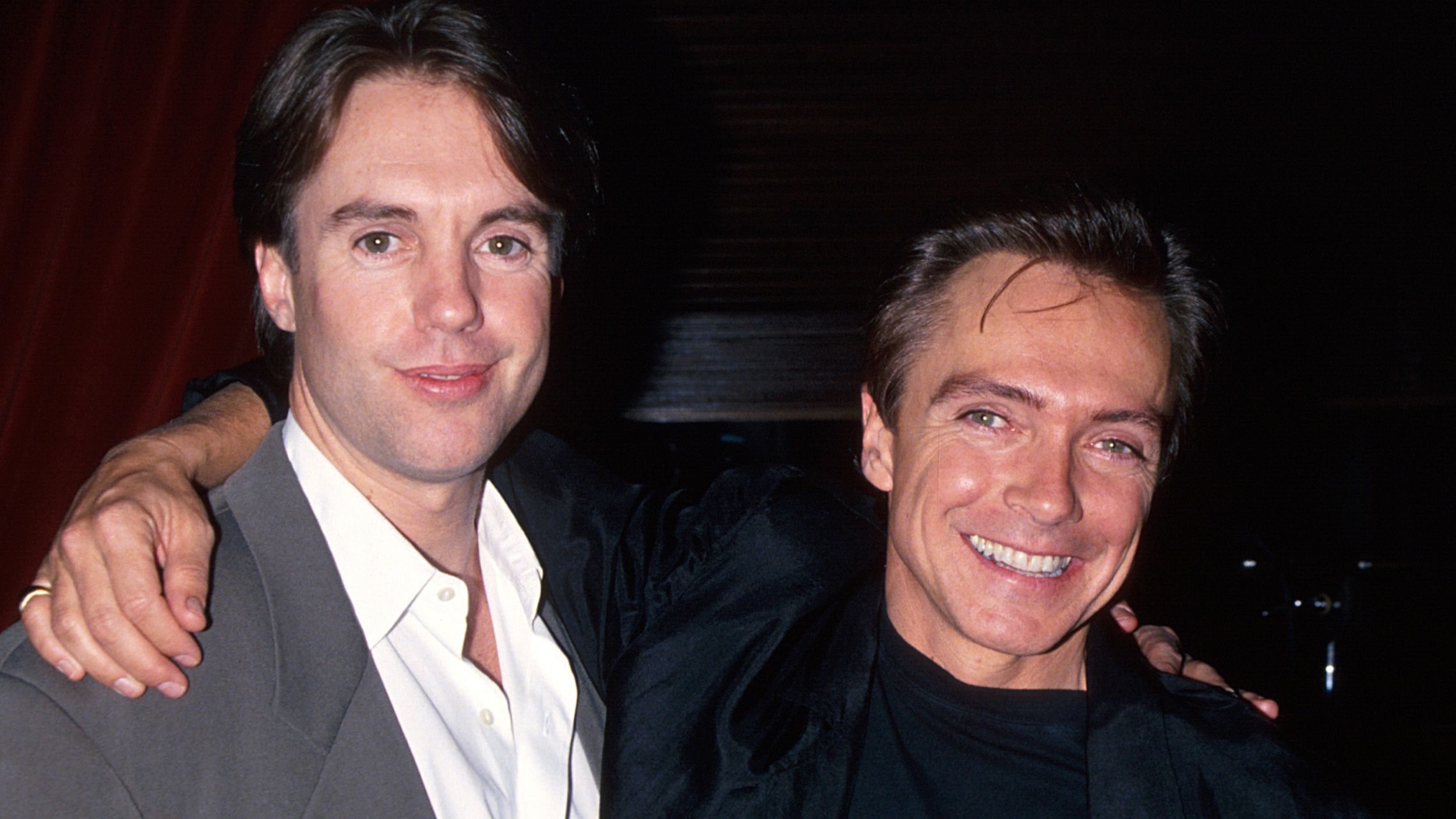
A late-bloom encore of youth: “Could It Be Forever” returns as a handshake between generations—proof that a first crush can echo, softly but stubbornly, even decades later.
When David Cassidy revisited “Could It Be Forever” with Hear’Say, it wasn’t just a novelty duet—it was a small cultural time machine. The collaboration appeared as a bonus track on Cassidy’s compilation Then and Now, which was released in the UK on October 1, 2001 (and later in the US on April 30, 2002). On that UK edition, it’s explicitly listed as Track 22: “Could It Be Forever (duet with Hear’Say)”—a tidy little addendum that, emotionally, feels anything but small.
The “why it matters” comes into focus when you remember what the song originally meant. In 1972, “Could It Be Forever” helped define Cassidy’s leap from TV heartthrob to bona fide pop star. In Britain, it was issued as a double A-side with “Cherish” and peaked at No. 2 on the Official Singles Chart—a towering peak that sits right alongside his era-defining UK run. In the United States, “Could It Be Forever” reached No. 37 on the Billboard Hot 100, a respectable hit in a market that often treated him more cautiously than the UK did.
So by the time the song reappears in 2001, it arrives with a long memory behind it—and a very modern companion beside it. Hear’Say were not a random cameo: they were the pop headline of that moment, a British group formed through ITV’s Popstars in early 2001, famous for instant chart success and the bright, camera-ready sound of a new century. Pairing Cassidy with Hear’Say created a deliberate contrast: the original teen idol of the early ’70s meeting the reality-TV pop phenomenon of the early 2000s, each reflecting the other’s era like two faces in the same mirror.
Commercially, the moment landed. A Billboard report from October 8, 2001 notes Cassidy scoring a UK Top 10 outing with “Could It Be Forever” alongside the “current chart stars” Hear’Say, and highlights that it was his first UK Top 10 appearance since Cassidy Live hit No. 9 in 1974. Meanwhile, the parent album Then and Now was itself a genuine UK success—No. 5 on the UK album chart, later reaching Platinum status, which tells you this wasn’t just a headline; it was a real audience showing up.
But the deeper story is emotional, not statistical.
“Could It Be Forever” has always been a song about the fragile bravery of first love—the way the heart wants eternity before it has learned how short a season can be. In Cassidy’s original era, that innocence felt almost built into the air: radios, glossy teen magazines, the soft-focus promise that romance might be simple if you believed hard enough. In the Hear’Say version, that same lyric takes on a different shade—less like wide-eyed prophecy, more like a fond ache. Cassidy’s voice carries the lived-in weight of time, while Hear’Say bring the bright, group-harmony sheen of early-2000s pop—clean, buoyant, eager. Together, they don’t erase the distance between eras; they underline it, and somehow make that distance tender.
That’s the quiet beauty of this collaboration: it doesn’t pretend we’re still in 1972. It lets the song grow up without losing its softness. The question “could it be forever?” stops sounding like a naïve guarantee and starts sounding like something more human—an old wish revisited, still worth singing because it once made life feel lighter.
In the end, David Cassidy and Hear’Say turn “Could It Be Forever” into a gentle reunion with the self: the younger heart that believed too much, and the older heart that still—astonishingly—wants to believe again.