
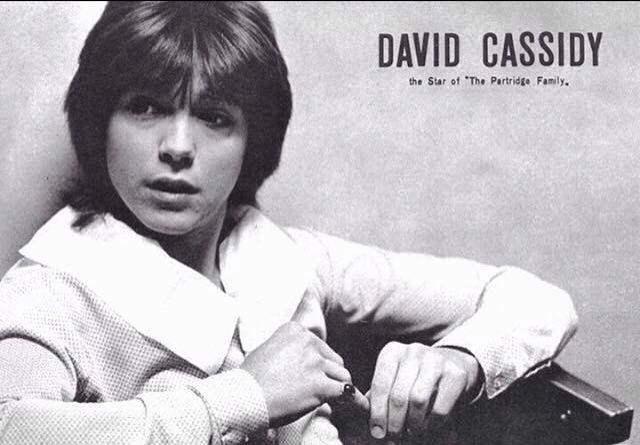
“Am I Losing You” is a gentle panic set to velvet pop—David Cassidy singing the moment certainty slips, when love is still in the room but already feels a mile away.
The most important facts belong first, because they explain why this song still lands with such quiet force. “Am I Losing You” was released in 1972 as a single by The Partridge Family Starring Shirley Jones Featuring David Cassidy on Bell Records (catalog Bell 45,200). It debuted at No. 90 on the U.S. chart dated April 1, 1972, and later peaked at No. 59 (with the peak dated April 29, 1972). The song was written by Irwin Levine and L. Russell Brown—a songwriting team closely tied to the Partridge Family hit factory—and it runs about 2:22–2:23 on most listings.
Now, what those numbers can’t tell you is the emotional temperature of the record: “Am I Losing You” is pop music made for the private hours. Not the screaming, poster-on-the-wall side of David Cassidy, but the part that always mattered more than the hysteria—his ability to sound like he’s talking to one person, not performing for a thousand.
The song opens like a weather report from inside the chest: “Something’s in the wind, something I can touch…”—a line that doesn’t describe proof, only instinct. That’s a wonderfully adult kind of fear, because it’s not about discovering a betrayal; it’s about sensing distance before it becomes official. It’s the tremor in a voice, the lag in a reply, the way a room goes quiet when you enter. And Cassidy sells that mood with a particular softness—he doesn’t accuse, he wonders. He doesn’t rage, he listens. The repeated question—“Am I losing you?”—isn’t rhetorical. It’s the sound of someone trying to catch a falling glass before it hits the floor.
Musically, the track sits in that early-’70s sweet spot where pop was still allowed to be tender without being embarrassed by its own sincerity. The arrangement doesn’t crowd the vocal; it gives Cassidy room to place the line just slightly behind the beat, like someone speaking carefully because the wrong word could tip the whole night into a fight. The melody is built like a lullaby that can’t quite put itself to sleep—pretty, yes, but restless. That restlessness is the real hook: you keep listening because the song itself feels like it’s waiting for an answer that never arrives.
And the lyric’s most heartbreaking trick is its simplicity. It doesn’t use clever metaphors to distract you. It uses plain sentences that sound like what people actually say when the truth is too raw for poetry: “Keep on telling me… no, please not tonight / Something just ain’t right…” That “not tonight” carries a whole lifetime of experience in four syllables. Tonight is when you finally ask. Tonight is when you finally stop pretending. Tonight is when you discover whether love is still a home—or only a habit.
For David Cassidy, this kind of song mattered because it hinted at what his public image often drowned out: he wasn’t only a teen-idol symbol. He could deliver vulnerability without melodrama. “Am I Losing You” is not a giant chart triumph—its U.S. peak at No. 59 makes that clear. But it’s a record that earns its place the slow way, by staying emotionally recognizable. Many people don’t carry it as “a hit”; they carry it as a feeling—one of those songs that surfaces years later when you catch yourself rereading a text, or replaying a conversation, or noticing that someone’s laughter has changed.
That’s the real meaning of “Am I Losing You”: it captures the moment before loss becomes history. The moment when love is still technically there, but your heart—quietly, accurately—has begun to grieve anyway. And if you’ve ever lived through that particular kind of almost-goodbye, you know why a song like this can feel so personal: it doesn’t dramatize heartbreak. It simply tells the truth, softly, and lets the listener supply the memories.