
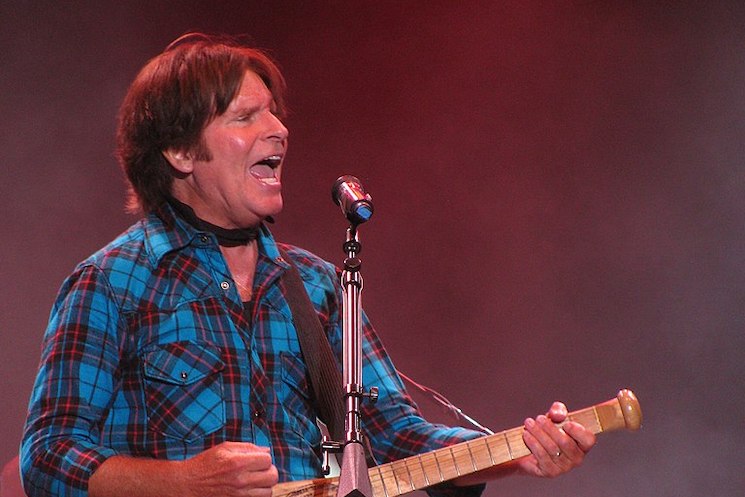
“The Holy Grail” is John Fogerty chasing a different kind of treasure—less a chalice of legend than that fleeting, intoxicating moment when groove, guitar, and imagination all line up and you feel young again.
“The Holy Grail” arrived as a non-album single on June 8, 2018, credited to John Fogerty feat. Billy F. Gibbons and released under license to Concord Records. Unlike Fogerty’s classic-era chart runners, this one did not register a listed chart position in the major singles columns (it’s shown as a non-charting single in his discography). And somehow that fits the song’s spirit: a “holy grail” isn’t something you find by following the usual map.
The real story behind it is wonderfully human—two guitar lifers meeting in the same room, talking shop, and letting the amps do the rest. Fogerty wrote the song in the lead-up to his 2018 co-headlining Blues and Bayous Tour with ZZ Top, then brought in Billy Gibbons to trade licks and add that unmistakable Texas bite. Gibbons himself framed it like a gift—saying that writing with Fogerty was “a genuine bonus,” and urging listeners, essentially, to turn it up.
Musically, “The Holy Grail” feels like Fogerty tipping his hat to a cousin genre without losing his own accent. The groove has that swamp-boogie stubbornness—muddy shoes, bright strings—while the guitar conversation nods toward ZZ Top’s classic strut. One rock outlet even pointed out how the track’s feel recalls the spirit of ZZ Top staples like “La Grange” and “Tush,” with Fogerty and Gibbons swapping lines throughout and Gibbons adding background vocals on the chorus. You can hear two players smiling in real time—less “guest star” and more “two old friends leaning over the same workbench.”
Lyrically, Fogerty doesn’t treat “holy grail” as medieval pageantry. He treats it like a fever dream—Amazon jungle, mystical planes, nectar of the gods, the kind of imagery that feels half comic-book, half late-night philosophy. It’s “mumbo-jumbo” on purpose: a playful admission that some pursuits can’t be explained cleanly, only chased. And that’s where the song quietly hooks you. Because for musicians like Fogerty—and for anyone who has ever spent a lifetime collecting memories the way others collect trophies—the true grail is rarely literal. It’s that sensation of meaning returning to the bloodstream: the rush of discovery, the sudden lift in the chest, the reminder that wonder is still possible.
What I find most moving, listening now, is how late in Fogerty’s career this song appears—and how unburdened it sounds. By 2018, his legacy was already carved into stone: the river mythologies, the American road grit, the voice that could make a single line feel like a hard truth. Yet here he is, choosing a track that isn’t trying to be “important” in the traditional sense. No grand autobiography. No heavy sermon. Just a dirty riff, a sly lyric, and the unspoken message: the hunt itself is the prize.
And maybe that’s the deeper meaning of “The Holy Grail.” Not that you will finally find the thing you’re missing—but that you can still feel the old appetite to look for it. The years change our bodies, our neighborhoods, our calendars. But every so often, a song like this comes along and reminds you that the spirit can still kick up dust and laugh while it runs.
In the end, John Fogerty and Billy Gibbons don’t offer a map to the treasure. They offer something better: a three-minute reminder that the world still has mystery in it—if you’re willing to plug in, lean forward, and follow the sound.