
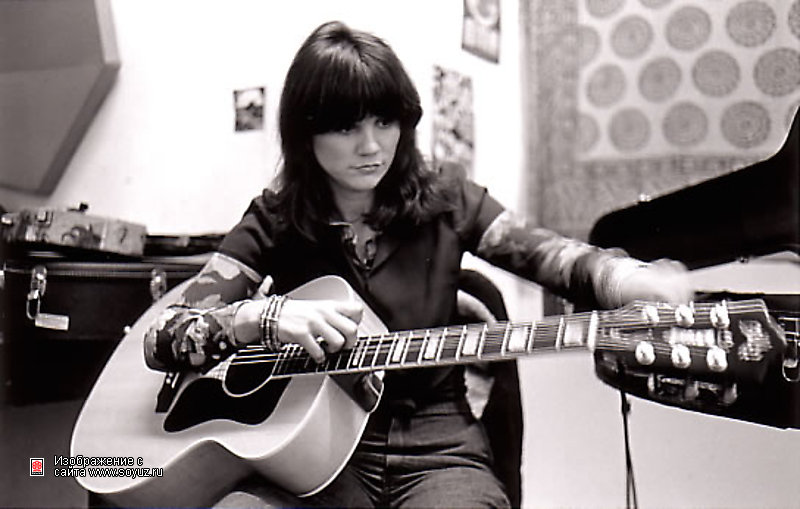
“La Calandria” is a love song disguised as a folk parable—Linda Ronstadt singing like a protective bird: building her nest on “strong branches,” praying love won’t fall, and trembling at how easily it can be taken away.
In 1987, at the very height of her mainstream fame, Linda Ronstadt made a brave, deeply personal turn: she released Canciones de Mi Padre—a full mariachi/ranchera album rooted in her family’s Mexican heritage. It arrived in late 1987 (North America release listed for November 1987) and went on to peak at No. 42 on the Billboard 200—an extraordinary achievement for a Spanish-language traditional album in the U.S. market. That’s the world “La Calandria” lives in: not as a crossover gimmick, but as a homecoming that Ronstadt sang with full seriousness and pride.
“La Calandria” appears as track 12 on Canciones de Mi Padre, and the song is commonly credited to Nicandro Castillo. It wasn’t released as a pop single with a neat chart “debut position,” but it gained a different kind of permanence: the kind you inherit, the kind that becomes part of family memory. Even recently, public radio and Latin-music journalists have revisited the track as one that moves listeners across generations—precisely because it speaks in images that feel older than any one life.
The opening metaphor is the song’s quiet thunderbolt. Ronstadt sings: “Yo soy como la calandria… siempre busca rama fuerte para no verlo caído”—“I am like the lark… always searching for a strong branch so it won’t be seen fallen.” It’s a simple picture—bird, nest, branch—yet it carries the full weight of human love. The nest is devotion. The branch is trust. And the fear is universal: that what you built with such care can still collapse.
What makes “La Calandria” hit so hard in Ronstadt’s voice is the way she refuses to “act” the sentiment. She doesn’t dramatize the line; she inhabits it. By 1987, she had already proven she could be the queen of rock, country-rock, pop standards—whatever room you put her in, she owned it. Yet on Canciones de Mi Padre, she chooses humility: she steps into a tradition where the singer’s job is not to sparkle, but to serve the story, honor the melody, and speak plainly to the heart. The album’s own history is explicit about this being the soundtrack of her childhood and family tradition, assembled with deep care (including printed translations and background notes in early editions).
And “La Calandria” is exactly the kind of song that rewards that care. It’s not a modern confessional. It’s a folk truth told through nature—because nature is where people have always gone when ordinary language feels too small. The bird isn’t only vulnerable; she’s intelligent. She plans. She chooses “strong branches.” This is love as responsibility: love not as a dizzy spell, but as something you build with attention. Yet the refrain turns that careful building into an ache, especially in the line highlighted by listeners again and again: “¿Mi prieta linda, qué voy a hacer si tú me quitas este querer?”—“My beautiful dark-haired darling, what will I do if you take this love away from me?” The beauty here is that the singer doesn’t ask for riches, or promises, or rescue—only that the beloved not remove the love itself. Because once love is gone, even the strongest branch can feel like air.
Within the larger arc of Canciones de Mi Padre, this track also carries the album’s deepest message: identity is not a costume you put on; it is a place you return to. The record became a landmark—winning a Grammy and later earning major institutional recognition, including induction into the Grammy Hall of Fame and selection for preservation in the U.S. National Recording Registry. So when Ronstadt sings “La Calandria,” she isn’t merely interpreting a traditional song—she’s preserving a living inheritance, and doing it with the kind of vocal sincerity that makes the listener feel the tradition isn’t distant. It’s here. It’s now. It’s yours if you let it in.
That’s the enduring magic of “La Calandria.” It sounds like a song about a bird—but it’s really a song about the human heart, always building, always bracing itself, always hoping the branch holds.