
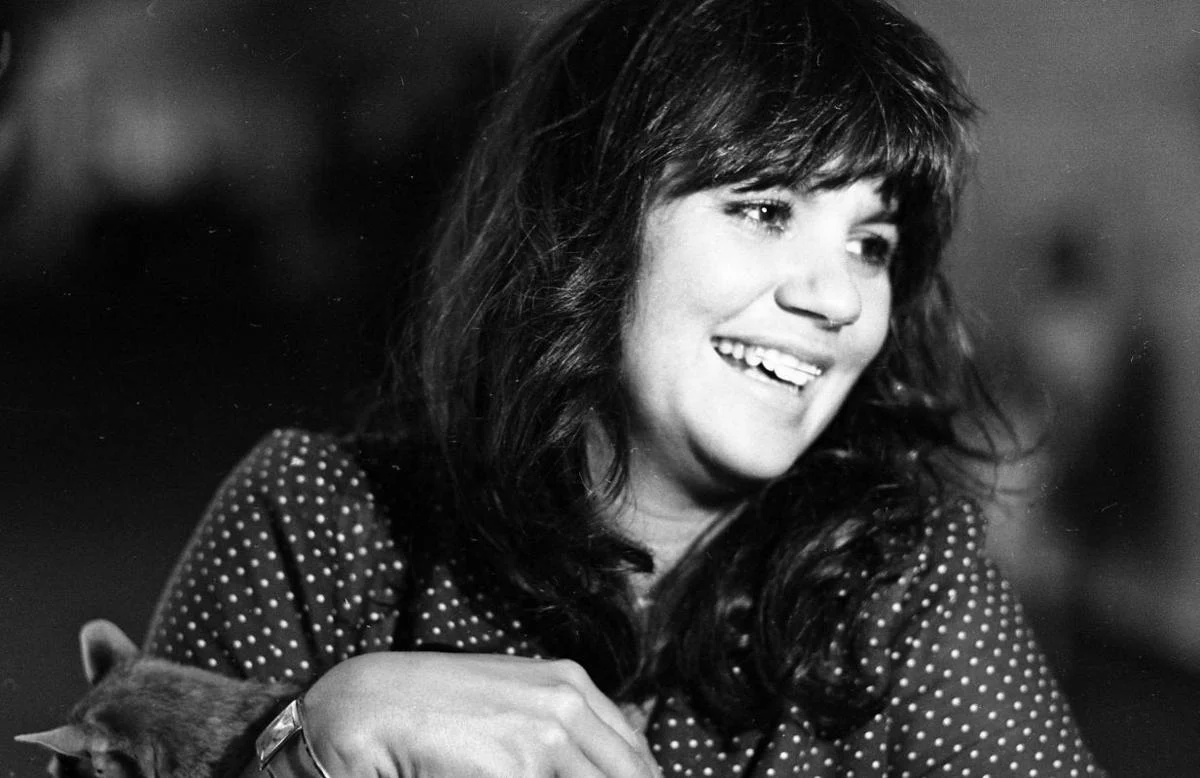
“A Number And A Name” is a quiet heartbreak document: the moment you realize someone can leave you behind not with a fight, but with a few unanswered lines—until a person becomes only a memory, only a number and a name.
The most important details come first, because they set the emotional temperature. “A Number and a Name” is sung by Linda Ronstadt on her first fully solo-credited studio album, Hand Sown… Home Grown, released by Capitol Records in March 1969 and produced by Chip Douglas. On the album, the song is credited to Tom Campbell and Steve Gillette, running 3:03—a small space of time, yet long enough to hold an entire goodbye.
It wasn’t launched as a chart single, so there’s no neat “debut position” to pin to it. In fact, this early period of Ronstadt’s solo career lived in that in-between zone—admired, promising, still searching for the exact lane that radio would later make wide for her. The album did produce singles (“Baby You’ve Been on My Mind” and “The Long Way Around”), but “A Number and a Name” remained what it still feels like today: a private favorite, the kind you find when you let the record play past the obvious stops.
That’s part of why it hits so hard. Hand Sown… Home Grown is often described as the beginning of Ronstadt’s country-rock direction—her California sensibility leaning toward Nashville shapes, even while the industry told her she didn’t quite fit either camp. In that uncertain, early landscape, “A Number and a Name” sounds like certainty of a different kind: not certainty that love will last, but certainty about what loss feels like when it finally settles in the bones.
The story behind the song is wonderfully simple—because songs like this rarely arrive with fireworks. Steve Gillette, one of the writers, has spoken about Ronstadt recording “our song” and shares her performance as part of the tune’s life in the world. That small phrase—our song—matters. It reminds you that this isn’t a manufactured heartbreak designed to sell. It’s a songwriter’s intimate idea, carried into the public by a singer whose gift was always her ability to make someone else’s words sound like her own lived truth.
And what is that truth? The song circles a particular kind of pain: not the dramatic breakup with slammed doors and shouted accusations, but the quieter betrayal of absence. The narrator is left parsing what wasn’t said—reading “farewell” into the empty spaces, turning silence into evidence. (It’s a cruel kind of arithmetic: you add up the missing calls, the vague promises, the dull finality of a relationship that ends without a proper ending.) Even the title is a cold little poem: when love is gone, what remains is contact information—an entry in a book, a trace in a system—a number and a name.
Ronstadt sings it in 1969 with a remarkable restraint. This is long before the arena-sized confidence of her mid-’70s peak, yet you can already hear the signature: that clear, focused tone that doesn’t need melodrama to cut deep. She doesn’t overplay the sadness; she lets it speak for itself, like a letter you reread even though you know it won’t change.
If you listen with the heart of someone who has collected years, the song starts to feel like more than romantic disappointment. It becomes a meditation on how easily people can be reduced by time and distance—how, in the end, we fear becoming administrative to one another: not a presence, not a voice, but a record. That’s why “A Number and a Name” still lands with such sting. It isn’t only about losing a lover. It’s about losing access—to the daily warmth of being known.
And perhaps that is the most quietly moving thing about finding this track on Hand Sown… Home Grown: it shows Linda Ronstadt at the beginning, already capable of delivering grown-up emotional truth. The sound is early, the era is young, but the feeling is timeless—because sooner or later, everyone learns the difference between love that stays and love that slips away… until all you have left is what you can write down, and what you can’t forget.