
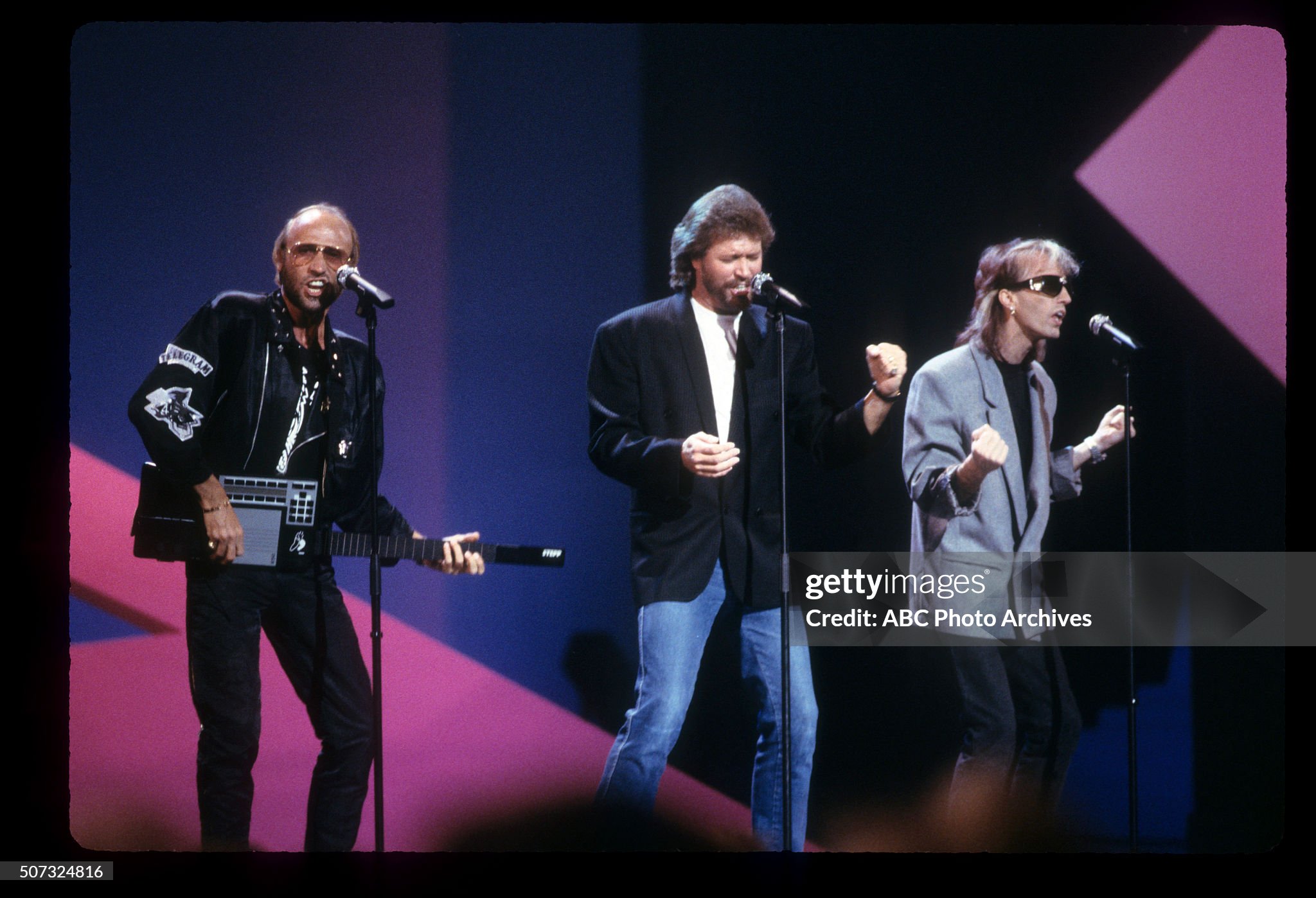
“Bodyguard” is the Bee Gees’ late-night love oath—protective, bruised, and intimate—where desire isn’t flashy anymore, but stubbornly faithful.
If you want a single that captures the Bee Gees at a fascinating crossroads—seasoned, wounded by time, yet still capable of making romance sound urgent—“Bodyguard” is one of their most revealing. Released as a January 1990 single on Warner Bros. Records, it was positioned as the second American single from the album One. What makes its release feel so “of its era” is the format: a cassette-only single, a detail that now reads like a small museum label from the last years before the CD and the coming digital tide rewired everything.
On paper, its chart story is modest but meaningful. “Bodyguard” reached No. 9 on Billboard’s Adult Contemporary chart and No. 48 on Canada’s RPM Top Singles—a reminder that by 1990, the Bee Gees were often embraced more warmly by adult radio than by the youth-tilted pop mainstream, which still tended to trap them in old “disco” assumptions. Yet the song itself doesn’t sound like a band living in the past. It leans into a sleek, emotional R&B frame, running 5:20 on the album (with a 4:20 promo edit), written by Barry, Robin, and Maurice Gibb and produced by the brothers with Brian Tench. Lead vocals are credited to Robin Gibb, and the performance carries that unmistakable Robin quality: wounded tenderness that never quite stops trembling, even when it tries to stand tall.
The larger context matters, because One (released 17 April 1989 in the UK) was more than just another record—it marked the Bee Gees touring internationally again for the first time since 1979, and it carried the emotional shadow of Andy Gibb’s death, with the album dedicated to him and the music often described as more melancholic than its predecessor E.S.P. In that climate, “Bodyguard” feels less like flirtation and more like a vow spoken by someone who has learned what loss costs. The lyric posture—it hurts me when you cry—doesn’t play like a line written for effect. It plays like a reflex, the instinct to shield someone you love because you know, too well, how quickly the world can bruise what is precious.
Then there’s the strange, very 1990 footnote that followed the song: the music video. Wikipedia notes the original cut was considered too sexual and had to be toned down, and that the controversy hurt airplay even as the single performed well in adult formats. Trade-press coverage from Music Connection made the situation even more vivid, reporting that the “original unexpurgated version” of the Bee Gees’ “racy ‘Bodyguard’ video” could be seen on the Playboy Channel as part of a new series called Playboy at Night. It’s one of those details that instantly dates the moment: a band once chased by disco backlash now tangled in late-’80s/early-’90s video-era sensationalism, as if the industry didn’t quite know how to market mature desire without turning it into a headline.
Internationally, even the single’s identity shifted depending on where you stood. In Europe and Asia, the A-side was “Tokyo Nights” instead of “Bodyguard,” and in Brazil, the A-side was “Wish You Were Here.” That kind of regional swapping tells you something quietly profound: the Bee Gees were no longer one simple radio story. They were a catalogue of moods—different songs chosen to match different audiences, different tastes, different definitions of what the Bee Gees “were.”
And that brings us back to the song’s meaning. “Bodyguard” isn’t about power; it’s about care—the kind that arrives after glamour, after the hard lessons, after you’ve learned that love isn’t proven by fireworks but by staying awake when someone else is falling apart. In the late glow of One, “Bodyguard” sounds like a man offering his presence as shelter. Not a perfect shelter—nothing in this era of the Bee Gees feels naïve—but a sincere one. A hand held out in the dark, saying: I can’t stop the night from coming, but I can stand beside you while it does.