
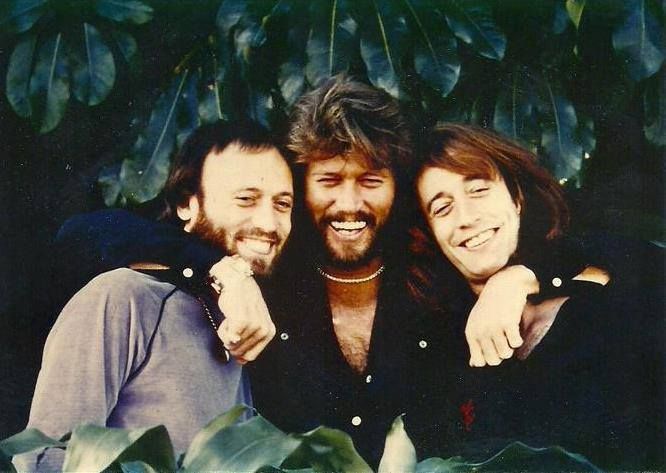
“Tomorrow, Tomorrow” is the Bee Gees’ bittersweet vow to keep moving—an urgent, orchestral rush where hope sounds brave precisely because the ground beneath it is already shifting.
In the late spring of 1969, Bee Gees released “Tomorrow, Tomorrow” into a world that was changing fast—and, quietly, so were they. The single came out on May 30, 1969 (UK: Polydor; US/Canada: Atco), backed with “Sun In My Morning.” It was recorded at IBC Studios, London, over March 19–21, 1969, with Barry Gibb and Maurice Gibb credited as songwriters and the production attributed to Robert Stigwood and the group. Most poignantly, it was the first Bee Gees single released after Robin Gibb quit the group, leaving the public-facing unit suddenly slimmer—Barry, Maurice, and drummer Colin Petersen trying to sound like a whole world again.
That backstory is not trivia; it’s the emotional weather behind the record. “Tomorrow, Tomorrow” doesn’t feel like a band casually releasing another 45. It feels like a band proving it still exists. And what a fascinating choice it was: the song was originally intended for Joe Cocker, not for the Bee Gees themselves—a fact that tells you something about its muscular, driving ambition. Even the brothers later suggested it may have suited Cocker’s grit more naturally, while Stigwood pushed it out as a single anyway. The result is a kind of beautiful mismatch: a track written with a bigger, rougher voice in mind, sung instead by Barry Gibb with that unmistakable, yearning clarity—like silk trying to carry a stone and somehow managing.
Its chart story mirrors that tension between expectation and outcome. In the United Kingdom, it peaked at No. 23. In the United States, it reached No. 54 on the Billboard Hot 100 (while doing better in other trade charts like Cash Box). Yet internationally it burned brighter—topping Denmark and landing Top 10 placings in multiple countries. This is one of those records where the numbers tell a quietly human story: the song traveled, but not evenly—like a letter that arrives quickly in some towns and late in others, yet feels personal wherever it lands.
Musically, “Tomorrow, Tomorrow” sits in that late-’60s Bee Gees pocket where baroque-pop elegance meets a rock-era insistence. The arrangement—credited to Bill Shepherd—adds strings that don’t merely decorate; they push, like wind at the singer’s back. And the structure (as contemporary reviewers noticed) moves through “several musically-exciting changes,” the kind of restless shape that suits a song obsessed with the future. Even Billboard framed it as a “strong driving rhythm ballad,” spotlighting Barry’s lead vocal strength.
But the meaning of “Tomorrow, Tomorrow” isn’t simply “hang on, better days are coming.” It’s sharper—and a little sadder—than that. The title repeats like a charm someone keeps rubbing in their pocket: tomorrow, tomorrow… as if naming the future could hold it still long enough to be trusted. That’s the way hope often works when life is unstable: you don’t declare certainty; you practice it. You say “tomorrow” the way a tired heart says “again”—not because you’re sure, but because you must be.
There’s an extra, almost hidden poignancy in the recording history. Because neither “Tomorrow, Tomorrow” nor its B-side appeared on the next Bee Gees album, Cucumber Castle, no stereo mix was prepared at the time; stereo versions didn’t arrive until 1990, when the tracks appeared on the box set Tales from the Brothers Gibb. That detail feels symbolic: for years, the song lived like a slightly obscured photograph—real, cherished, but not fully “revealed” in modern clarity until much later. Time, in other words, finally caught up with the title.
So when you listen now, you don’t just hear a 1969 single. You hear a band in mid-transformation, throwing everything it has—strings, drums, conviction—into the promise of the next day. “Tomorrow, Tomorrow” is the sound of persistence dressed up as pop: energetic, dramatic, and deeply human in its refusal to stop believing, even when belief is the hardest thing to sing.