
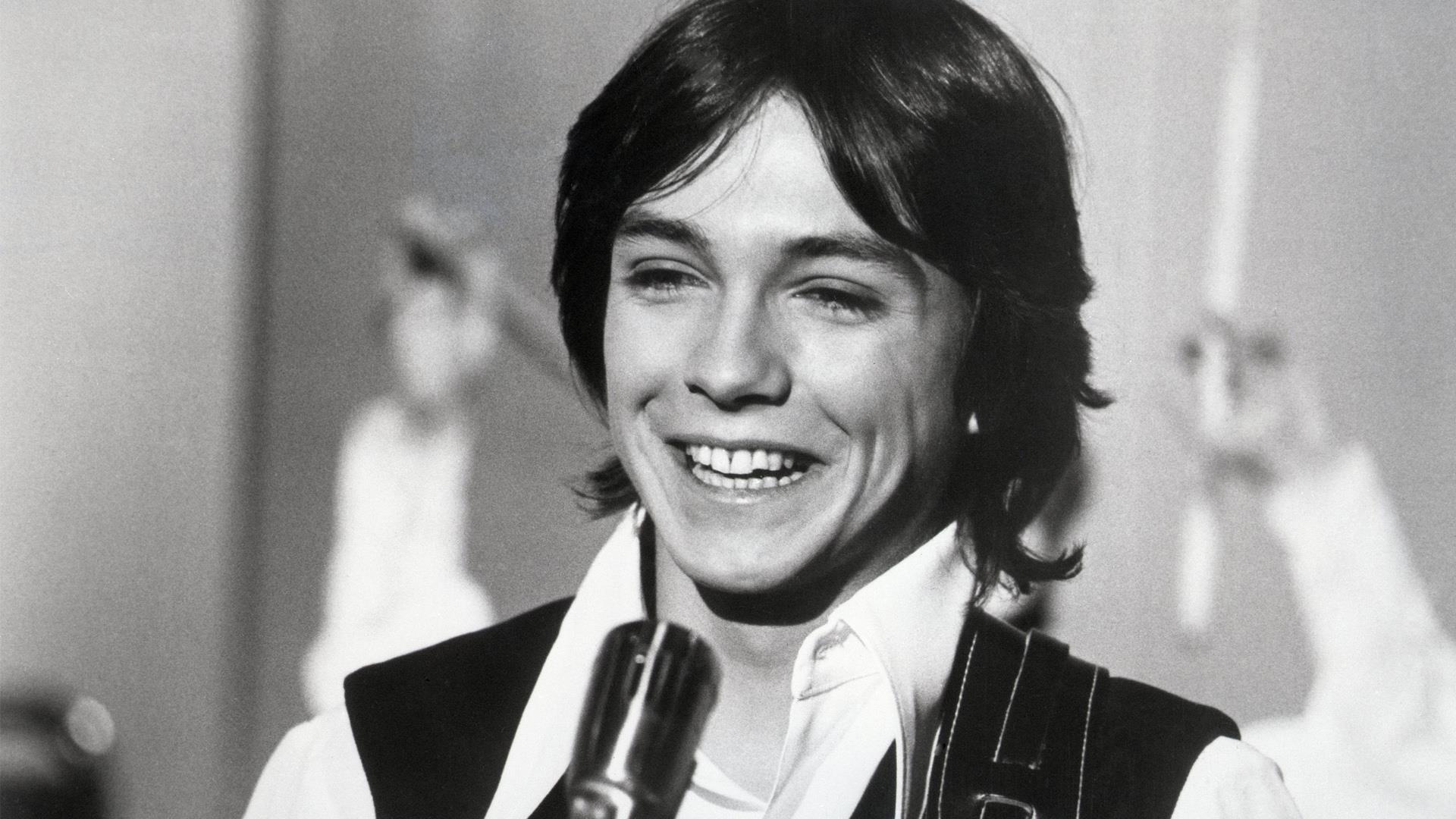
“Thin Ice” is David Cassidy singing from the edge of adulthood—where love is no longer a game, and one careless step can crack everything beneath you.
In 1985, when David Cassidy released “Thin Ice” on the album Romance, he wasn’t trying to recreate the roar of the early ’70s. He was doing something harder: he was trying to be heard plainly, as a grown man with a steadier voice and sharper emotional instincts. “Thin Ice” sits near the heart of that record (written by David Cassidy with producer-songwriter Alan Tarney), and it carries the album’s central mood: glossy on the surface, quietly vulnerable underneath—like a well-lit room where you still feel a draft.
A few grounding facts belong right up front. “Thin Ice” is an album track, not one of the singles that carried Romance onto the charts. The album itself—released in 1985 and produced by Alan Tarney—became a genuine comeback story in the UK, reaching the Top 20 of the UK Albums Chart. Its most visible success came through the single “The Last Kiss,” which made the UK Top 10. “Thin Ice,” though, earned its reputation differently: as the kind of deep cut that reveals an artist’s inner weather better than any headline single can.
There’s a particular poignancy to that. By the mid-’80s, Cassidy’s public identity had already lived several lives—TV stardom, pop idol frenzy, the long aftermath of being remembered too loudly for a version of yourself you’d already outgrown. Romance was the sound of him stepping into a more European, adult-pop vocabulary—sleek, rhythmic, emotionally controlled. And “Thin Ice” feels like the moment in that world when the polished mask slips just enough for you to see the stakes.
Even the title does a lot of quiet work. “Thin Ice” isn’t just a metaphor for danger; it’s a metaphor for trust. Ice only looks solid until it doesn’t. It holds you—until it suddenly refuses. That’s the dread at the center of the song: the feeling that something precious is still intact, but only barely, and one more misunderstanding could send it under. In that sense, this isn’t a “young love” lyric at all. It’s the voice of someone who has learned—maybe the hard way—that relationships don’t always explode; sometimes they crack slowly, silently, under the weight of what’s left unsaid.
Musically, it fits the Tarney universe beautifully: bright, clean lines; a controlled, modern pulse; a kind of emotional minimalism that keeps the drama inside the phrasing rather than spilling it into melodrama. Cassidy sings with a careful urgency—never histrionic, never begging, but very aware of the edge. You can hear a man trying to choose the right words before the moment passes, the way people do when they sense a door beginning to close and they’re not sure if it’s closing because of anger… or simply because of time.
What makes “Thin Ice” especially moving in Cassidy’s story is that he didn’t leave it behind as “just an album track.” He brought it into the concert hall. During his October 1985 stand at London’s Royal Albert Hall, he performed “Thin Ice” live—captured on the England-only release His Greatest Hits – Live. That detail matters because artists don’t always take their newest, most personal material into a room full of expectations. Choosing to sing it there suggests he believed in it—not as a nostalgic accessory, but as a statement of who he was becoming.
And that’s the lasting meaning of “Thin Ice.” It’s not merely about romantic risk; it’s about identity—about the fragile surface between who the world thinks you are and who you’re trying to be. Cassidy sounds like someone balancing carefully, refusing to stomp, refusing to show off, trying to cross the distance with dignity. The song doesn’t promise safety. It offers awareness. It admits the danger—and keeps walking anyway.
That’s why, years later, “Thin Ice” can feel strangely intimate. It doesn’t perform confidence; it performs the attempt at confidence. It’s the sound of caution learning to speak in the language of hope. And if you listen closely, beneath the sheen of the mid-’80s production, you’ll hear what gives the song its quiet power: a man singing as if the most important thing in the world is not to be applauded… but to be understood, before the surface finally gives way.