
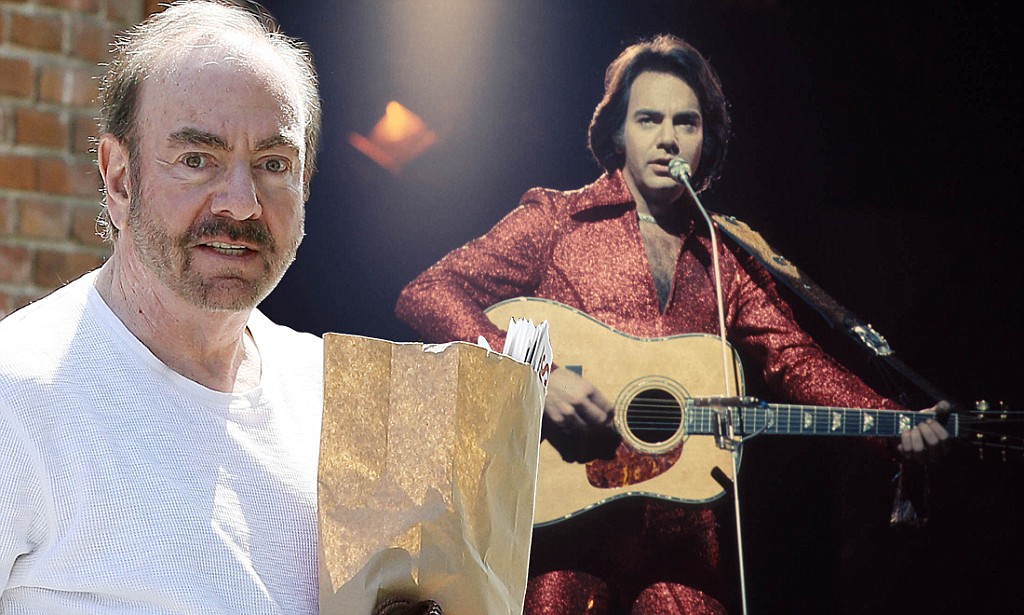
“Juliet” is Neil Diamond at his most quietly vulnerable—an intimate plea wrapped in late-’60s pop warmth, where romance feels less like conquest and more like waiting, hoping, and growing up.
If you know Neil Diamond mostly through the stadium-sized choruses—those songs that seem to lift entire rooms to their feet—then “Juliet” can feel like finding a handwritten letter tucked inside a familiar book. It isn’t one of the singles that defined his public legend. It’s a deep-album ballad, placed with care on his 1969 studio LP Brother Love’s Travelling Salvation Show, released April 4, 1969, where “Juliet” appears as the fourth track, running 2:51.
That album context matters, because Brother Love’s Travelling Salvation Show captured Diamond in a particularly restless, transitional moment—still close enough to his early pop-songwriter roots to favor tight structures and memorable hooks, yet already reaching for something more narrative and searching. Commercially, the record was a modest but meaningful presence: it peaked at No. 82 on the Billboard 200, and it later earned RIAA Gold certification. In other words, it wasn’t a blockbuster on arrival, but it clearly found a long, patient audience—exactly the kind of slow-burn fate that suits a song like “Juliet.”
And what kind of song is it? “Juliet” feels like a man trying to speak softly enough that he won’t scare off what he most wants to keep. The title alone carries a built-in echo—Shakespeare, devotion, the ache of distance—but Diamond doesn’t play it as grand tragedy. Instead, he brings it down to human scale: the private weight of missing someone, the strange humility of admitting you’ve been waiting “for so long,” the way love can make even a grown voice sound younger, almost startled by its own sincerity. There’s a tenderness in that perspective that’s easy to overlook if you only know Diamond as the master of the arena refrain.
What makes “Juliet” linger is precisely that it doesn’t chase spectacle. As an album cut, it lives in the spaces between bigger gestures—between the theatrical revival energy of the album’s title song and the record’s more road-worn reflections. It’s the moment where the lights dim, the band breathes, and the singer stops performing confidence. The longing here is not flashy; it’s domestic, patient, almost devotional. You can hear the era in the songwriting—late ’60s pop and rock leaning into confession—but you can also hear Diamond’s personal signature: a gift for turning plain words into something that feels suddenly ceremonial, as if saying a name out loud might summon the person back into the room.
Critics have sometimes described Brother Love’s Travelling Salvation Show as an album assembled quickly, with uneven material—yet even that kind of mixed assessment highlights why “Juliet” stands out for many listeners: ballads like this can provide the emotional center that a tracklist otherwise keeps circling around. The song’s strength isn’t novelty; it’s directness. It doesn’t ask you to decode a metaphor. It asks you to remember the particular strain of waiting—how time stretches, how imagination fills gaps, how a single name can become a small prayer repeated under the breath.
So if you’re looking for a “debut chart position” for “Juliet” itself, the honest answer is that it wasn’t rolled out as a marquee single in the way Diamond’s big hits were; its public life is tied to the album that carried it. And that’s not a limitation—it’s part of its character. “Juliet” is the kind of track that doesn’t announce itself with rankings. It earns its place the older way: by being there when you return to the album, by catching you off guard on a quiet evening, by making you realize that the most enduring romantic songs aren’t always the ones that shout the loudest.
In the end, Neil Diamond gives “Juliet” a very specific kind of dignity: not the drama of star-crossed lovers, but the dignity of someone who stays faithful to a feeling even when no one is applauding. And that, perhaps, is why the song still feels so close—because it isn’t trying to be immortal. It’s simply trying to be true.