
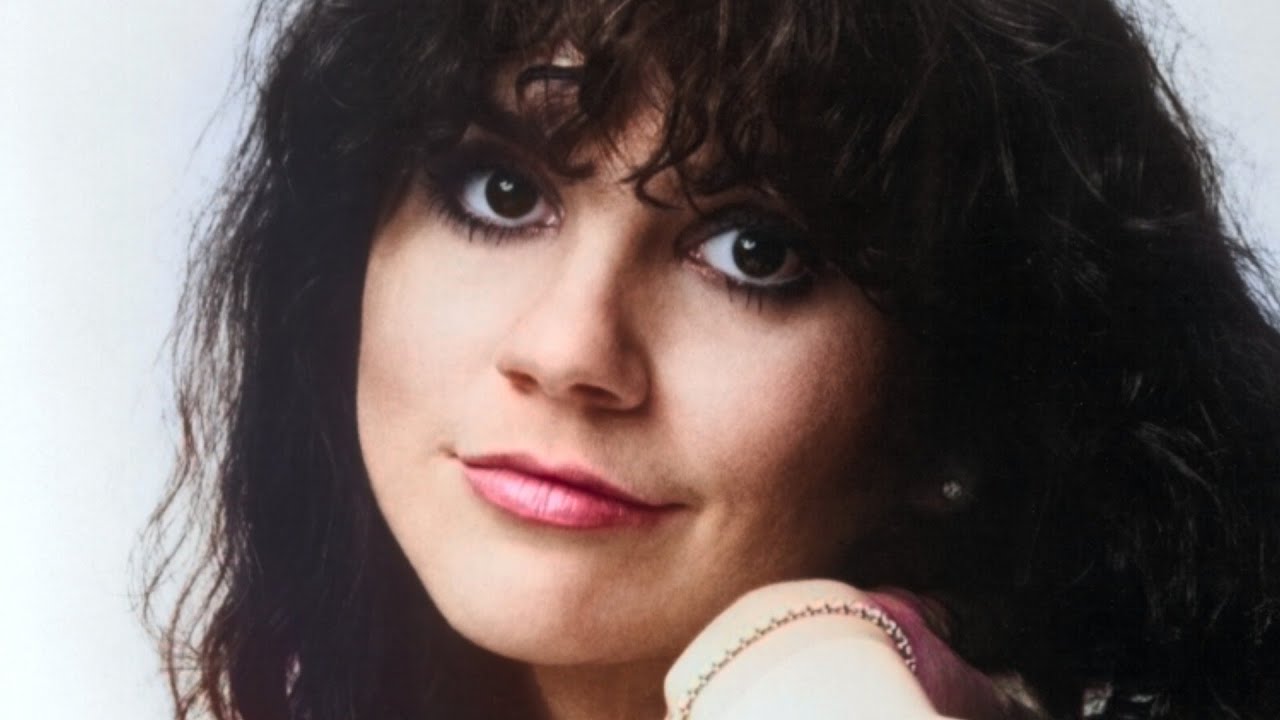
“Willin’” (Live, Hollywood 4/24/1980) is Linda Ronstadt turning a trucker’s rough-road prayer into something tender and heroic—loneliness sung with grace, like headlights cutting through night.
Recorded on April 24, 1980 at Television Center Studios, Hollywood, and originally filmed for a special broadcast on HBO, Linda Ronstadt’s live “Willin’” stands as one of those performances that feels less like “a cover in a setlist” and more like a quiet act of translation. When Rhino finally issued the concert as Live in Hollywood on February 1, 2019, “Willin’” appeared as track 3, positioned early—almost as if Ronstadt wanted the audience to understand, right away, that this show wasn’t only about hits and horsepower. It was also about feeling.
The “debut moment” for this performance, in modern terms, is tied to that 2019 archival release—Ronstadt’s first official live album, drawn from master tapes long thought lost and later recovered. And while “Willin’” itself wasn’t rolled out as a chart single, the album’s appearance on Billboard-era rankings did become part of the story of her return to the public ear—proof that even decades-old tapes can feel urgent when the voice is this alive.
But the deeper truth of “Willin’” begins long before 1980. The song was written by Lowell George, and it first entered the world through recordings connected to Johnny Darrell (1970) and then Little Feat, who released it on their January 1971 debut album—before re-recording it at a slower tempo for Sailin’ Shoes in 1972, where it landed with greater impact. It’s a song told from the driver’s seat—miles, stimulants, freight-town romance, and that strange honesty you only find when you’ve been alone too long with your thoughts. Over time it became a kind of modern American folk hymn, a “trucker anthem” with bruises on its knuckles.
Ronstadt had already recognized the heart inside it years earlier. She recorded “Willin’” for her breakthrough album Heart Like a Wheel (released November 19, 1974), where it sits on the track list as a key moment—her voice finding yearning inside a song many heard as rowdy road-talk. That matters, because by the time she stepped onto the Hollywood stage in 1980, she wasn’t borrowing the song—she was returning to it, as to an old truth that keeps changing shape as you age.
And what a stage it is. The Live in Hollywood release notes and documentation describe the backing band as a circle of longtime allies—musicians who understood her phrasing the way old friends understand your silences. Among those associated with the recording are Kenny Edwards, Danny Kortchmar, Dan Dugmore, Bill Payne of Little Feat, Bob Glaub, Russ Kunkel, Wendy Waldman, and even Peter Asher in the broader orbit of personnel mentioned for the concert. There’s a lovely symmetry there: a song born from Little Feat’s world, carried live with musicians connected to that very bloodstream.
The meaning of Ronstadt’s 1980 “Willin’” is not in the bravado of the lyric, but in the tenderness she brings to it. In her voice, the road is still long, the nights are still heavy, but the singer isn’t boasting—she’s confessing. She doesn’t glamorize the drift. She reveals the loneliness under it: the way a person can keep moving simply because stopping would mean feeling everything at once. That’s why this performance hits with such quiet force. It doesn’t ask you to admire toughness; it asks you to recognize endurance.
And perhaps that’s the most nostalgic ache of all: hearing Linda Ronstadt in 1980—at full command—sing a song about restlessness with a calm that feels earned. The guitars shimmer, the rhythm holds steady like tires on asphalt, and her voice—bright, unwavering—turns the driver’s bargain into something almost spiritual: not a demand for pleasure, but a plea for a sign that the miles mean something.
In the end, “Willin’ (Live at Television Center Studios, Hollywood, CA, 4/24/1980)” is a reminder that great singers don’t just sing songs—they redeem them, pulling out the hidden human core and placing it gently in your hands.