
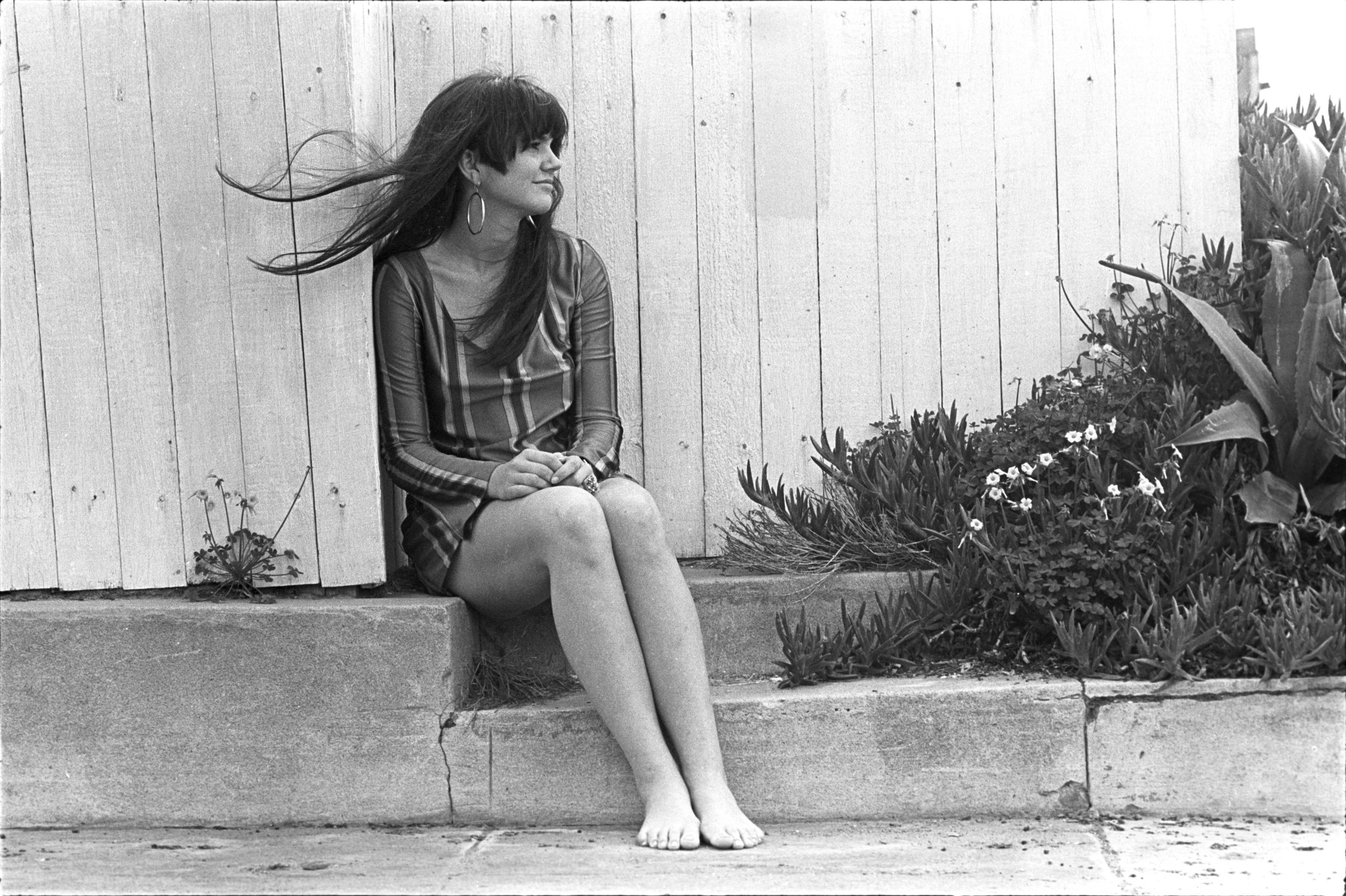
“It Doesn’t Matter Anymore” (Atlanta, 1977) is heartbreak with its shoulders squared—Linda Ronstadt singing resignation not as defeat, but as the first calm breath after a storm.
On December 1, 1977, at the Fox Theatre in Atlanta, Linda Ronstadt placed “It Doesn’t Matter Anymore” at a beautifully telling point in her set—song 7, following “Faithless Love” and just before “When Will I Be Loved.” In concert terms, that is a masterstroke: she guides the room from weary, adult uncertainty into a sharper pop ache, and then into the bright insistence of an old Everly Brothers plea. It’s like watching someone turn the pages of a private diary—one emotion giving way to the next, not by accident, but by lived logic.
This Atlanta performance has circulated widely as a filmed concert from that same night at the Fabulous Fox—a snapshot of Ronstadt in full 1977 command, when her voice could cut cleanly through rock, country, and pop without ever sounding like she was “crossing over.” In at least one circulating clip description, she’s even noted as playing guitar while singing the song—an extra layer of intimacy for a track whose entire power is in how plainly it faces the truth.
To understand why “It Doesn’t Matter Anymore” lands so hard in her hands, you have to honor its original ghost. The song was written by Paul Anka and recorded by Buddy Holly on October 21, 1958, then released as a single on January 5, 1959—less than a month before Holly’s death. In the U.S. it rose to No. 13 on the Billboard Hot 100, and in the UK it became the country’s first posthumous No. 1, an achievement that feels chilling when you remember the lyric’s cool shrug of finality. (Anka later spoke publicly about the song’s tragic irony and about giving his composer royalties to Holly’s widow—an act that makes the tune feel, even now, like compassion set to melody.)
Ronstadt’s connection to the song wasn’t casual. She recorded “It Doesn’t Matter Anymore” in 1974 on her breakthrough album Heart Like a Wheel, and when it was used as the B-side to her hit “When Will I Be Loved,” it charted in its own right—reaching No. 47 on the Billboard Hot 100, No. 20 on Adult Contemporary, and No. 54 on the country chart. That kind of “double-sided” life tells you something: people weren’t only buying the sunshine side of Ronstadt. They wanted the dusk side too.
And dusk is exactly what the Atlanta rendition captures.
In Ronstadt’s voice, the title line “It Doesn’t Matter Anymore” stops being a glib dismissal and becomes a form of self-protection—almost a whispered spell. The song’s narrator is trying to convince herself that the bruises don’t count, that the longing has been properly filed away, that the heart has finally learned to behave. But anyone who has lived long enough to say “it doesn’t matter” with a straight face knows the secret: the phrase is rarely true the first time you say it. It’s something you repeat until your hands stop trembling.
That’s why the Atlanta placement—between “Faithless Love” and “When Will I Be Loved”—feels so emotionally exact. You can hear the shape of a lived romantic cycle: the mature recognition that love can be messy and unreliable… the attempt to declare yourself free of it… and then, almost inevitably, the old question returns—when will I be loved? Ronstadt doesn’t preach that pattern. She simply sings it, and the audience hears their own history in the space between songs.
What makes this 1977 performance endure isn’t only the accuracy of the notes or the polish of a great touring band. It’s that rare Ronstadt gift: she can deliver resignation without bitterness. She doesn’t spit the past out; she sets it down. And that, in the end, is the deepest meaning of “It Doesn’t Matter Anymore (Live in Atlanta, 1977)”—a reminder that moving on is not forgetting, but choosing, at last, to stop letting the wound decide the shape of your day.