
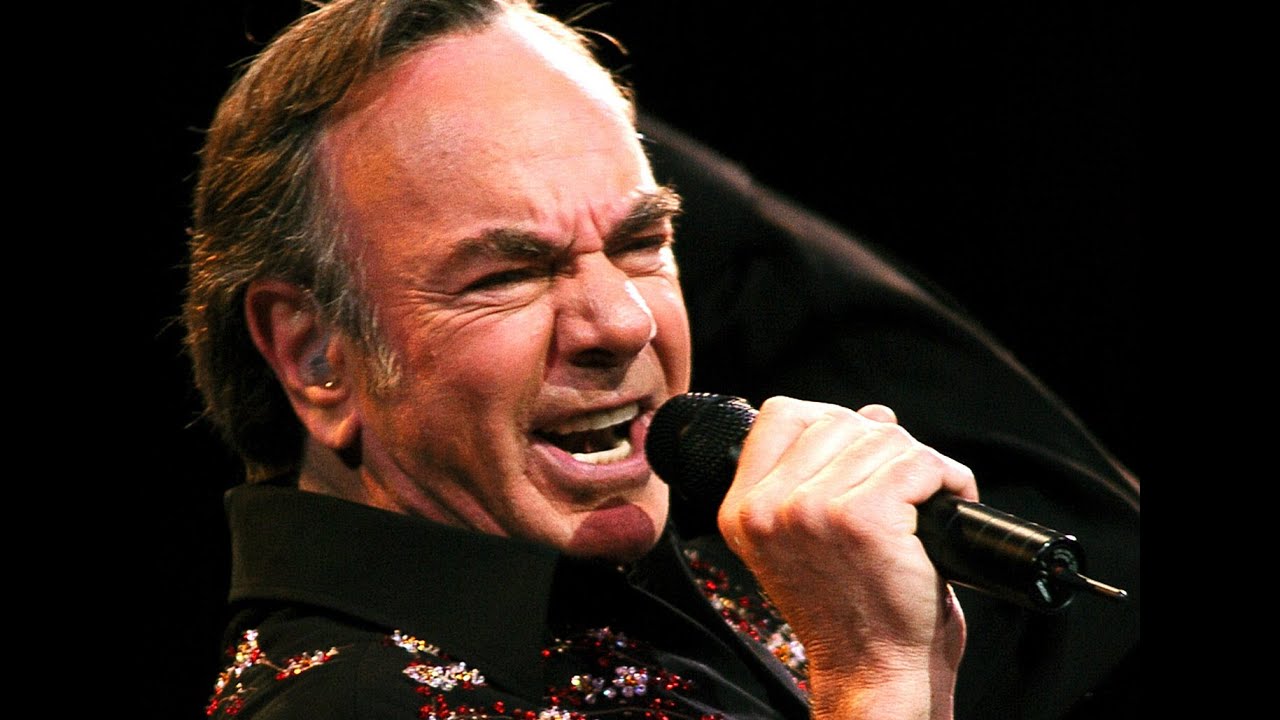
“O Holy Night” is where Neil Diamond lets the spotlight dim into candlelight—turning a centuries-old carol into something intimate, weathered, and quietly majestic.
When Neil Diamond sings “O Holy Night,” you don’t just hear a Christmas standard—you hear a man who has lived inside the long corridors of popular song, pausing at the most reverent doorway and choosing not to rush. His recording appears on The Christmas Album, released September 22, 1992 on Columbia, produced by Peter Asher, with orchestral and choir arrangements credited to David Campbell. That placement matters: Diamond didn’t tuck the carol away as a casual seasonal extra; he made it the final track on the record—track 14—like a closing prayer after the familiar festivities have quieted.
If you’re looking for the “ranking at launch,” the most truthful chart story is the album’s, not a single’s. Diamond’s “O Holy Night” was not introduced as a headline charting single; instead, it rode in on the strength of the album, and the album performed like a true seasonal classic from day one—reaching No. 8 on the Billboard 200. Over time, it became not just a holiday purchase but a recurring ritual: the RIAA certified The Christmas Album Double Platinum on August 7, 2001, reflecting shipments of two million copies in the United States. Numbers like that don’t happen by novelty. They happen when a record becomes part of people’s calendars—pulled from the shelf the way you pull out ornaments, each year a little more worn, a little more loved.
What makes Diamond’s “O Holy Night” especially compelling is how it respects the carol’s original stature while still sounding unmistakably like him. This is not a singer trying to “out-sing” history; it’s a storyteller leaning into it. And history is heavy here. “O Holy Night” began life as “Cantique de Noël”, set to music by French composer Adolphe Adam in 1847, based on a French poem by Placide Cappeau (“Minuit, chrétiens”). The English-language version most people know was created by John Sullivan Dwight, who translated/adapted the text in the mid-19th century (commonly dated to 1855). In other words, this song was already old—already carrying generations—long before a pop icon like Diamond ever stepped up to the microphone.
So what’s the “story behind” Diamond recording it? Part of it is simply the shape of The Christmas Album itself: a project built for his adult-contemporary audience, yes, but executed with real craft—lush choral architecture, orchestral color, and a producer (Peter Asher) known for letting singers sound human inside large arrangements. But the deeper story is artistic temperament. Neil Diamond has always been drawn to songs that let him stand alone in a crowd—big emotions delivered plainly, without irony. “O Holy Night” rewards exactly that kind of singer: its awe is direct, its pleading is open-faced, and its famous climaxes are less about virtuosity than conviction.
In Diamond’s hands, the meaning of “O Holy Night” becomes less ornamental and more personal. The carol is, at its core, about a night when the world’s exhaustion is interrupted by something holy—what the lyric calls a “thrill of hope.” Diamond’s voice—gritty, burnished, unmistakably mortal—makes that hope sound hard-won rather than decorative. He doesn’t sing like an angel visiting earth; he sings like a man on earth trying to believe again. And that is why his performance can feel so close, even inside grand arrangements: the awe is not abstract. It’s the awe of someone who knows what weary really means.
There’s also a quiet afterlife to this recording that underscores its staying power. A later curated collection, A Neil Diamond Christmas, notes that Diamond and his longtime engineer Bernie Becker created a new mix of “O Holy Night,” explicitly identifying it as a song that was “originally released on The Christmas Album.” That detail lands like a gentle confirmation: this wasn’t a one-season performance. It was something Diamond kept returning to—refining, preserving, and making sure it still sounded the way he wanted it to sound when the years had moved on.
Ultimately, “O Holy Night” survives every era because it speaks to a familiar human moment: the house goes quiet, the lights soften, and you feel—if only briefly—that time is larger than your troubles. Neil Diamond doesn’t modernize that feeling. He simply inhabits it. And when the final chorus rises, it doesn’t feel like showmanship. It feels like someone lifting their eyes from the ordinary world, just long enough to remember what “divine” might mean.