
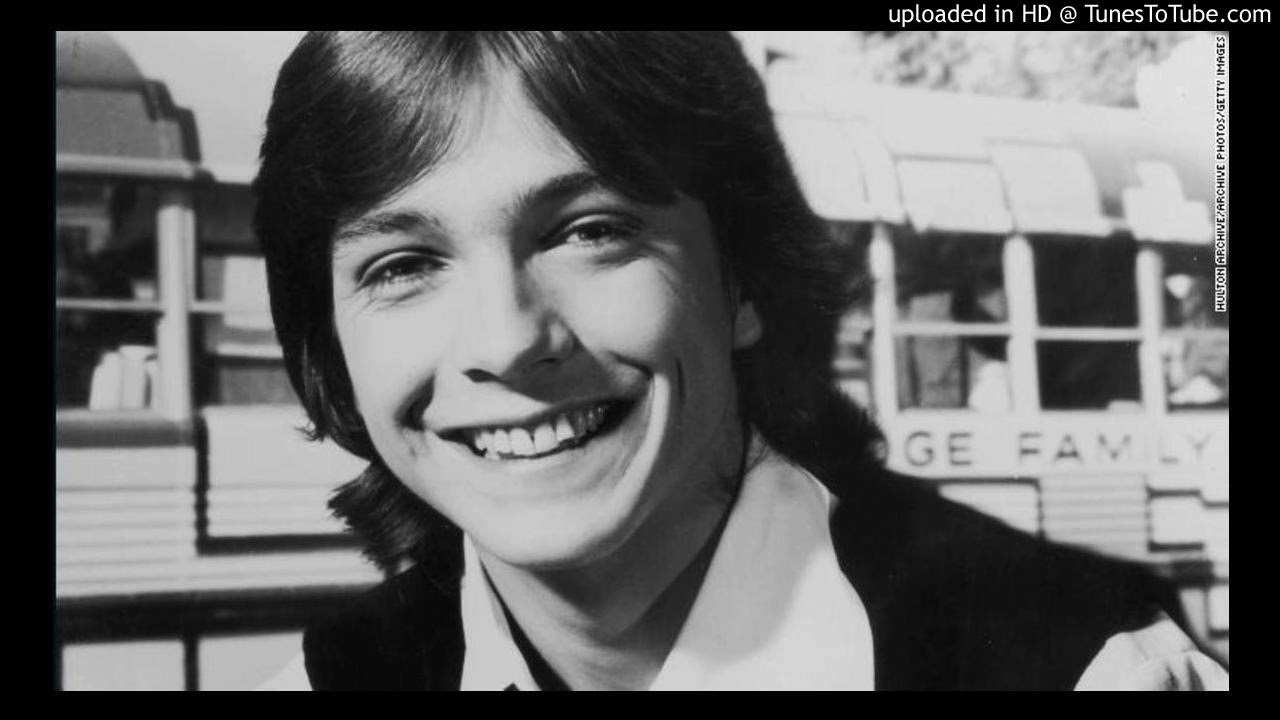
“Walk Away Renée” is the sound of love choosing dignity over pursuit—an elegant goodbye where the heart breaks quietly, then steps back into the distance.
There’s a particular kind of heartbreak that doesn’t shout. It doesn’t throw plates, doesn’t make scenes, doesn’t demand a last word. It simply realizes—too late—that longing can be beautiful and still be futile. That’s the ache at the center of “Walk Away Renée”: the moment you understand that following someone you adore can turn you into a shadow of yourself, and the only way to keep your pride intact is to let them go.
Long before David Cassidy ever sang it, “Walk Away Renée” was already a small masterpiece of 1960s “baroque pop,” written by Michael Brown, Bob Calilli, and Tony Sansone, and released by The Left Banke in July 1966 on Smash Records. It’s one of those records where sadness is dressed in velvet: ornate arrangement, wistful melody, and a lyric that feels like a letter you never meant anyone else to read. The original climbed to No. 5 on the U.S. charts—a remarkable feat for a song that sounds so refined, so inward.
The story behind the name “Renée” has its own bittersweet glow. Accounts around the song’s origin commonly connect it to Renée Fladen (later Renée Fladen-Kamm), who was associated with the band’s circle in the mid-1960s and is often cited as a key inspiration for the Left Banke songs bearing her name. Even without any biography, though, the writing communicates a truth most people recognize instantly: sometimes love isn’t a problem to solve—it’s a feeling you survive. “Just walk away” is not cruelty. It’s self-preservation said politely.
So what happens when David Cassidy—a singer whose voice once lived inside television’s brightest, most public kind of pop—returns to this song decades later?
His version appears on A Touch of Blue (released 2003), his final studio album, where “Walk Away Renee” is listed as track 5 at 3:25. The album was released by Universal Music and produced by Ted Carfrae, and it leans into a smooth, reflective palette—less teenage certainty, more late-evening candor. And that context matters, because Cassidy isn’t trying to “compete” with the Left Banke’s youthful ache. He’s revisiting the song as someone who knows that leaving can hurt more than staying.
In terms of “ranking at launch,” Cassidy’s “Walk Away Renee” wasn’t rolled out as a chart single with a headline debut; its public footprint is carried by the album. In the UK, A Touch of Blue reached No. 61 on the Official Albums Chart (and No. 63 in Scotland), spending two weeks on each chart. That may sound modest next to the thunder of earlier decades, but it’s perfectly in tune with the album’s character: this is not the sound of an artist chasing the past. It’s the sound of an artist choosing taste, choosing atmosphere, choosing songs that age well.
Cassidy’s interpretation changes the emotional lighting. The Left Banke’s original feels like a young man watching someone he wants walk away through a bright city afternoon—beauty everywhere, pain right in the middle of it. Cassidy, by contrast, sings from a later place: the place where you’ve already learned that romance can be a revolving door, and that sometimes the most honest love is the love that doesn’t cling. His voice—older, seasoned—can make the lyric feel less like romantic melodrama and more like a quietly brave decision.
That is why “Walk Away Renée” endures in Cassidy’s hands. It becomes a song about emotional maturity: about recognizing the instant when devotion stops being noble and starts becoming self-erasure. The line “walk away” becomes a boundary drawn with tenderness instead of bitterness. And perhaps that’s the most haunting thing of all—how a song from 1966 can still describe, with astonishing precision, the way we sometimes have to step back from the very thing we want most.
In the end, David Cassidy doesn’t just cover “Walk Away Renée.” He inhabits its central truth: that heartbreak isn’t always a collision. Sometimes it’s a graceful retreat—one last look, one last ache, and then the long, quiet walk toward tomorrow.