
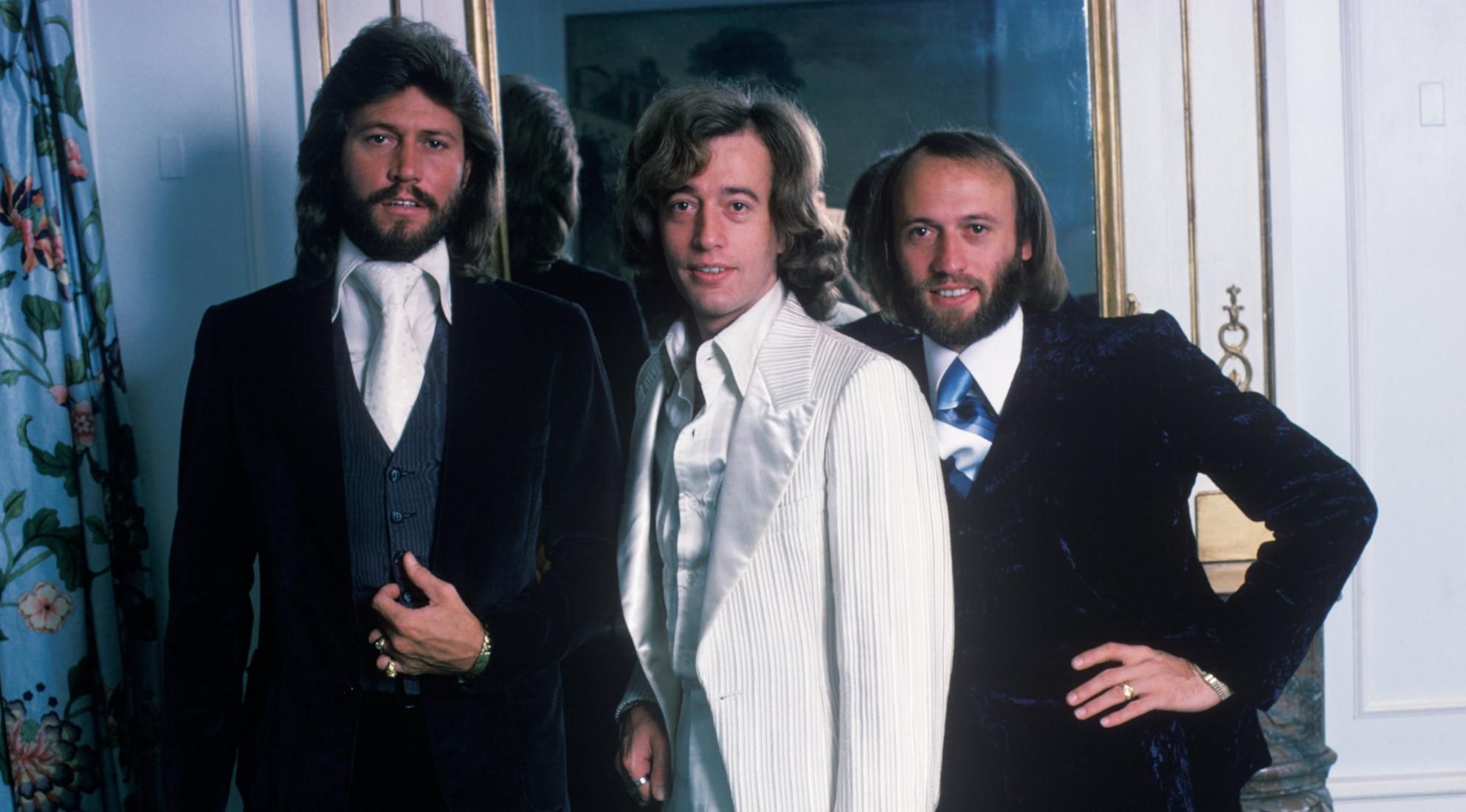
A Luminous Meditation on Identity and Fragile Connection
When the Bee Gees released Idea in September 1968, they stood at a creative crossroads—an English-Australian band conquering the world with their baroque pop sound, yet already haunted by the inner tensions that often accompany brilliance. The album, also titled Idea, produced two major singles: “I’ve Gotta Get a Message to You,” which soared to No. 1 in the UK and entered the U.S. Top 10, and “I Started a Joke,” a haunting ballad that would later become one of their most enduring global hits. The title track, “Idea,” though not released as a single, embodies the emotional tenor of the album—a record steeped in existential reflection, rich orchestration, and the yearning harmonies that define the group’s late-1960s aesthetic.
What makes “Idea” so striking is its introspective core. Written by Barry, Robin, and Maurice Gibb during one of their most fertile songwriting periods, the song operates as both confession and contemplation. Beneath its seemingly simple melodic structure lies an emotional depth that evokes alienation, self-doubt, and the search for meaning amid fame’s disorienting glare. The Bee Gees were no strangers to such dualities—balancing commercial triumph with internal discord—and “Idea” reflects that tension beautifully. The song’s arrangement swells and contracts like a breathing organism: gentle acoustic textures give way to orchestral flourishes, suggesting an internal dialogue between vulnerability and grand aspiration.
At its heart, “Idea” speaks to identity fractured by expectation. The lyrics trace the contours of disconnection—between self and society, between thought and feeling. There’s an almost philosophical melancholy at work here: the realization that inspiration, or “idea,” is both gift and burden. In this sense, the track transcends its pop structure to engage with universal human questions—how one sustains authenticity in a world demanding constant reinvention. For a band known for immaculate harmonies, it is telling how much space “Idea” leaves open: pauses where emotion lingers unresolved, moments where Barry’s voice feels both intimate and distant, as though he were singing from within a dream he can’t quite interpret.
Musically, “Idea” occupies that delicate frontier between pop craftsmanship and artful experimentation that characterized the Bee Gees’ late-60s output. Its subtle shifts in key and texture mirror an unsettled consciousness; nothing ever stays fixed for long. This was an era when the Gibb brothers were not merely writing songs but constructing emotional architectures—miniature symphonies of longing and revelation. Listening to “Idea” today is to witness their sensitivity to mood as much as melody: every chord change feels like a flicker of thought passing through a mind on the brink of revelation.
In retrospect, “Idea” encapsulates what made the Bee Gees’ early work so profound—the fusion of pop immediacy with poetic introspection. Before disco catapulted them into another cultural epoch entirely, they were already exploring what it meant to be human through sound alone: vulnerable yet grand, personal yet universal. In this song lies the germ of everything that would follow—a small but shining fragment of their endless pursuit of meaning through music.