
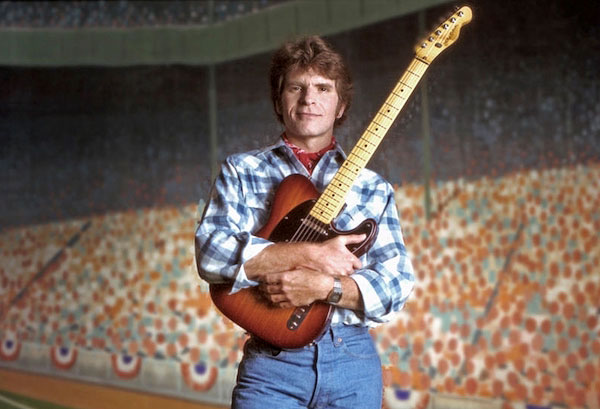
“Have You Ever Seen the Rain” (with Alan Jackson) is John Fogerty revisiting a classic not to re-create the past, but to finally name its ache—sunlight and sorrow falling at the same time.
By the time John Fogerty recorded “Have You Ever Seen the Rain (with Alan Jackson)” for his collaboration album Wrote a Song for Everyone, he wasn’t chasing a “greatest-hits victory lap.” He was doing something more intimate: returning to a song he wrote at the height of success, when the ground beneath that success was already cracking. The duet appears as track 13 on Wrote a Song for Everyone, released May 28, 2013, and it runs 3:17—a small window of time for a feeling that can follow you for decades.
Because you care about the “arrival” moment: this duet wasn’t rolled out as a major stand-alone chart single, so it doesn’t have a clean Hot 100 “debut position” of its own. Instead, its public launch is tied to the album’s impact. Wrote a Song for Everyone debuted at No. 3 on the Billboard 200, selling 51,319 copies in its first week—a striking opening for an artist revisiting older songs with fresh partners, and proof that the catalog still breathed in real time.
What makes this specific version matter is Alan Jackson. Fogerty’s original recording—released by Creedence Clearwater Revival as a single in January 1971 from Pendulum—already carried a country-rock heart under its swamp-rock skin. Bringing in Alan Jackson doesn’t “country-fy” the song so much as reveal what was always there: a plainspoken melody built for wide skies, long drives, and the kind of quiet regret you don’t dress up with fancy words. In Jackson’s voice, the chorus sounds less like a riddle and more like a hard-won observation—something you realize after you’ve lived long enough to recognize that happiness can have a shadow.
To understand the story behind the song, you have to go back to the strange emotional weather of CCR’s peak. The track’s central image—rain coming down on a sunny day—isn’t just poetic scenery. Fogerty has explained that the song reflected the impending breakup of Creedence Clearwater Revival and the tensions inside the band, including the looming departure of his brother Tom Fogerty. In other words: the world was applauding, the charts were kind, the dream looked bright from the outside—yet inside the circle, something felt heavy, unresolved, already ending. That’s why the song has always landed like a sigh that learned to sing. Even in 1971 it wasn’t merely a hit; it was a farewell forming in slow motion.
And it was a hit. The original CCR single rose to No. 8 on the Billboard Hot 100, reached No. 1 in Canada, and became one of the band’s signature recordings. Those numbers matter here because they underline the song’s central irony: it was commercially triumphant while emotionally bruised—success draped over sadness like a bright coat thrown over trembling shoulders.
So when Fogerty revisits the song in 2013 with Alan Jackson, the duet becomes a kind of reconciliation—not necessarily with people, but with memory itself. Wrote a Song for Everyone was built around the idea that these songs could live again in different voices and different rooms, with a guest list that crossed rock, country, and soul. But “Have You Ever Seen the Rain (with Alan Jackson)” feels especially symbolic: it places a song born from band fracture into a setting of companionship. Two artists share the weight of the chorus, and the question at the center—have you ever seen the rain…?—stops sounding like confusion. It starts sounding like recognition.
That’s the enduring meaning of this performance: “rain” isn’t only heartbreak; it’s the truth you can’t ignore. “sunny day” isn’t only happiness; it’s the surface the world sees. The duet holds both at once, calmly, without forcing an answer—because the older you get, the more you understand that life rarely offers clean weather. Some days are bright and painful in the same breath. And somehow, in this version, that isn’t tragic. It’s honest.