
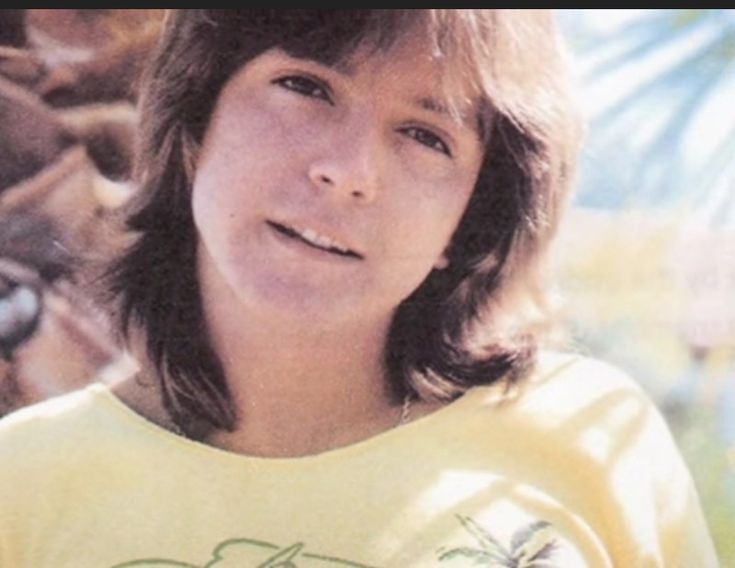
“Hurt So Bad” is a classic slow-burn lament—David Cassidy singing the kind of heartbreak that doesn’t shout, but settles in and refuses to leave.
By the time David Cassidy released “Hurt So Bad” in late 1979, he was well beyond the bright, televised immediacy that first made his voice a household presence. This record arrived not as an album centerpiece or a carefully staged comeback, but as a non-album single—a standalone statement that quietly revealed where his instincts were pointing: toward older songs, deeper emotions, and a more grown-up kind of romantic truth. In the U.S., it was issued on MCA/Curb as MCA 41101, backed with “Once A Fool,” with discography listings placing its release in September–October 1979.
Because it was a non-album single, “Hurt So Bad” didn’t receive the same commercial framing as Cassidy’s earlier hits. Major discography sources list no significant chart placing for the single—effectively suggesting it did not break through on the primary U.S. and U.K. charts in the way his 1970s smashes did. That lack of chart “arrival,” however, is not the same thing as a lack of meaning. In fact, the song’s modest footprint can make it feel more intimate—like something meant for the listener who stays with an artist past the headlines.
The material Cassidy chose was already steeped in pop history. “Hurt So Bad” was written by Teddy Randazzo, Bobby Weinstein, and Bobby Hart, and first became famous through Little Anthony & The Imperials in the mid-1960s—one of those dramatic heartbreak ballads that seems built to echo off the walls of a late-night room. By 1979, the song was a well-traveled standard, already proving its durability across styles and decades. Cassidy’s decision to tackle it reads less like trend-chasing and more like a deliberate reach for a song with emotional architecture: big melody, clean lines, and a lyric that allows a singer to show restraint without losing intensity.
That lyric is the real engine. “Hurt So Bad” doesn’t describe heartbreak as theatrical collapse; it describes it as a private condition—an ache that keeps returning even when you try to outthink it. The pain in this song is not only about losing someone, but about being unable to escape the after-effects: the mind replaying what the heart refuses to accept. In that sense, the title phrase isn’t just a dramatic hook. It’s a diagnosis. Hurt can be sharp, yes, but it can also be persistent, a slow pressure that reshapes the days.
This is where David Cassidy becomes a compelling interpreter. His best performances often carried an unusual combination: a soft-edged vulnerability paired with a professional polish learned under relentless spotlight. On “Hurt So Bad,” that combination fits the story. The narrator isn’t posturing; he’s admitting. There’s no victory here, no clever last word—only the recognition that love can leave bruises that don’t show on the skin. And because Cassidy’s public image had long been associated with youth and romance in its brighter forms, hearing him inhabit a song like this can feel like watching the lights dim after the show, when the room empties and the real feelings finally speak.
The single’s release details add another layer of poignancy. Issued as “Hurt So Bad” / “Once A Fool,” it sits in Cassidy’s catalog like a small crossroads—caught between eras, carrying the sound of a singer testing what remains when the cultural noise quiets down. And the song has continued to reappear later through catalog releases and reissues, reinforcing that it belongs to the long tail of his work—the part of the story that fans often discover after they’ve already learned the famous chapters.
Ultimately, “Hurt So Bad” is not about reinvention. It’s about recognition: recognizing that some songs endure because they tell the truth without decoration, and recognizing that an artist like David Cassidy had more to offer than the role he was first assigned. This single may not have announced itself loudly in 1979, but it carries a particular kind of dignity—one that comes from singing a timeless ache plainly, and letting the listener supply the memories the lyric can’t name.