
“Someday Never Comes” is the ache of a promise that keeps getting postponed—until the years slip by and you realize “someday” was never a date, only a consolation.
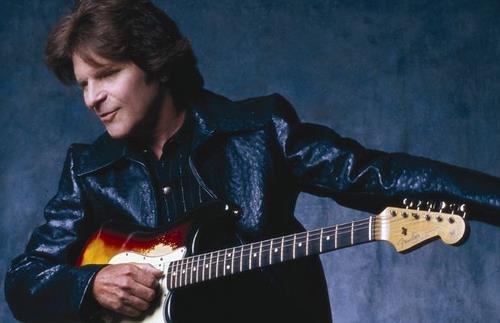
When John Fogerty sings “Someday Never Comes” with Dawes, the song changes temperature. It stops sounding like a solitary confession made at the end of a troubled band’s life, and starts feeling like a conversation across generations—older voice and younger voices sharing the same sentence, as if trying to rescue it from the past.
This duet appears on Fogerty’s 2013 album Wrote a Song for Everyone, released May 28, 2013 (notably, on his 68th birthday), where he re-records classic songs alongside a wide guest list. The record debuted strongly, peaking at No. 3 on the U.S. Billboard 200 and No. 2 on Billboard’s Top Rock Albums—a reminder that these songs weren’t merely “old favorites,” but living pieces of American DNA still capable of drawing a crowd.
Yet the real gravity of “Someday Never Comes” is older, and heavier. The song was originally released in May 1972 as a single by Creedence Clearwater Revival, drawn from their album Mardi Gras—and it became the band’s final single before their breakup later that year. It reached No. 25 on the U.S. Billboard Hot 100, respectable on paper, but emotionally it’s one of Fogerty’s most quietly devastating writings.
The “story behind” it is not trivia; it’s the wound that gives the song its shape. Fogerty has explained that it reflected both his parents’ divorce and, later, the unraveling of his own marriage—an intimate cycle of adults leaving and children waiting, full of questions no one seems able to answer. The brilliance is how gently he delivers that pain. The lyric is structured like a child’s repeated request—why, when, how long—met again and again with the soft anesthesia of “someday.” In this song, “someday” isn’t hope; it’s a delay tactic. It’s the word grown-ups use when the truth is too sharp to hold in bare hands.
That’s why the 2013 version matters. Fogerty himself felt the original CCR recording never fully matched the arrangement he had imagined, given the internal turmoil of the band at the time; he later described the 2013 re-recording as closer to his original vision. And Dawes—a band whose modern Americana sensibility is built on listening rather than showing off—fit this song like a quiet room fits a hard conversation. On Wrote a Song for Everyone, their presence doesn’t compete with Fogerty’s history; it steadies it.
The meaning of “Someday Never Comes” becomes even more heartbreaking when you consider what it’s really about: not one broken promise, but a lifetime of postponed understanding. Children grow up waiting for the moment when the story will finally make sense—when the father will return, when the household will stop shaking, when the distance will be explained. Then, almost without noticing, the child becomes the parent…and finds the same helpless phrase rising to the lips: “someday you’ll understand.” The song doesn’t accuse so much as it mourns the way time repeats itself, the way we inherit not just faces and voices, but silences.
So when Fogerty sings it with Dawes, the duet reads like a small act of mercy. The song is still sad—there’s no rewriting that. But the shared vocals suggest something the original couldn’t: that even if “someday” never arrives the way we wanted, we can still tell the truth now, while the room is warm and the people we love are still within earshot.
In the end, “Someday Never Comes” remains one of those rare songs that feels more accurate the older it gets. It doesn’t promise closure. It simply names the ache—beautifully, plainly—and leaves you with the quiet urge to do what the narrator couldn’t: to stop postponing the important words, while there’s still time to say them.