
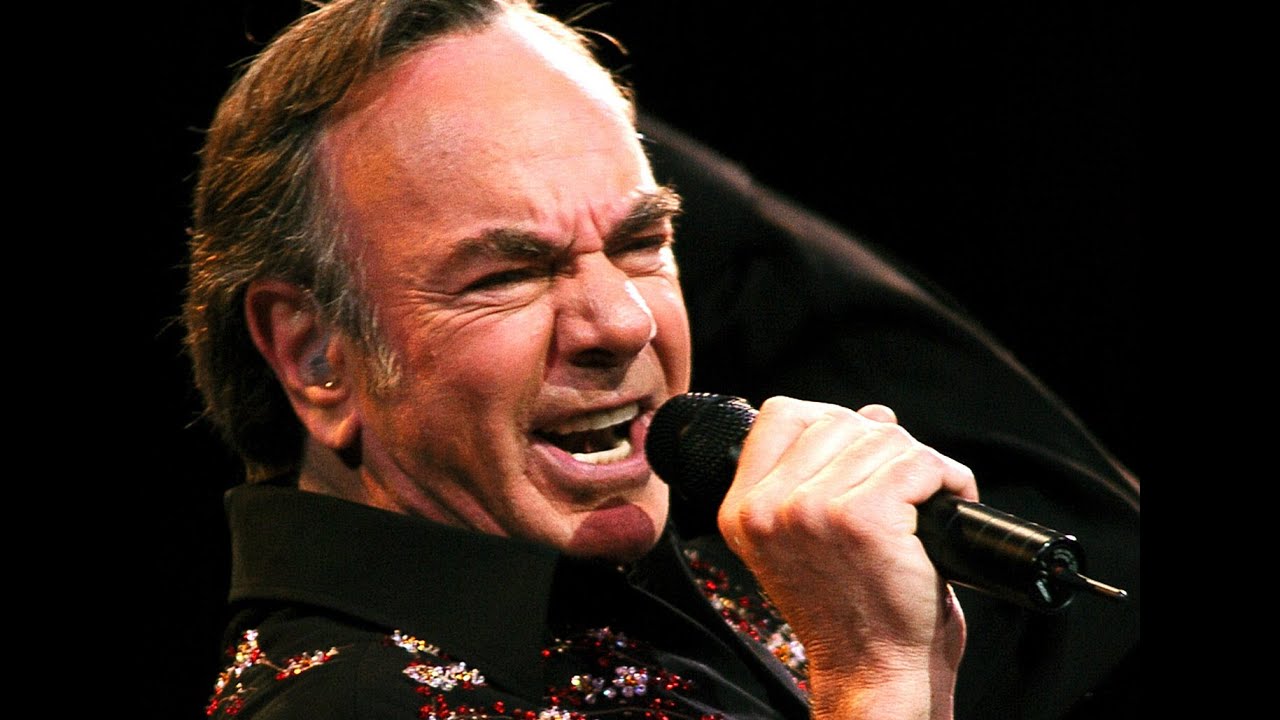
“On the Robert E. Lee” is a postcard of motion and mischief—two minutes of wind-in-your-face freedom, with a faint shadow of history trailing behind the music.
The first thing worth knowing—because it places the song exactly where it belongs—is that “On the Robert E. Lee” arrives as a soundtrack moment, not a chart-hunting single. It appears on Neil Diamond’s blockbuster 1980 soundtrack album The Jazz Singer (Original Songs From the Motion Picture), released November 10, 1980. The album itself became a major commercial event, reaching No. 3 on the Billboard 200 and staying on the chart for a long run (Billboard’s chart-history summary lists 12 weeks in the Top 10 and a total of 115 weeks on the Billboard 200).
Inside that hugely visible project, “On the Robert E. Lee” is a brief, breezy interlude—about 2:03—placed on Side One after “Amazed and Confused,” like a sudden opening of windows in a room full of big emotions. And its authorship is a small story of its own: it’s co-written by Neil Diamond and the celebrated French composer Gilbert Bécaud—the same partnership that also produced “Love on the Rocks” and “Summerlove” on the same album. The whole soundtrack was produced by Bob Gaudio, whose gift for sleek, dramatic pop frames Diamond’s voice in bright cinematic light.
If you listen closely, you can feel why this song exists in the architecture of The Jazz Singer. Much of that album carries weight—identity, longing, family, faith—yet “On the Robert E. Lee” behaves like a grin mid-thought. It’s not trying to be profound; it’s trying to be alive. The lyric sketches a riverboat fantasy: sails waving, crowds gathering, a dash toward New Orleans, the promise of dancing “under the stars.” (Even without quoting it at length, you can hear the shapes: travel, heat, flirtation, and the simple thrill of going somewhere.)
And still—because this is Diamond, because it’s 1980, because the album also contains “America”—the title can’t help carrying a second layer. “Robert E. Lee” is not a neutral phrase in U.S. memory; it’s a name braided into Civil War history, and hearing it sung so jauntily can create an uneasy aftertaste for modern ears. One reviewer, looking back on the film and soundtrack, even notes the strange tonal tension of the song’s placement and implications. You don’t have to turn the track into a lecture to feel that complexity. Sometimes a pop song simply shows you how culture used to speak—lightly, casually—about things we now hold more carefully. In that sense, “On the Robert E. Lee” becomes an artifact as much as an entertainment: a snapshot of what felt “colorful” and unproblematic to mainstream pop production at the time, and what doesn’t land the same way today.
Yet musically, the song still does what it was built to do. It moves. It smiles. It lifts the shoulders. It’s a quick rush of Americana-stagecraft, a little theater of the road (or the river), delivered by a singer who always knew how to sound like he meant every syllable—even when the story is just a gleaming, romantic “tonight.” The brevity is part of its charm: it doesn’t overstay, doesn’t explain itself, doesn’t ask you to build a life inside it. It’s the kind of track that flashes by like lights along dark water, leaving you with that old, familiar feeling—half adventure, half longing—that music can summon in an instant.
So if “On the Robert E. Lee” still draws you in, it may be for the simplest reason of all: it offers a momentary escape into movement. A song that says: the wind is up, the night is young, the world is wider than your worries—step aboard, just for two minutes, and let the music carry you downstream.