
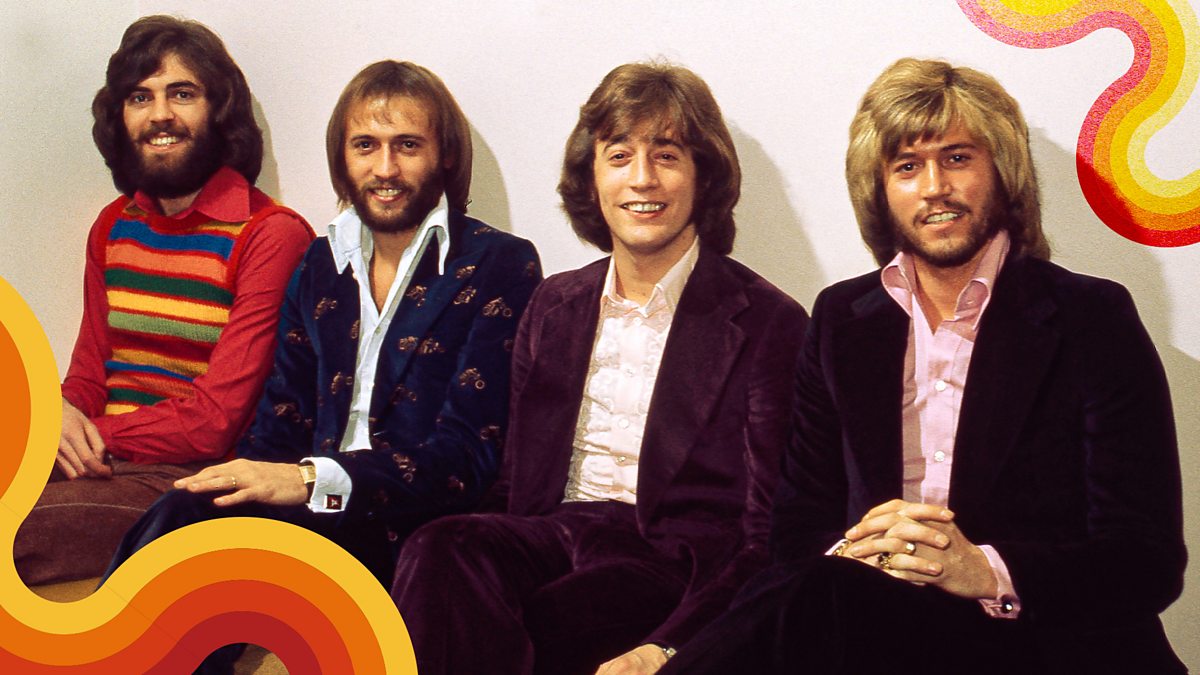
“Then You Left Me” is the Bee Gees at their most unguarded—an intimate break-up confession where the heartbreak isn’t dramatized, just stated, as if the singer is too tired to pretend it didn’t happen.
To understand “Then You Left Me”, it helps to place the facts right up front—because this song lives in a slightly hidden corner of the Bee Gees’ story. It was recorded during the making of Cucumber Castle—the group’s April 1970 album that grew out of their television special of the same name. What makes that era uniquely poignant is that Cucumber Castle is the only Bee Gees album that contains no recorded contributions from Robin Gibb, who had left the group before the album was made. In other words, “Then You Left Me” belongs to a moment when “leaving” wasn’t only a lyric—it was part of the air they were breathing.
In strict chart terms, “Then You Left Me” did not launch as a major A-side single, so it has no meaningful U.S. debut position of its own. Its most visible single-era appearance is as the B-side to “I.O.I.O.” on Atco 6752. That A-side reached No. 94 on the U.S. Billboard Hot 100 (chart dated July 11, 1970), while “Then You Left Me” remained the flip-side—loved by listeners who were willing to turn the record over. Discography sources also document that “Then You Left Me” was recorded around July 1969, with Barry Gibb on lead vocal, credited to Barry and Maurice Gibb.
Now for what the song feels like.
There’s a special kind of ache in Bee Gees ballads from this transitional period—less ornate than their later grand pop, more bare-chested than their earlier baroque melancholy. “Then You Left Me” moves with that confessional directness: the narrator insists he never demanded “time” or “lies,” yet the wound is exactly what betrayal always creates—the unbearable realization that you can be careful and still be hurt. The lyric leans on a devastatingly simple idea: “You only hurt the one you love the most.” It’s the kind of line that doesn’t try to be clever; it tries to be true.
Because it isn’t a song about rage. It’s a song about abandonment’s after-hours silence: “every night I sit beside my bed.” There’s no dramatic exit scene, no cinematic confrontation—just the room afterward, the mind afterward, the small rituals of loneliness that arrive when the world has stopped watching. That’s why the title lands like a verdict. “Then You Left Me” doesn’t frame the departure as a plot twist. It frames it as the moment life’s meaning breaks into two halves: before, and after.
The backstory deepens that emotion. Cucumber Castle was assembled from material tied to a TV project and recorded in 1969, a time when the Bee Gees themselves were navigating instability—personnel changes, Robin’s absence, and a sound searching for its next identity. So when Barry sings a song about being left, it’s hard not to hear a second narrative underneath: a band trying to remain whole while part of its heart has walked away. Even if that wasn’t the “intended” meaning, it becomes part of the listening experience—because music doesn’t stay inside the borders artists draw for it. It travels with the life surrounding it.
Musically, “Then You Left Me” embodies the Bee Gees’ gift for turning plain chord changes into emotional architecture. It isn’t built to dazzle. It’s built to hold the singer while he admits what pride usually tries to hide. And Barry’s voice—already capable of that pleading, bright sorrow—does something quietly masterful here: it doesn’t beg for sympathy. It simply makes the loneliness audible.
That’s why “Then You Left Me” has endured as a fan-favorite deep cut. It’s a private track on a peculiar, in-between album, yet it carries a universal bruise: the shock of loving someone enough to trust them, and discovering trust doesn’t protect you. “Then You Left Me” is not the Bee Gees at their most famous. It may not even be the Bee Gees at their most polished. But it is the Bee Gees at their most human—standing still for a moment, letting the road noise fade, and admitting that some goodbyes don’t explode. They simply close the door—and leave you listening to the silence on the other side.