
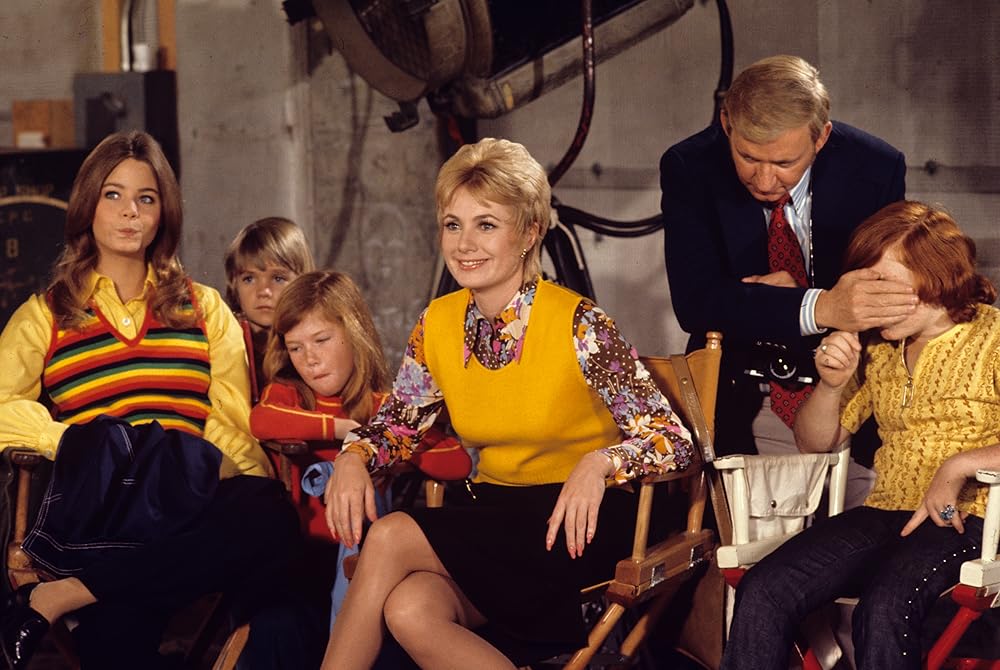
“Summer Days” feels like the kind of song that arrives on a breeze and stays like a memory—soft, sunlit, and full of that bittersweet glow only The Partridge Family could turn into pop.
There are songs that become famous, and then there are songs that become beloved—quietly, almost privately, over the years. “Summer Days” belongs to the second group. It was never one of The Partridge Family’s headline singles, never one of the records that stormed the charts and announced itself with fanfare. In fact, that is part of its charm. “Summer Days” was an album track, originally recorded in 1971 for the group’s third studio album, Sound Magazine, and it was not released as a single, which means it had no standalone Billboard chart peak of its own. Yet that very lack of chart glare has helped preserve something special about it. The song feels discovered rather than overexposed, like a warm old photograph tucked inside a book and found again years later.
To understand why the song lands with such warm-weather nostalgia, it helps to remember where it came from. Sound Magazine was released in August 1971, just as The Partridge Family were deep in their early-70s commercial ascent. The album itself was no minor footnote: it reached No. 9 on Billboard’s Top LPs chart, became the group’s third hit album in ten months, and was certified Gold in the United States. In the UK, it later climbed to No. 14, making it the only Partridge Family album to break the British Top 20. So although “Summer Days” did not chart by itself, it was born inside one of the group’s most successful and best-loved albums. That matters, because the song carries the polished, melodic confidence of a project made at the very moment when the Partridge sound was at its brightest and most assured.
The song was written by Tony Romeo, one of the most important behind-the-scenes architects of the Partridge Family sound. Romeo had a gift for writing songs that felt open-hearted and immediate without becoming flimsy. He understood how to build pop that sounded effortless, even when it was expertly designed. Apple Music credits him as the composer and lyricist of “Summer Days,” with Wes Farrell producing—another key fact, since Farrell was the producer who helped shape nearly all of the group’s classic records. This is not accidental sunshine. It is crafted sunshine, made by people who knew exactly how to package youth, melody, and longing into something radio-friendly yet emotionally durable.
And what gives “Summer Days” its lasting pull is that it does not merely celebrate summer—it remembers it, even while it seems to be living inside it. That is the secret of so much great nostalgic pop: it sounds happy on the surface, but carries a faint awareness that the season will not last. That tension is what makes the song hit like more than lightweight television pop. It captures the emotional weather of youth so well—the sense that sunlight, romance, freedom, and passing time are all somehow happening at once. The Partridge Family were often associated with cheerful, accessible songs, but on tracks like this they could also suggest something gentler and more wistful: the feeling of wanting a moment to keep glowing just a little longer.
There is another fascinating layer to the story. Later sources tied to Partridge Family fandom say “Summer Days” had once been considered for David Cassidy’s emerging solo career before plans changed, and the song instead stayed with the group. I would treat that detail with some caution because the strongest source I found for it is fan-maintained rather than archival. But one fully supported fact does deepen the picture: David Cassidy later recorded his own solo version of “Summer Days” for his 1973 album Dreams Are Nuthin’ More Than Wishes. That alone suggests the song meant something within Cassidy’s musical orbit and was not just a discarded filler track. It had a life beyond its first appearance, and that continuing life says a great deal about its melodic strength.
What makes it feel like a forgotten gem is precisely this combination of qualities. It comes from a hit album, but was not itself a hit single. It was written by a major Partridge Family songwriter, but it lives just off the main highway of their best-known songs. It sounds easy and breezy, yet the emotion beneath it is tender enough to linger. In that way, “Summer Days” represents something essential about The Partridge Family at their best. They were never only a television phenomenon. In the right song, they could create a whole emotional atmosphere—sun on the pavement, radio from another room, a sense of innocence already beginning to slip into memory.
So yes, “Summer Days” feels like a blast of warm-weather nostalgia. But it also feels like something more enduring than seasonal charm. It reminds us how powerful a modest pop song can be when melody, voice, and mood align just right. Not every treasure announces itself with chart statistics or endless replay. Some simply wait, year after year, until the right listener comes back and hears in them the glow of a world that once felt endless. “Summer Days” is that kind of song—easy to overlook, impossible to forget once it finds its place in the heart.