
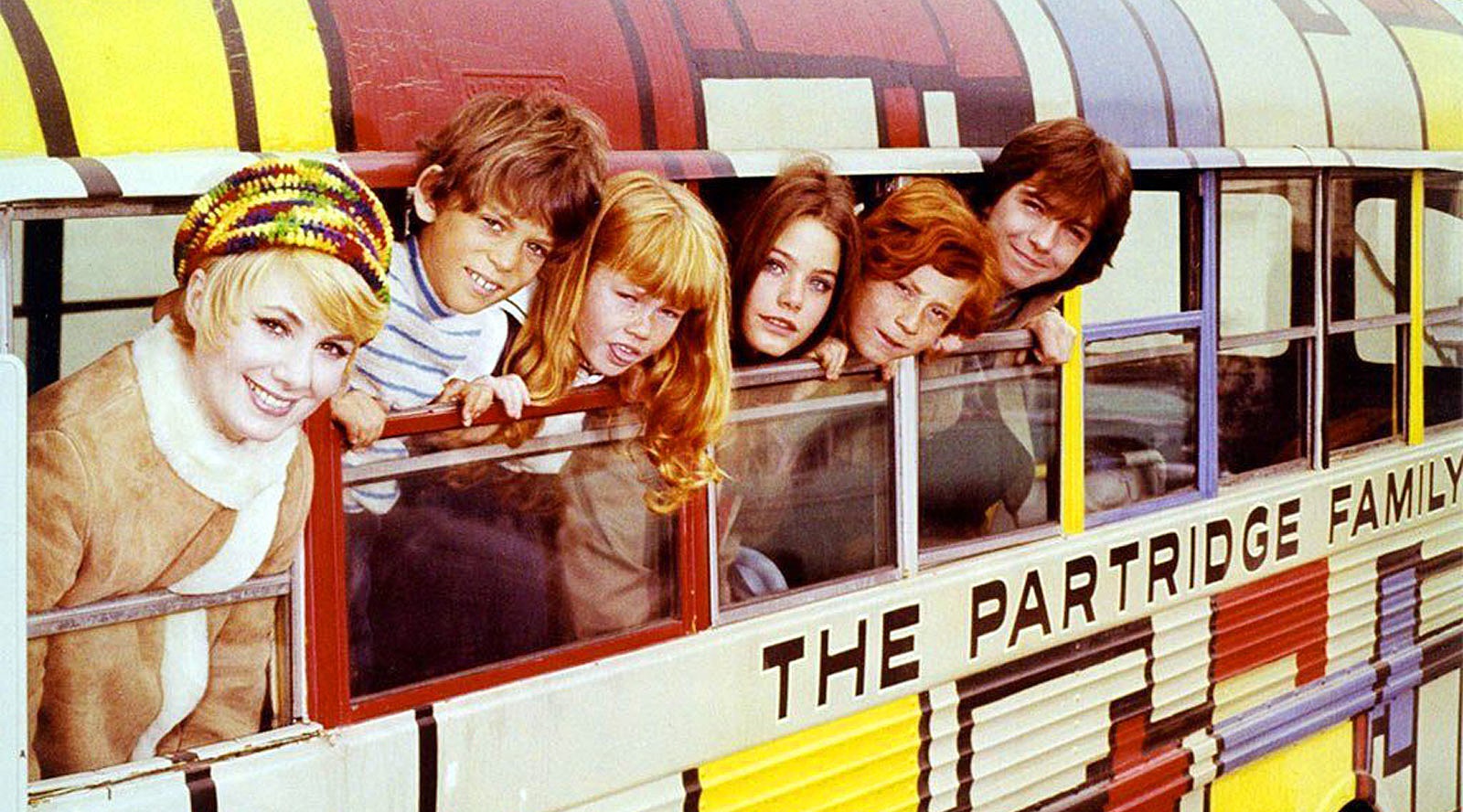
“Looking Through the Eyes of Love” shows The Partridge Family at their most winning: teen pop with a tender pulse, a radiant chorus, and just enough ache to make the sweetness feel real.
There are songs in the Partridge Family catalog that arrive with instant chart-history flash, and then there are songs like “Looking Through the Eyes of Love”—records that feel gentler, warmer, and perhaps even more revealing with time. Released in late 1972 as the lead single from The Partridge Family Notebook, the song reached No. 39 on the Billboard Hot 100, No. 9 on Billboard’s Easy Listening chart, and No. 9 on the UK Singles Chart. In Britain, it spent nine weeks on the official chart, a reminder of just how strongly David Cassidy’s appeal and the group’s melodic polish traveled across the Atlantic. It also became the group’s final U.S. Top 40 hit, which gives the song an added emotional weight in retrospect: it sounds bright and young, yet it stands at the edge of a chapter beginning to close.
That context matters, because “Looking Through the Eyes of Love” is more than a pleasant teen-pop single. It is one of those songs where the Partridge Family formula—sunlit melody, romantic innocence, and highly crafted pop production—finds an especially graceful balance. The song was written by the great Barry Mann and Cynthia Weil, the songwriting team behind so many emotionally direct pop classics, and their touch is unmistakable here. They knew how to write songs that sounded simple on first hearing but were built on sturdy melodic architecture and an emotional idea listeners could step into immediately. In this case, the idea is irresistible: love does not merely change what one feels, it changes how one sees. That is why the title still has such charm. It captures the whole mood of the song in one phrase—youthful, hopeful, open-hearted, and just a little dream-struck.
And that is where the record’s tenderness becomes so appealing. The Partridge Family were often associated with buoyant, television-friendly pop, but their best recordings always carried a trace of emotional softness beneath the gloss. “Looking Through the Eyes of Love” is a perfect example. It does not push too hard. It does not try to overwhelm the listener with drama. Instead, it lets the chorus do the work, and what a chorus it is—full of lift, warmth, and that unmistakable early-70s feeling that romance could still be rendered in melody without embarrassment. The heart of the song lies in that sense of transformation: the world itself seems gentler, brighter, more meaningful when filtered through affection. In lesser hands, that idea might have tipped into sentimentality. Here, it feels sincere.
A great deal of that comes down to the performance. By 1972, David Cassidy had become far more than the face of a television phenomenon. He had developed into one of the defining teen-pop voices of the era—light enough to sound youthful, but expressive enough to carry longing without turning maudlin. On “Looking Through the Eyes of Love,” he sings with just the right degree of softness. He does not oversell the emotion. He lets the melody glow. That restraint is part of the song’s staying power. The tenderness feels earned because it is never inflated into something bigger than the song can hold.
The production deserves its share of praise as well. Produced by Wes Farrell for Bell Records, the single fits beautifully within the polished sound world of The Partridge Family Notebook, an album released in November 1972 that reached No. 41 on the U.S. album chart and spent 16 weeks in the Top 200. The album was the group’s first not to crack the U.S. Top 40, which again makes this single’s warm reception feel especially significant. Even as the commercial peak was beginning to soften, the group could still produce a record of real melodic charm and emotional immediacy. Sometimes that is when pop becomes most touching—when the glare eases a little, and the craftsmanship becomes easier to hear.
There is also something quietly lovely about the song’s deeper history. Before The Partridge Family recorded it, Gene Pitney had taken the same Barry Mann–Cynthia Weil song into the charts in 1965, reaching No. 28 in the U.S. and No. 3 in the UK. That means the Partridge Family version was already engaging with a known pop song, not inventing one from scratch. But rather than sounding secondhand, their recording gives the tune a fresh early-70s sheen—less dramatic than Pitney’s, perhaps, but more pastel, more tender, and perfectly suited to the group’s romantic pop identity. It is a reminder that The Partridge Family could do more than generate catchy television tie-ins. They could also reinterpret existing material with enough warmth and polish to make it feel newly their own.
So yes, “Looking Through the Eyes of Love” shines because of its teen-pop glow, its tenderness, and its unforgettable chorus. But it lasts because it catches something universal inside that polished surface. It understands the old, simple truth that love alters perception—that when the heart is engaged, the world itself seems rearranged. The Partridge Family were masters of turning that kind of emotional clarity into accessible pop, and on this song they did it with particular grace. It may not be their loudest statement, or their most historically towering hit, but it remains one of their sweetest achievements: a record where melody, mood, and innocence meet in exactly the right measure, and where the heart of the chorus keeps opening a little wider every time it returns.