
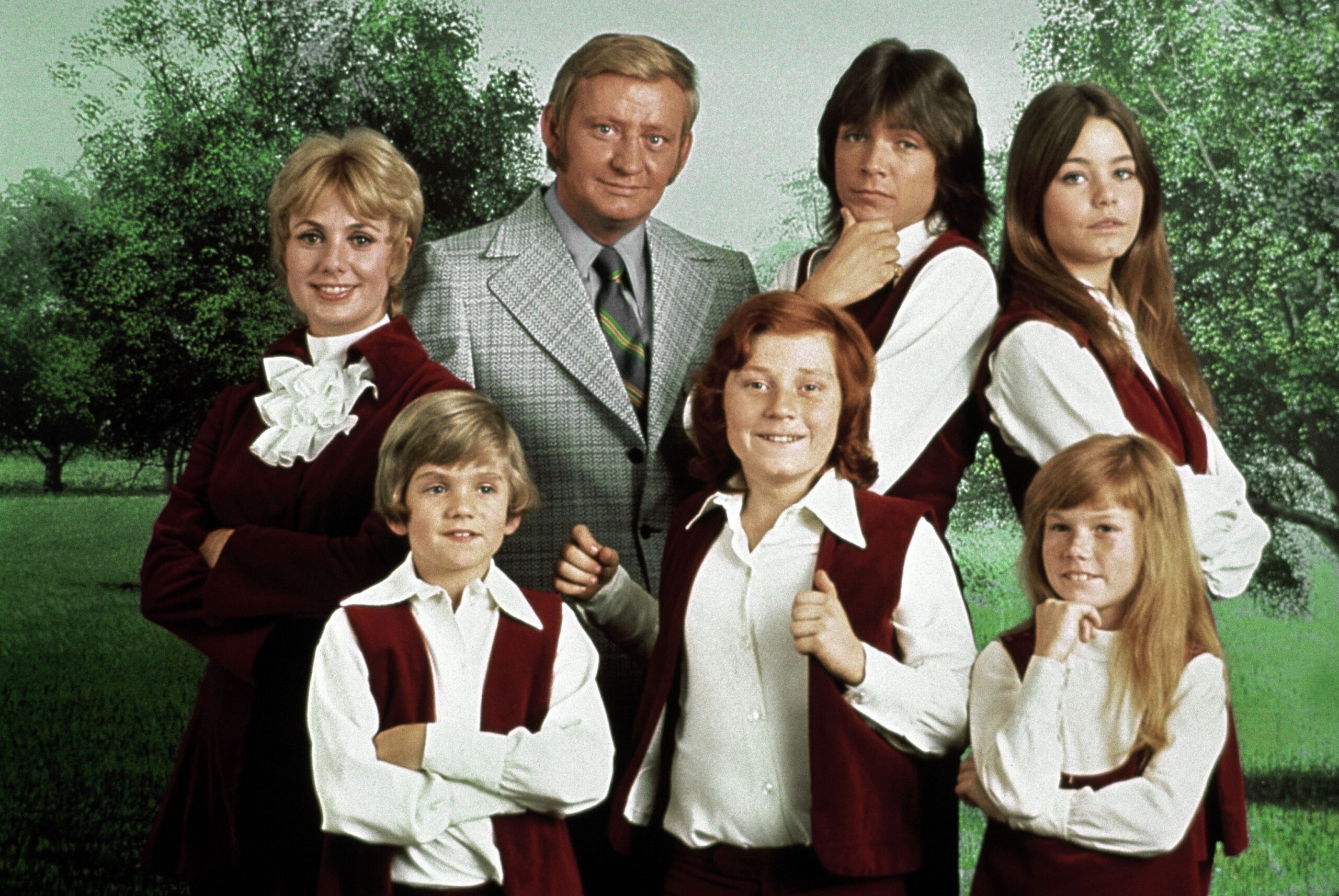
“One Night Stand” is the kind of Partridge Family title that makes a listener stop in mid-scroll — a little daring, a little mysterious, and just specific enough to promise there is a story, a mood, and a hook waiting behind it.
Some song titles work like gentle invitations. Others work like headlines. “One Night Stand” belongs to the second kind. Before a note even starts, the title alone does half the work: it sparks curiosity, raises an eyebrow, and makes you want to know whether The Partridge Family are about to sound mischievous, romantic, theatrical, or a little more grown-up than their family-pop image usually suggested. That is exactly why it remains such a fascinating deep cut. “One Night Stand” was not a hit single in its own right, but it was important enough to be used as the B-side of “It’s One of Those Nights (Yes Love)”, and it first appeared on the 1971 album Sound Magazine. The song was written by Wes Farrell and Paul Anka, recorded on May 5, 1971, and later earned enough lasting affection to reappear on compilation albums such as Greatest Hits.
That context matters, because “One Night Stand” sits in a particularly strong moment of the Partridge Family story. Sound Magazine, released in 1971, was no filler album tossed out to feed a television craze. It became a major success, reaching No. 9 on Billboard’s Top LPs chart, later charting in the UK and Australia as well. So when “One Night Stand” appeared there, it did so as part of one of the group’s most commercially and culturally alive periods. This was the era when David Cassidy was becoming one of the defining young pop voices of the early 1970s, and when the Partridge Family sound still felt bright, polished, and unexpectedly versatile.
And what a title to give that moment. “One Night Stand” sounds bold even now, but in the Partridge Family universe it carries an extra jolt because it brushes against a slightly older, more dramatic world than the group’s image usually advertised. That is the genius of it. The title suggests danger or grown-up complication, yet the song lives inside the carefully crafted Bell Records pop world that made the Partridges so instantly appealing. The result is a kind of perfect tension: curiosity on the outside, melodic accessibility on the inside. Even a fan discography page still emphasizes the song’s key hook and credits, a small sign that the track kept its identity rather than fading into anonymous album-cut territory.
There is another reason the title sparks instant curiosity: it sounds cinematic. It feels like the opening line of a little road story. And in fact, one summary of the lyric on that fan discography page points to exactly that atmosphere: “Every night… a different town… I sing my song… pack my things and move along.” That gives the phrase “One Night Stand” a double meaning that is more theatrical than scandalous. It evokes the traveling life, the transience of performance, the restless rhythm of one-night appearances and constant departures. In that sense, the title is cleverer than it first appears. It flirts with provocation, but it lands in a melancholy show-business space instead.
That sort of wordplay suits The Partridge Family beautifully. They were always strongest when they balanced innocence with just enough sophistication to keep the songs from feeling disposable. “One Night Stand” does exactly that. It catches your attention with a phrase that sounds a bit daring, then folds that phrase into a pop setting shaped by experienced songwriters and top-tier studio craft. The credits themselves tell you this was no casual throwaway: Wes Farrell was the central architect of the Partridge Family recording identity, while Paul Anka brought real pop pedigree to the writing. That combination alone explains why a song with such a catchy title still feels sturdy rather than gimmicky.
The song also had a life beyond the original LP. It was featured in the TV series, with IMDb soundtrack listings noting its use in “Diary of a Mad Millionaire,” while episode references also show “One Night Stand” turning up again in the series’ later life. That matters because Partridge Family songs often gained their emotional hold not just from the records, but from the way they lived on television screens, in bedrooms, and in the ongoing rhythm of weekly family-pop familiarity. A title as memorable as “One Night Stand” was always going to stick a little harder once fans could attach it to a performance as well as a vinyl sleeve.
So why does “One Night Stand” instantly spark curiosity? Because it understands one of pop music’s oldest secrets: a great title should make you hear the song before you have heard the song. This one does that beautifully. It sounds a little dangerous, a little glamorous, a little lonely, and very much like the start of a story. In the hands of The Partridge Family, that promise becomes even more charming, because the group knew how to make a provocative phrase feel melodic, approachable, and full of personality. Not every memorable title leads to a memorable track. This one does. And that is why “One Night Stand” still has such pull — one title, one hook, and one of those wonderfully curious Partridge Family tracks that makes you want to click first and ask questions later.