
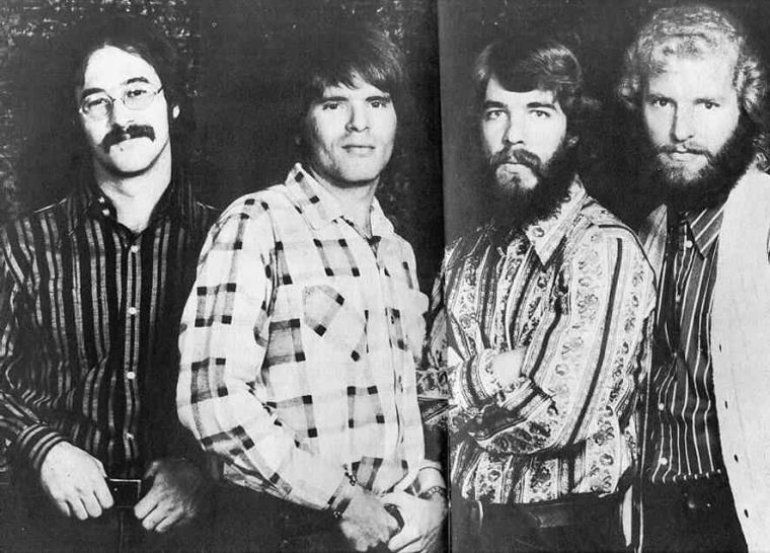
“Bad Moon Rising” is the great CCR contradiction: a song that sounds bright, quick, and almost carefree, even as it predicts disaster with a grin that somehow makes the doom even harder to resist.
There are darker songs in rock history, and there are heavier ones. But very few are as weirdly irresistible as “Bad Moon Rising.” Released by Creedence Clearwater Revival on April 16, 1969 as the lead single from Green River, it climbed to No. 2 on the Billboard Hot 100 and then went all the way to No. 1 on the UK Singles Chart, where it stayed for three weeks in September 1969. It was backed by “Lodi,” another remarkable CCR song, which only deepens the sense that this was one of the most potent singles of the era.
What makes “Bad Moon Rising” so unforgettable is the contradiction at its core. The lyric is practically apocalyptic: trouble on the way, earthquakes, hurricanes, bloodshed, panic. And yet the music does not sound frightened. It sounds jaunty, hooky, almost cheerful. That mismatch is the whole genius of it. John Fogerty gives us catastrophe in a form you can sing along to with the car windows down. The song does not trudge toward doom; it skips. That is why it remains so addictive. The listener feels the tension immediately, even before fully thinking about it: the melody says sunshine, while the words say the sky is about to split open.
Fogerty himself later explained that the song was inspired by the 1941 film The Devil and Daniel Webster, specifically a hurricane scene, and that the lyric reflected what he saw as an apocalyptic mood hanging over the late 1960s. That context matters. “Bad Moon Rising” was not just random gothic fun. It came out of an America full of unrest, political violence, and a sense that something was coming apart. The brilliance of the song is that it never lectures about any of this. It simply turns that dread into a compact, unforgettable pop-rock warning.
Musically, the record is just as clever as the concept. CCR recorded it in March 1969 at Wally Heider Studios in San Francisco, and Fogerty wrote and produced it himself. The arrangement leans on a crisp, rockabilly-inflected drive rather than anything ominous or lumbering. That choice is exactly why the doom lands harder. If the band had made the song murky and theatrical, it might have been merely spooky. Instead, they made it lean, bright, and direct. The disaster does not arrive through fog. It arrives in daylight, with a backbeat.
This is also where CCR were different from so many of their contemporaries. In 1969, a lot of rock bands explored darkness through psychedelia, abstraction, or sheer heaviness. Creedence Clearwater Revival did something much more unsettling: they made dread sound ordinary, almost homespun. “Bad Moon Rising” feels like an old warning passed down on a porch, except it is delivered as a hit single sharp enough for Top 40 radio. That plainspoken quality is one reason the song has lasted. It never depends on trend or studio trickery. It depends on a perfect piece of songwriting and a band disciplined enough not to overplay it.
There is another reason the song remains so beloved: it captures John Fogerty’s unique gift for making menace catchy without cheapening it. He was one of the great compression artists in American rock. In barely over two minutes, he gives you weather, prophecy, fear, and a chorus so immediate that people who have never studied the lyrics still know it by heart. That is not a small achievement. It is one thing to write an ominous song. It is another to write one that becomes communal, almost celebratory, without losing any of its warning.
And perhaps that is the deepest reason “Bad Moon Rising” still feels so alive. It understands a truth many songs miss: doom can be seductive. People are drawn to warnings, to dark omens, to the thrill of hearing catastrophe named before it arrives. CCR packaged that instinct perfectly. They gave listeners a song about disaster that felt good to sing, which only made the disaster feel stranger, closer, and more real. That is why the record still jumps out of speakers after all these years. It does not just predict trouble. It makes trouble sound catchy enough to invite in.
So yes, “Bad Moon Rising” is the CCR song that made doom sound weirdly irresistible. Not because it softened the darkness, but because it delivered that darkness with such speed, clarity, and grin-tight confidence that resistance became impossible. It remains one of the great American rock singles precisely because it never forces a choice between pleasure and dread. With Creedence Clearwater Revival, you get both at once — and that is what makes the moon still rise.