
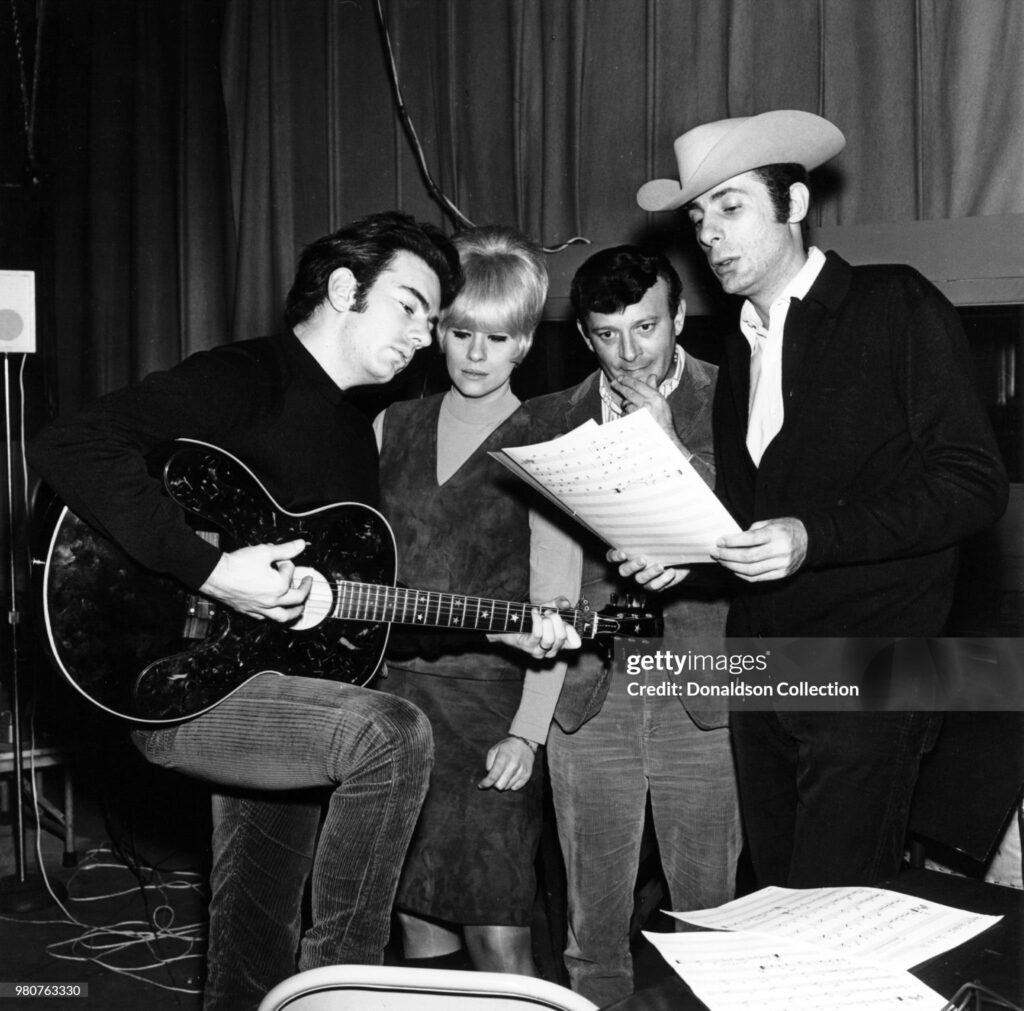
“We” feels larger than most love songs because Neil Diamond turns a single, humble word into a vision of devotion, endurance, and human belonging that reaches far beyond romance alone.
There are titles so small they almost disappear at first glance. “We” is one of them. Just one syllable, one breath, one word that most songwriters would pass over without a second thought. But in Neil Diamond’s hands, that little word becomes enormous. It becomes shelter. It becomes union. It becomes the fragile miracle of two souls speaking as one while still carrying all the loneliness, memory, and hard-won tenderness that life has placed on them. That is why “We” still feels bigger than most love songs ever written. It does not simply celebrate romance. It enlarges it until romance begins to touch something almost spiritual. The song appeared on Diamond’s 2005 album 12 Songs, produced by Rick Rubin, and while it was not released as a charting single of its own, it closed an album that marked one of the great late-career renewals in modern popular music. 12 Songs was released on November 8, 2005, reached No. 4 on the Billboard 200, and climbed to No. 5 on the UK Albums Chart.
Those facts matter, because “We” should not be treated as some casual deep cut hidden in a lesser period. It came at the end of a record that many listeners and critics heard as a return to Diamond’s essence: the songwriter, the confessor, the man who could carry feeling with plain language and still make it sound profound. Rubin’s production stripped away much of the grand showroom gloss people often associated with Diamond and brought him back toward a more intimate sound—acoustic, close, human-scaled. Contemporary reviews of 12 Songs repeatedly emphasized that paring-down, that sense of a veteran artist being brought back to his emotional center rather than merely polished for nostalgia’s sake. In that setting, “We” lands not as a showpiece, but as a distilled truth.
And that is where the song’s greatness begins. Most love songs are built on I and you. They move between desire and distance, promise and fear, longing and satisfaction. “We” does something rarer: it begins where many songs end. It assumes that love, at its deepest, is not merely attraction between two separate people, but the creation of a shared existence. That one word holds a whole philosophy inside it. It suggests that real love changes grammar. It changes perspective. It asks the heart to stop speaking only for itself. Neil Diamond always had a gift for finding the emotional weight inside everyday language, but here he goes further. He takes perhaps the simplest pronoun of all and makes it feel like a destiny.
What makes the song feel bigger than an ordinary love song is that “we” is never just romantic in the narrow sense. It carries companionship, yes, but also survival. It implies all that must be endured together: disappointment, aging, doubt, forgiveness, the quiet work of staying close when life loses its early shine. That is why the song has such mature resonance. It is not infatuation singing in the mirror. It is commitment speaking softly after experience has already done its damage. Diamond was well into the later, reflective arc of his career when he recorded 12 Songs, and that matters. A younger singer might have made “We” sound idealistic. Diamond makes it sound earned.
There is also something deeply moving in the song’s placement as the closing track on 12 Songs. Albums often end with statements of summary, reckoning, or farewell, and “We” feels like all three at once. After the searching, bruised, spiritually restless mood of the earlier songs, this final number arrives like a quiet answer—not a naive answer, not an easy one, but a humane one. It is as though Diamond, after circling through desire, uncertainty, aging, temptation, and self-examination, comes at last to the simplest conclusion possible: the solitary self is not enough. The word “we” becomes not just a romantic pronoun, but a rescue from isolation.
That may be the deepest reason the song lingers. Neil Diamond has always understood loneliness better than many of his imitators. Even his biggest anthems often contain a trace of ache, a sense that joy must be sung against the possibility of emptiness. In “We,” that loneliness is not denied; it is answered. The song feels expansive because it does not describe love as excitement alone. It describes love as enlargement of being. Two people together become something wider than either could manage alone. That is a grand idea, but Diamond delivers it without pomp. He lets the word do the work. He trusts its plainness. And in doing so, he reminds us that the most meaningful language in music is often the least complicated.
It is also telling that “We” remained important enough to be included later on Neil Diamond 50 – 50th Anniversary Collection, a career-spanning retrospective issued in 2017. That inclusion suggests the song was not merely a closing track he left behind; it was part of the body of work he wanted remembered. And rightly so. For all its modest title, “We” contains one of the most generous emotional gestures in his catalog.
So yes, one word, endless meaning. Neil Diamond’s “We” still feels bigger than most love songs because it reaches beyond passion into fellowship, beyond affection into identity, beyond romance into the aching human hope that life might be shared deeply enough to become more bearable, more beautiful, and more whole. It is not the loudest song he ever wrote. It does not need to be. Its greatness lies in how quietly it widens the heart.