
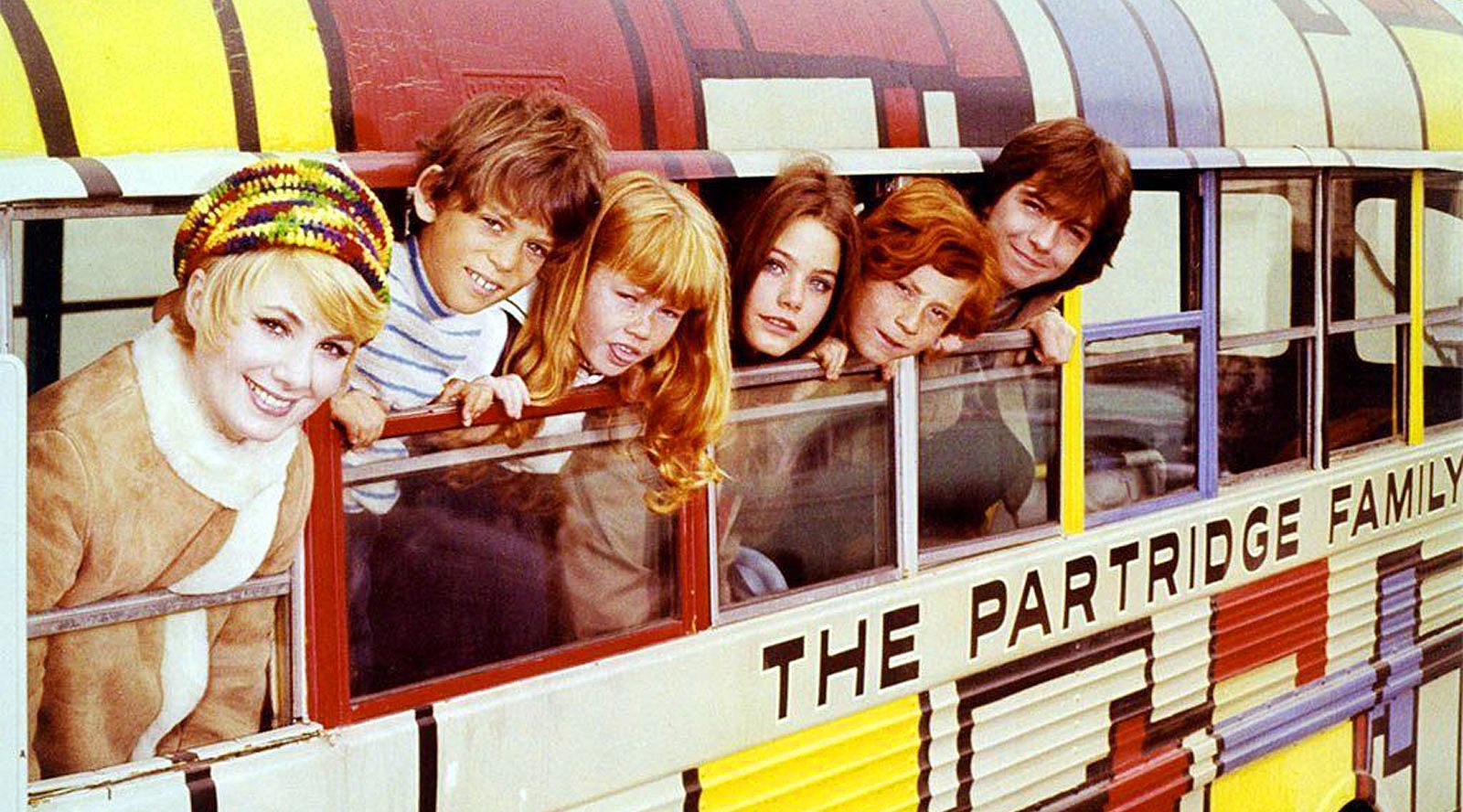
The Partridge Family turned “Twenty-Four Hours a Day” into a bright little vow of devotion—simple, smiling, and full of the kind of warmth pop music once delivered so effortlessly.
Some songs do not arrive with the thunder of a major hit, yet they stay behind like a familiar afternoon light. “Twenty-Four Hours a Day” by The Partridge Family belongs to that special class of recordings: cheerful on the surface, tender at heart, and impossible to separate from the soft-glow optimism of early-1970s pop. Though it was not released as a major charting U.S. single and therefore did not make the Billboard Hot 100 on its own, the song remains part of the larger musical world that made The Partridge Family such a beloved name. It appeared during the group’s immensely popular recording era, when their television success and radio-friendly sound created one of the most recognizable pop identities of the time.
By the early 1970s, The Partridge Family had already become far more than a television novelty. Built around the ABC series of the same name, the act blended sitcom charm with polished studio craftsmanship. At the center of it all was David Cassidy, whose voice and presence helped transform the project into a genuine pop phenomenon, with Shirley Jones providing warmth and credibility as the family matriarch. Behind the scenes, the records were shaped by some of the era’s finest professional songwriters, arrangers, and session musicians, giving the group’s best material a sheen that still holds up decades later.
“Twenty-Four Hours a Day” came from that polished world. It is often remembered as an album track rather than one of the towering signature hits like “I Think I Love You” or “Doesn’t Somebody Want to Be Wanted”, but that is part of its charm. Songs like this helped define the emotional atmosphere of The Partridge Family: romantic without being heavy, catchy without strain, and filled with the kind of melodic innocence that now feels almost like a lost language. The record captures the era’s sunny production style—crisp rhythm, bright harmonies, and a lead vocal that sounds eager, sincere, and open-hearted.
What makes “Twenty-Four Hours a Day” linger is not complexity, but clarity. Its emotional message is direct: affection that does not clock out, devotion that stays present from morning until night. In another artist’s hands, that idea might have felt slight. But The Partridge Family specialized in making emotional simplicity feel honest. There is something deeply comforting in the song’s lack of irony. It does not try to be mysterious. It simply offers love as constancy, as companionship, as a bright thread running through ordinary life.
That quality was one of the quiet strengths of the group’s music. Their best recordings often worked not because they said something difficult, but because they said familiar things beautifully. In “Twenty-Four Hours a Day”, the promise of devotion feels tied to a time when pop records were allowed to be unabashedly melodic and emotionally generous. Listening now, one hears more than a catchy tune. One hears the emotional architecture of a gentler pop age—music built to reassure, to charm, and to stay close.
There is also the unmistakable presence of David Cassidy, whose voice carried much of the group’s emotional appeal. He could sing bright material without sounding mechanical, and that gift mattered enormously. In songs like this, he brought a youthful urgency that gave lightweight pop a real pulse. His delivery helped bridge the gap between television fantasy and genuine pop feeling. That was part of the magic of The Partridge Family: even when the concept was manufactured, the emotional effect often was not. The records connected because the performances did.
The song’s story, then, is less about backstage drama than about craft. The Partridge Family recordings were assembled with great professional care, often using elite Los Angeles session players and seasoned pop writers who understood exactly how to build a hook, frame a vocal, and keep a melody airborne. That craftsmanship is all over “Twenty-Four Hours a Day”. It sounds effortless, but records that feel effortless usually come from people who know precisely what they are doing. Every cheerful lift in the arrangement, every neatly placed harmony, every clean turn of phrase serves the same emotional purpose: to make the listener feel held inside something light, sweet, and sure.
In a broader sense, the meaning of “Twenty-Four Hours a Day” lies in its portrait of loyalty as joy rather than burden. The song does not frame love as sacrifice or struggle. Instead, it presents affection as a natural state of being, something gladly offered and gladly repeated. That is one reason the track can still feel refreshing. In a musical culture that often leans toward complication, there is something quietly moving about a song so comfortable with sincerity.
And perhaps that is why this lesser-discussed gem still matters. It reminds us that the legacy of The Partridge Family is not limited to the biggest hits. Their catalog also contains these smaller, glowing moments—songs that may not dominate oldies countdowns, but that still carry the fragrance of a particular time in American pop. “Twenty-Four Hours a Day” is one of those moments: a compact, affectionate song that captures the hopeful emotional tone of the group at their best.
For listeners who remember when pop music could smile without apology, this song still offers a lovely return. It is light, yes—but not empty. Beneath its bright surface is a gentle promise: to be there, to keep caring, to make devotion sound easy. That is no small thing. In the world of The Partridge Family, such feelings were not trivial. They were the point. And in “Twenty-Four Hours a Day”, they still shine with a warmth that time has not managed to dim.