
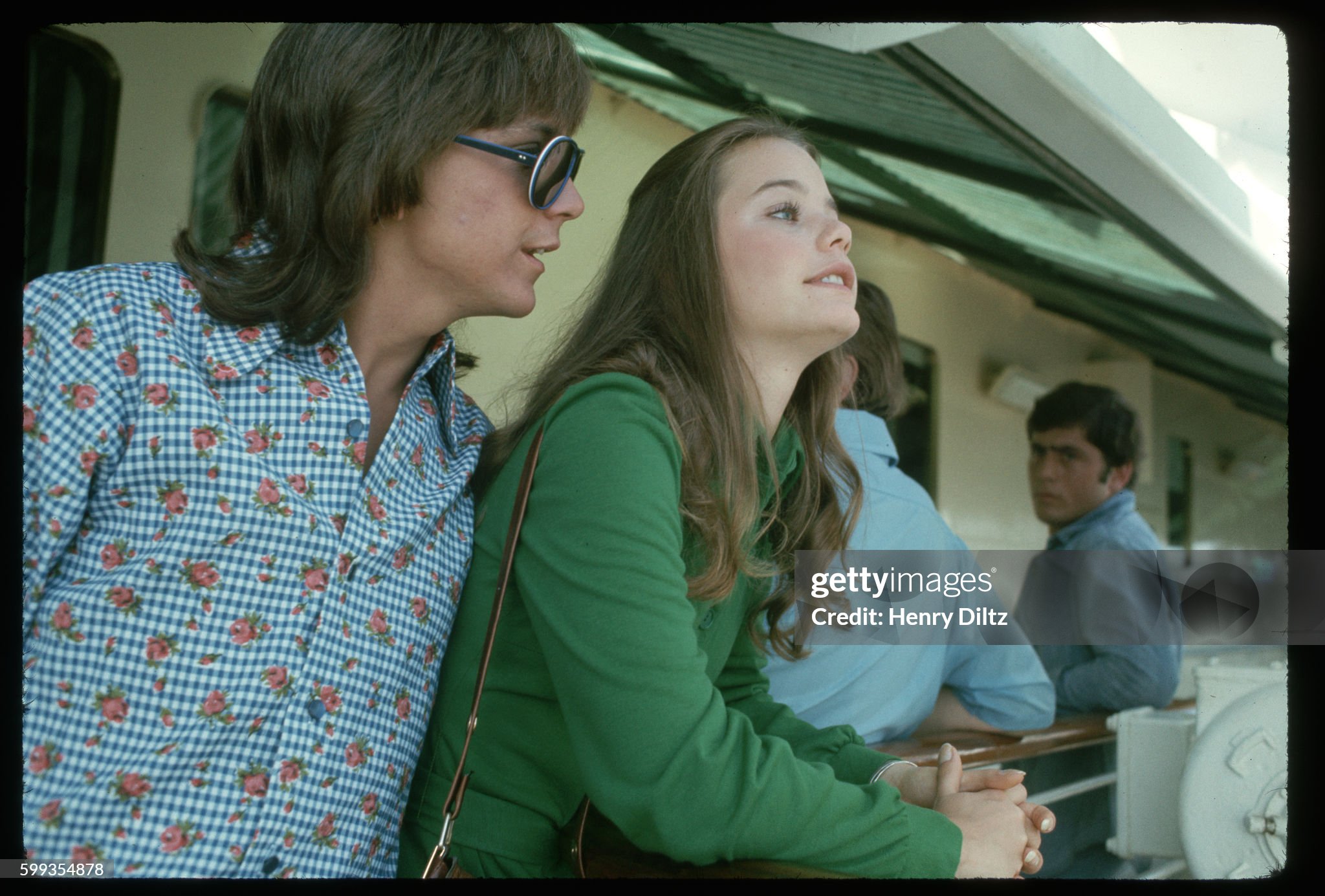
A quiet promise set inside bright early-1970s pop, There’ll Come a Time reveals the softer, more reflective heart of The Partridge Family and reminds us that not every lasting song arrives as a blockbuster.
Among the many records associated with The Partridge Family, There’ll Come a Time stands out not because it was one of the act’s most heavily celebrated chart smashes, but because it carries a gentleness that many louder hits never quite reach. In chart terms, it is generally remembered more as a catalog favorite from the group’s peak era than as one of the giant singles that defined their run on radio. That distinction matters. Some songs win the week; others keep speaking for years. There’ll Come a Time belongs to the second kind.
To understand why the song still touches listeners, it helps to remember the unusual world that produced it. The Partridge Family was a television sensation, of course, fronted on screen by Shirley Jones and, most importantly in musical terms, by the magnetic young voice of David Cassidy. Behind the scenes, the records were crafted with the polish of top Los Angeles studio professionalism, shaped during an era when producer-driven pop could sound effortless even when every note had been carefully placed. Under the guidance of figures such as Wes Farrell, the group built a catalog that was often dismissed too quickly as simple bubblegum. But songs like There’ll Come a Time make that judgment feel incomplete.
What is the song really about? At its core, There’ll Come a Time is built around patience, emotional faith, and the belief that clarity arrives in its own season. The title itself is the key. It does not promise instant happiness, instant love, or instant understanding. Instead, it offers something more mature: the reassurance that what is unresolved now will not remain unresolved forever. That is one reason the song can feel different with the passing years. In youth, it sounds sweet. Later, it sounds wise.
Musically, the song carries the signature elegance of polished early-1970s pop. There is melody without strain, rhythm without aggression, and an arrangement that supports the lyric instead of overwhelming it. The harmonies are clean, the instrumental backdrop is warmly controlled, and the emotional center remains the vocal line. If David Cassidy is indeed the reason so many of these recordings still breathe beyond their era, this song is a fine example of why. He does not attack the lyric. He leans into it. There is a softness in the phrasing that keeps the song from turning sentimental in a cheap way. It feels earnest, but never cloying.
The story behind There’ll Come a Time is therefore tied less to scandal or dramatic studio conflict than to a broader truth about the Partridge Family project. At the height of the show’s popularity, the machine around the music could easily have settled for bright, disposable hooks alone. Yet the catalog regularly made room for songs with a little more ache, a little more tenderness, a little more inward feeling. That is where this number finds its strength. It shows that even inside a highly commercial pop phenomenon, there was space for emotional nuance.
It is also worth noting how the song sits within the larger identity of The Partridge Family. The biggest hits were immediate, catchy, and built for broad public embrace. They had to work fast. There’ll Come a Time, by contrast, does not seem interested in rushing toward its listener. It unfolds. It waits. It trusts melody and mood. That may be one reason it was never destined to overshadow the headline singles. Radio often rewards the most instantly undeniable song. Memory, however, is often kinder to the one that offered comfort.
There is a deeper emotional contradiction here that gives the song lasting beauty. The Partridge Family was marketed with sunshine, charm, and family-friendly brightness, yet many of the best performances in the catalog carry a trace of loneliness just beneath the gloss. There’ll Come a Time lives in that delicate space. It sounds reassuring, but not simplistic. Hopeful, but not naïve. It knows that waiting is part of life. It knows that affection and certainty are not always immediate gifts. That understanding is precisely what gives the song its emotional maturity.
For listeners returning to it now, the song often feels like a rediscovery. Removed from old television schedules, fan magazines, and the noise of teen-idol frenzy, it can finally be heard for what it is: a beautifully restrained pop performance with a tender emotional center. It reminds us that the Partridge Family catalog deserves more than nostalgic affection alone. At its best, it holds real craft, real warmth, and moments of real interpretive grace.
In the end, There’ll Come a Time lasts because of its modesty. It does not beg to be called a masterpiece. It simply offers a promise in a calm voice and trusts that the listener will meet it there. Decades later, that may be exactly why it still feels so personal. Some songs make their mark by arriving with fanfare. Others, like this one, become companions. And companions are often the songs we keep the longest.