
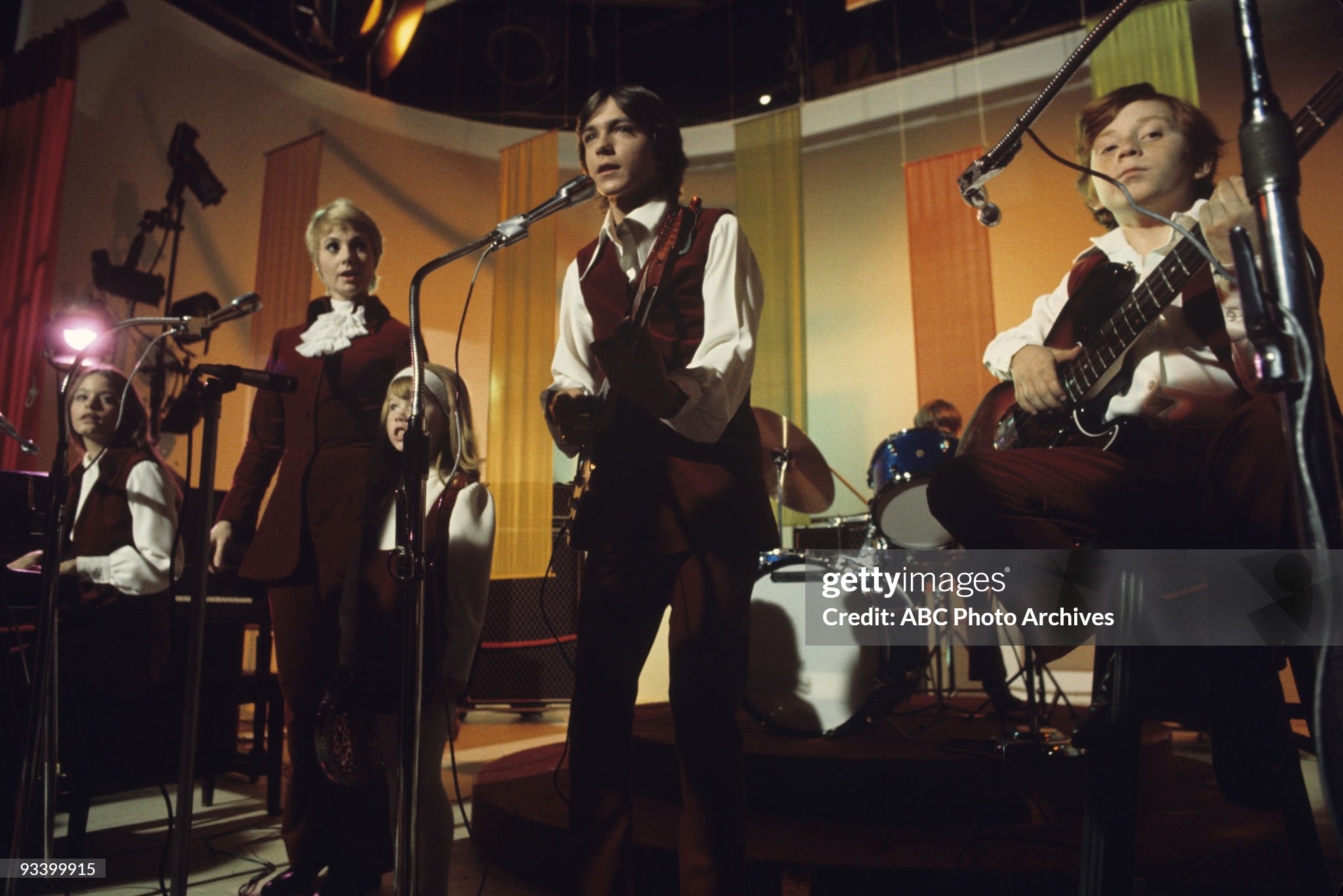
Hello, Hello is one of those forgotten Partridge Family songs that still carries the clean, hopeful glow of 1971, when pop could sound innocent without sounding slight.
Some songs become signatures. Others live quietly in the margins, waiting for time to be kind to them. Hello, Hello by The Partridge Family belongs to that second category. Released during the group’s remarkable early-1970s run, it never stood as one of their defining chart monsters in the way I Think I Love You did at No. 1 on the Billboard Hot 100 in 1970, or Doesn’t Somebody Want to Be Wanted did at No. 6 and I’ll Meet You Halfway at No. 9 in 1971. Hello, Hello did not become a major standalone U.S. hit on that level, and perhaps that is exactly why it feels so pure now. It was not overplayed into exhaustion. It was not flattened by familiarity. It simply remained there, glowing softly in the background, like a radio memory that never fully left.
That matters, because The Partridge Family was more than a television phenomenon. The ABC series gave America its smiling family-band image, but the records were built with real pop craftsmanship. Produced under the watch of Wes Farrell, with lead vocals largely carried by David Cassidy and support from top Los Angeles studio players, the group created some of the most polished sunshine-pop of its era. Even the lesser-celebrated songs had care in them: bright arrangements, melodic clarity, and a sense that pop music could still be warm-hearted, melodic, and sincere. Hello, Hello captures that spirit beautifully.
What makes the song linger is not grand drama, but lightness handled with feeling. The melody moves with an easy lift, and the performance has that unmistakable early-’70s studio sheen: crisp rhythm, tidy harmonies, and a vocal approach that feels open rather than strained. David Cassidy had a gift that is sometimes overlooked because of the teen-idol frenzy surrounding him. He could make a simple lyric sound personal. He did not have to force emotion into a song like Hello, Hello; he let warmth do the work. That is one reason the track still feels so appealing decades later. It trusts melody. It trusts charm. It trusts the listener to understand that tenderness does not need to be loud.
And beneath that bright surface, the song carries the emotional essence of its time. In 1971, pop music still had room for innocence that was not ironic. A greeting in a song title could still suggest anticipation, romance, possibility, even a small rush of hope. Hello, Hello sounds like the first spark of connection before life becomes complicated. It belongs to a world of transistor radios, afternoon television, family living rooms, and records that spun not to impress anyone, but to brighten a day. That may sound modest, but modesty is part of its strength. The song does not reach for philosophical depth; instead, it preserves a mood that many bigger records lost while trying to sound more important.
That is also the hidden story behind why songs like this endure. The most famous hits often carry a public identity. They arrive attached to chart numbers, magazine covers, and endless replay. But a song such as Hello, Hello survives more privately. It stays with listeners who found it between the better-known singles, who heard something sweet and unguarded in it, and who kept that feeling long after the headlines moved on. In that sense, the song’s meaning has deepened with age. What once sounded simply cheerful now also sounds fragile, almost like a snapshot of a gentler pop vocabulary. It reminds us of a period when emotional directness was not considered naive, but natural.
Musically, the track fits neatly into the Partridge Family formula at its best: tuneful, efficient, radio-friendly, but softened by a genuine melodic glow. There is a buoyancy in the arrangement, yet it never becomes cartoonish. The harmonies are clean, the momentum is steady, and the overall texture suggests movement without restlessness. That balance was one of the group’s quiet strengths. Their recordings often understood that joy works best when it is shaped carefully. Hello, Hello is a fine example of that craftsmanship. It is catchy, yes, but also gracefully restrained. It smiles rather than shouts.
There is another reason the song still resonates: it reflects the emotional promise attached to the Partridge Family image itself. The group represented togetherness, melody, and a kind of pop optimism that was especially comforting in a changing era. Of course, adults at the time knew the television fantasy and the recording reality were not the same thing. Still, that did not diminish the feeling the records created. If anything, it made the accomplishment more impressive. Songs like Hello, Hello could take a manufactured pop setting and turn it into something sincerely affecting. That is not a small achievement. It is one of the reasons the group’s catalog deserves a second look beyond the biggest titles.
Listening now, Hello, Hello feels like a song lit by afternoon sun. It carries the emotional color of youth without reducing itself to novelty. It sounds unhurried, unembarrassed, and full of simple melodic faith. Buried behind larger hits, yes—but sometimes that is where the loveliest songs are found. They do not arrive with the force of a cultural event. They return quietly, years later, and remind us that pop history is not built only on chart peaks. It is also built on these smaller treasures: songs that hold a season, a mood, a vanished kind of sweetness. In that way, Hello, Hello still glows with 1971 innocence, and perhaps even more movingly now than it did then.
For listeners willing to step past the obvious titles, this song offers a gentle reward. It is a reminder that the Partridge Family was not only about the songs everyone remembers first. Hidden among the blockbuster singles were recordings with grace, charm, and emotional light. Hello, Hello remains one of them—a modest, lovely piece of pop craftsmanship that still sounds like a smile carried through time.