
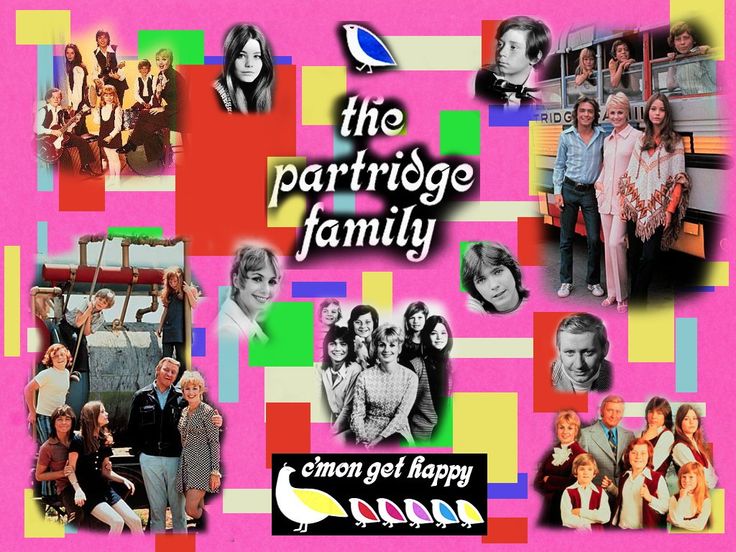
Oh, No, Not My Baby gives The Partridge Family one of those rare songs where cheerful pop and quiet heartbreak live side by side, and that contrast is exactly why it still lingers.
There is something deeply affecting about hearing The Partridge Family sing “Oh, No, Not My Baby”. On the surface, it carries the easy melodic glow that made the group such a familiar presence in the early 1970s. But listen a little closer, and the song reveals a very different emotional current: denial, loyalty, and the stubborn hope that love may still be intact even when the world is saying otherwise. That is the quiet power of this recording. It sounds light, but it is built on ache.
The song itself did not begin with The Partridge Family. “Oh, No, Not My Baby” was written by the legendary songwriting team of Gerry Goffin and Carole King, two names that helped define the emotional language of 1960s and early 1970s popular music. The first major hit version was recorded by Maxine Brown in 1964, and that original reached No. 24 on the Billboard Hot 100. In Brown’s hands, the song had a wounded, soulful strength. When The Partridge Family later took it on, the emotional core remained, but the presentation shifted into polished pop: softer edges, sunnier harmonies, and the unmistakable sound of television-era comfort music.
As a recording by The Partridge Family, the song is generally remembered more as a beloved album-era performance than as one of the group’s major headline chart singles. It did not stand in the same commercial spotlight as “I Think I Love You”, which famously hit No. 1 on the Billboard Hot 100 in 1970, or “Doesn’t Somebody Want to Be Wanted”, which reached No. 6 in 1971. That actually gives “Oh, No, Not My Baby” a special kind of afterlife. It belongs to that treasured class of Partridge Family recordings that devoted listeners return to not because radio forced them to, but because the feeling stayed with them.
And feeling is everything here. The lyric is simple, almost disarmingly so: people are talking, rumors are circling, and the singer refuses to believe that the one she loves could be untrue. It is not a song of certainty. It is a song of emotional resistance. The narrator is trying to hold back reality with faith alone. That is what makes it so human. So many songs about heartbreak come after the truth has landed. “Oh, No, Not My Baby” lives in that fragile moment just before acceptance, when the heart is still saying, “No, not yet. Not this love. Not my love.”
That emotional contradiction makes the Partridge Family version especially interesting. The group’s recordings were often built around buoyant arrangements, bright backing vocals, and the inviting lead presence of David Cassidy, whose voice could sound both youthful and sincerely wounded at the same time. Produced in the polished pop style associated with the group’s early-1970s run, the song turns private hurt into something almost companionable. It does not collapse under sadness. Instead, it keeps moving, as if melody itself might help the heart survive what it cannot yet admit.
There is also a cultural charm in hearing a song like this filtered through The Partridge Family world. The television series projected warmth, family closeness, and a kind of musical optimism that became part of the era’s emotional furniture. Yet beneath that sunny image, many of the best Partridge Family performances carried real tension. That is why this song matters. It reminds us that even in the most polished pop, there can be traces of confusion, longing, and quiet fear. The arrangement may smile, but the lyric is holding on by its fingertips.
Musically, the song is a lovely example of how durable the Goffin-King craft truly was. Their writing understood that heartbreak is often most memorable when it is compressed into plain language. No grand speech is needed. Just one repeated thought, one refusal, one desperate insistence. In “Oh, No, Not My Baby”, that repeated title line becomes both shield and confession. The singer wants to sound certain, yet every repetition tells us how much is at stake. That is masterful songwriting, and The Partridge Family honor it by not overcomplicating it.
For listeners who came to the group through television, the song can also feel like a memory within a memory. It recalls the years when pop records arrived not only through transistor radios and record stores, but through family living rooms and weekly rituals. A song like this did not need to shout to be remembered. It slipped in gently. It stayed because it felt familiar. It understood that heartbreak is not always dramatic. Sometimes it is just a quiet refusal to let go of what once seemed certain.
That may be the deepest reason “Oh, No, Not My Baby” still resonates. It captures a universal emotional instinct: before sorrow becomes fact, hope tries one last time to rewrite the ending. The Partridge Family wrap that feeling in melody, harmony, and warmth, giving the song a tenderness that feels distinct from the earlier hit versions. It may not be their most famous recording, but it is one of those performances that reveals why their music meant so much. Beneath the glossy production and the familiar smiles, there was often a very real understanding of the heart.
And perhaps that is why this song endures so beautifully. It is not simply about being wrong or right about love. It is about that fleeting, fragile interval when love still feels worth defending, even against the evidence. In that space, The Partridge Family found something unexpectedly moving in “Oh, No, Not My Baby”: not just heartbreak, but the last graceful stand of hope.