
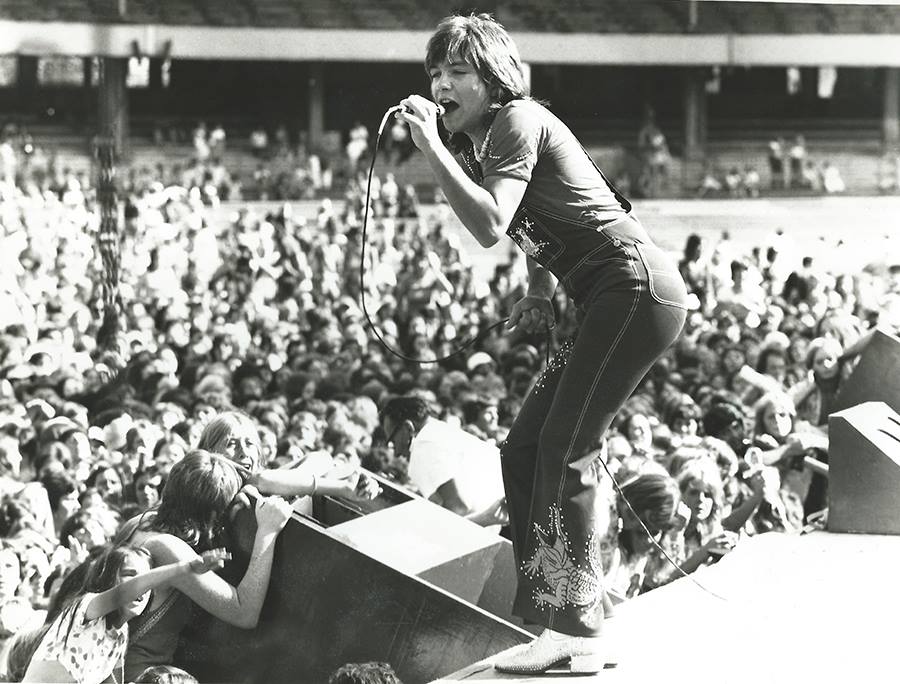
“I’ve Been Lonely Too Long” is the sound of waiting finally speaking out loud—loneliness turning into a simple, courageous request: don’t leave me here by myself anymore.
There’s a particular honesty in “I’ve Been Lonely Too Long”—an honesty that doesn’t depend on clever metaphors or dramatic threats. It’s built from one plain sentence, repeated until it stops sounding like a lyric and starts sounding like a truth someone has been trying not to admit. When David Cassidy recorded “I’ve Been Lonely Too Long” for his 1972 album Rock Me Baby, he wasn’t introducing a brand-new song to the world. He was stepping into a well-loved piece of blue-eyed soul that had already carried its bruised optimism through the late 1960s—and he chose to sing it as if the loneliness had grown older, quieter, and more personal.
The song was originally written by Felix Cavaliere and Eddie Brigati and first released in 1967 by The Young Rascals (often billed as The Rascals). Their version became a substantial hit, reaching the Top 20 on the U.S. Billboard Hot 100—a song that sat comfortably in its time, when radio still made room for bright melodies that hid complicated feelings underneath. The original recording has a buoyant urgency: it’s lonely, yes, but it still believes relief could be just around the corner, as if the next verse might open a door.
Cassidy’s version arrives five years later, in a different emotional climate—both for the times and for him. Rock Me Baby (released in October 1972) was part of his push to be heard beyond the television image, leaning into more adult choices and deeper influences. On that album, Cassidy also covered another Cavaliere/Brigati classic, “How Can I Be Sure,” which became a notable single for him. So “I’ve Been Lonely Too Long” doesn’t feel like a random cover. It feels like a deliberate nod to the music that shaped his teenage ears—songs with real pulse and real hurt, the kind that sound cheerful until you listen closely.
And listening closely is the key to why this song works.
At its heart, “I’ve Been Lonely Too Long” is not a breakup song. It’s a threshold song—the moment before love begins, or the moment before it ends, when the speaker finally admits what pride has been trying to hide. The lyric doesn’t paint loneliness as poetic. It paints it as exhausting. It’s the kind of loneliness where days feel heavier than they should, where you catch yourself staring at the same wall too long, where you realize you’ve been “getting by” so long that “getting by” has started to feel like a life sentence.
Cassidy’s interpretation often reads as softer and more inward than the original. Where the Rascals carry a youthful spark—like a person pacing the room, too restless to sit—Cassidy sounds like someone who has stopped pacing because he’s tired. That shift changes the meaning. The words “I’ve been lonely too long” stop being a dramatic line and become an admission made in a low voice, the way you say something true when you no longer have the energy to pretend.
That’s the quiet power of the song: it treats loneliness as something you can endure… until you can’t. And then, without blaming anyone, it asks for connection. Not perfection. Not a guarantee. Just presence.
Musically, the song’s structure does something very human. It repeats the core phrase the way the mind repeats a worry—over and over—until you’re forced to address it. That repetition isn’t a trick. It’s psychology. When you’ve been lonely too long, you don’t have fifty different ways to say it. You have one truth, and it keeps returning.
In the context of David Cassidy’s career, choosing this song for Rock Me Baby also reads like a small act of self-definition. It’s a cover, yes, but it’s the kind of cover that reveals taste and intention. It says: here is what I value—melody with feeling behind it, rhythm with a heartbeat, a lyric that speaks plainly rather than posing. And because it wasn’t pushed as a major A-side single in the way “How Can I Be Sure” was, “I’ve Been Lonely Too Long” lives where many of the most beloved songs live: as an album track discovered privately, returned to quietly, and remembered with a personal sense of ownership.
The deeper meaning of the song, especially as time passes, is almost painfully simple: loneliness is not only about being alone. It’s about being unheard. It’s about having affection in you with nowhere to place it. It’s about waking up and realizing you’ve been surviving on habit when what you wanted was closeness. And when Cassidy sings it, you can hear that tension—the tug between dignity and need, between “I can handle this” and “I don’t want to handle this anymore.”
That is why “I’ve Been Lonely Too Long” endures across versions and decades. Because it doesn’t depend on fashion. It depends on a feeling that keeps returning in human lives, quietly, stubbornly, until it’s finally spoken. And in David Cassidy’s reading, the song becomes less like a bright plea and more like a late-night truth—tender, understandable, and heavy with the hope that after all this time, someone will finally say: I’m here.