
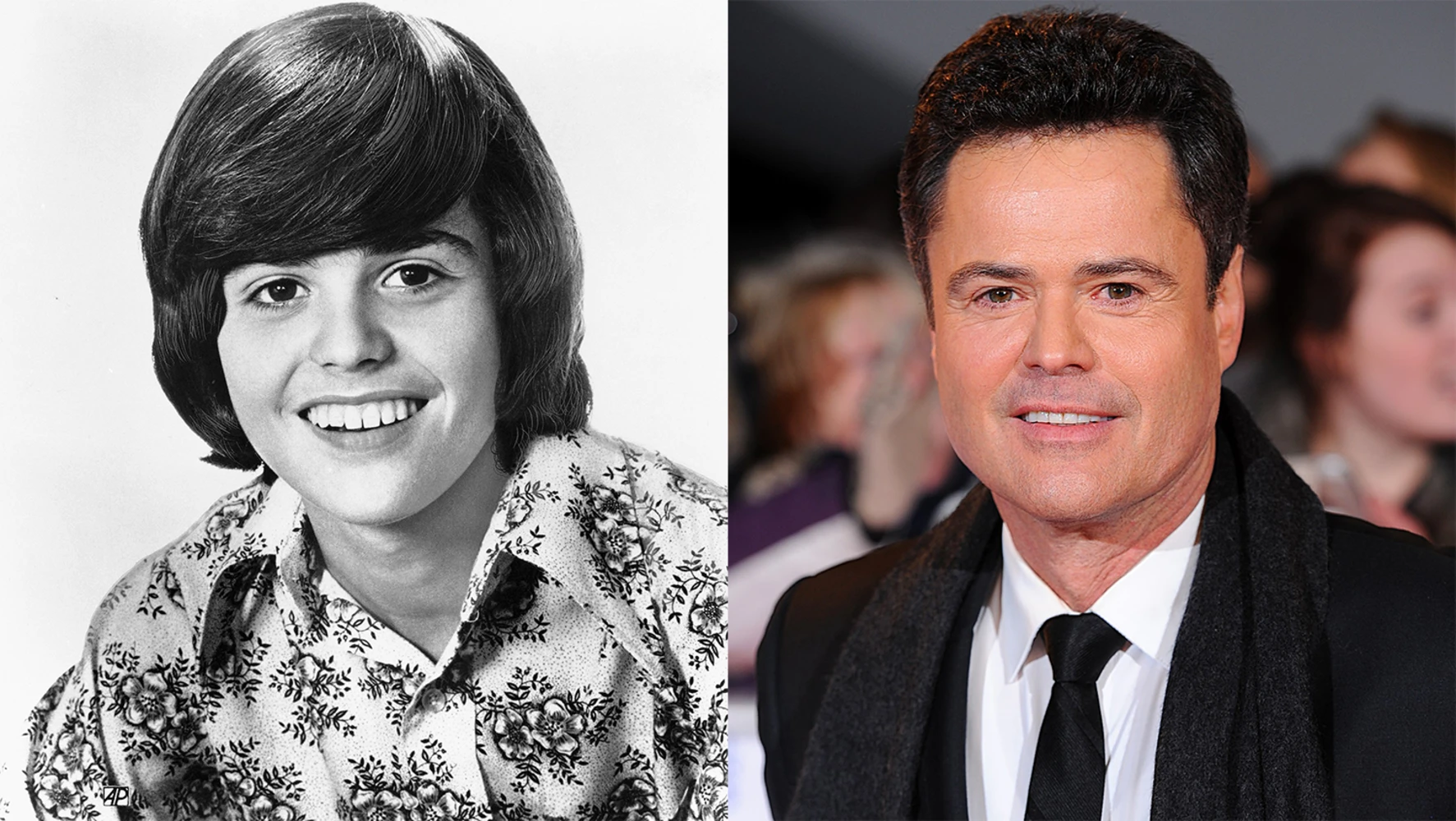
A rite of passage wrapped in pop melody, “I’ll Make a Man Out of You” captures Donny Osmond at the fragile crossroads between boyhood promise and adult expectation—when confidence is learned, not assumed.
Released in 1971, “I’ll Make a Man Out of You” arrived at a crucial moment in Donny Osmond’s career. The world already knew him as the cherubic youngest brother of The Osmonds, adored for innocence and harmony rather than individual assertion. This song—issued as a solo single and later included on his self-titled debut solo album Donny Osmond (1971)—marked a deliberate step forward. It wasn’t rebellious, and it wasn’t defiant. It was something subtler, and perhaps more difficult: an announcement of growth.
On the charts, the song confirmed that the transition was being heard. “I’ll Make a Man Out of You” reached #9 on the Billboard Hot 100 in the United States and climbed even higher abroad, peaking at #3 on the UK Singles Chart. Those positions mattered not just commercially, but symbolically. This was proof that audiences were willing to follow Donny beyond the safety of childhood charm—into a more self-aware, emotionally forward space.
The song was written by Michael Lloyd and Alan Osmond, a pairing that explains much about its balance. Lloyd, a seasoned pop craftsman, understood structure and momentum; Alan Osmond understood Donny—his voice, his image, and the delicate timing required to let him mature without forcing the moment. The result is a song that feels purposeful without sounding strained.
Musically, “I’ll Make a Man Out of You” is bright, rhythmic, and confidently paced. It carries the polished early-1970s pop sound—clean production, forward motion, and a chorus built to lift rather than overwhelm. But beneath that brightness is a lyric that carries real emotional weight. This is not a boast. It is a promise—almost a vow—to grow into responsibility, to meet love with strength rather than uncertainty.
What makes the song particularly compelling is its point of view. The title can sound bold, even brash, when read on the page. But in Donny Osmond’s voice, it comes across as aspirational rather than dominant. He sings not as someone declaring authority, but as someone pledging effort. The “man” being made here is not defined by conquest or control, but by commitment—to love, to steadiness, to becoming worthy of trust.
Vocally, Donny is at an interesting stage. His voice still carries the smooth clarity of youth, but there is a new firmness in his phrasing. He sounds focused, grounded, less tentative than before. That tonal shift does much of the storytelling work. You can hear the transition happening in real time: the careful shaping of an adult identity without abandoning sincerity.
The meaning of “I’ll Make a Man Out of You” rests in that transition. It reflects a moment many listeners recognize—not necessarily tied to age, but to awareness. The moment when affection turns into responsibility. When attraction begins to ask something of you. The song doesn’t pretend that maturity arrives fully formed. It presents it as a process, a decision made daily, often quietly.
Placed within the context of Donny Osmond (1971), the song stands out as a declaration of intent. The album itself performed strongly, reinforcing his solo credibility, but “I’ll Make a Man Out of You” carries the emotional center. It says: I am changing, and I am doing it on purpose. That clarity helped Donny navigate a path that many young stars never manage—growing up in public without losing trust.
Over time, the song has taken on an added layer of poignancy. Heard decades later, it no longer sounds like ambition alone—it sounds like hope. A young voice believing that character can be chosen, that maturity is something you rise into rather than wait for. That belief, simple as it may seem, is timeless.
In the broader arc of Donny Osmond’s career, “I’ll Make a Man Out of You” represents one of his first true moments of self-definition. Not a break from the past, but a step forward from it. And that step—measured, sincere, and openly vulnerable—is why the song still resonates.
Because becoming yourself is rarely about sudden change.
More often, it begins with a promise—
spoken softly, but meant to be kept.