
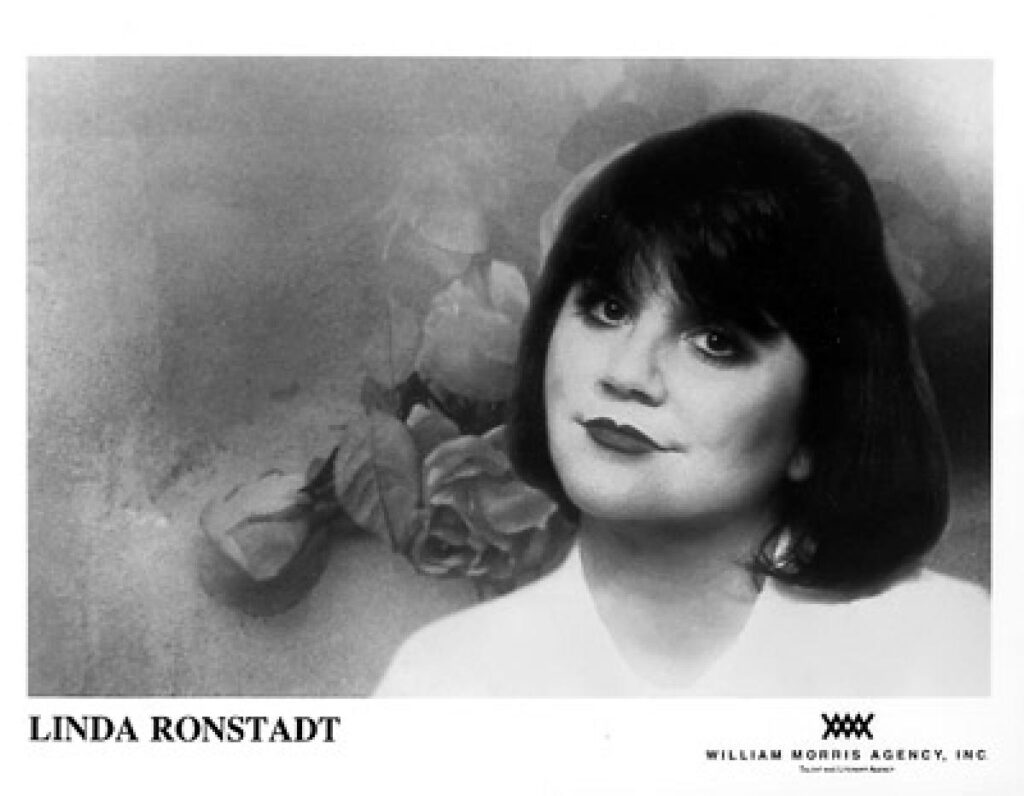
“(I Love You) For Sentimental Reasons” is a love confession spoken softly—less a declaration of passion than a tender admission that memory can be a lifelong home
There’s a special kind of romance that doesn’t burn hot—it glows. Linda Ronstadt understood that glow better than almost anyone, and her reading of “(I Love You) For Sentimental Reasons” feels like the moment you stop trying to be impressive and simply tell the truth. She recorded the song for her 1986 album For Sentimental Reasons, released on September 22, 1986 by Asylum Records, produced by Peter Asher, and shaped in the velvet shadow of Nelson Riddle’s orchestral world.
For listeners who care about the “first impact” in black-and-white numbers, the most reliable chart marker is the album’s performance at release: For Sentimental Reasons peaked at No. 46 on the Billboard 200 and No. 3 on Billboard’s Top Jazz Albums chart. Within that album sequence, “(I Love You) For Sentimental Reasons” appears as track 8—not right up front as a commercial flag, but placed where an album begins to feel like late evening: quieter, more intimate, more honest.
The song itself carries a long, dignified history. “(I Love You) For Sentimental Reasons” was published in 1945, associated with writers Ivory “Deek” Watson and William “Pat” Best, and it became a true standard in the postwar American songbook—especially after The King Cole Trio took it to No. 1 on Billboard’s Best Seller chart in the 1940s. That pedigree matters, because Ronstadt didn’t approach this as nostalgia for nostalgia’s sake. She approached it as a living piece of emotional language—something that still works because the human heart still works the same way.
What makes Ronstadt’s version so affecting is how she reframes the title phrase. In many pop songs, “I love you” is a spark—instant heat, immediate urgency. Here, “for sentimental reasons” suggests something older and deeper: love that has survived daily life, love that remembers. It’s not saying, “I love you because you thrill me.” It’s saying, “I love you because you’re woven into who I am.” That kind of love doesn’t shout. It sits beside you.
This performance also lives inside a larger story that gives it extra weight. For Sentimental Reasons was the final installment of Ronstadt’s celebrated trilogy of big-band/traditional pop albums with Nelson Riddle—following What’s New (1983) and Lush Life (1984). During the making of this album, Riddle died, and the record was completed with some tracks conducted by Terry Woodson, which casts a faint, poignant shadow across the entire project. You can feel that shadow not as gloom, but as reverence: the sense of artists treating each phrase carefully, as if time itself were listening.
Ronstadt’s voice here is the opposite of flashy. She doesn’t oversell the sentiment, and that restraint is precisely why the sentiment lands. The orchestration doesn’t compete with her; it carries her, like a slow tide. Instead of drama, you get poise—and poise, in a love song, can be quietly devastating. It says: I’ve known longing. I’ve known distance. I’ve known the way affection changes shape over years. And still—still—I choose this.
There was also a small public-facing “chapter” for the song in the marketplace: it was issued as a 7-inch single on Asylum (paired with “Straighten Up and Fly Right”) and is documented in Ronstadt’s singles discography. But its deeper life has never depended on chart fireworks. Its real power is the way it makes a listener remember that love is not always loud—sometimes it is simply faithful, tied to the quiet evidence of shared days.
In the end, Linda Ronstadt doesn’t turn “(I Love You) For Sentimental Reasons” into a showpiece. She turns it into a room you can step into. A room where the past isn’t a burden, but a tenderness. Where the heart doesn’t need to prove itself—only to speak, softly, and mean every word.