
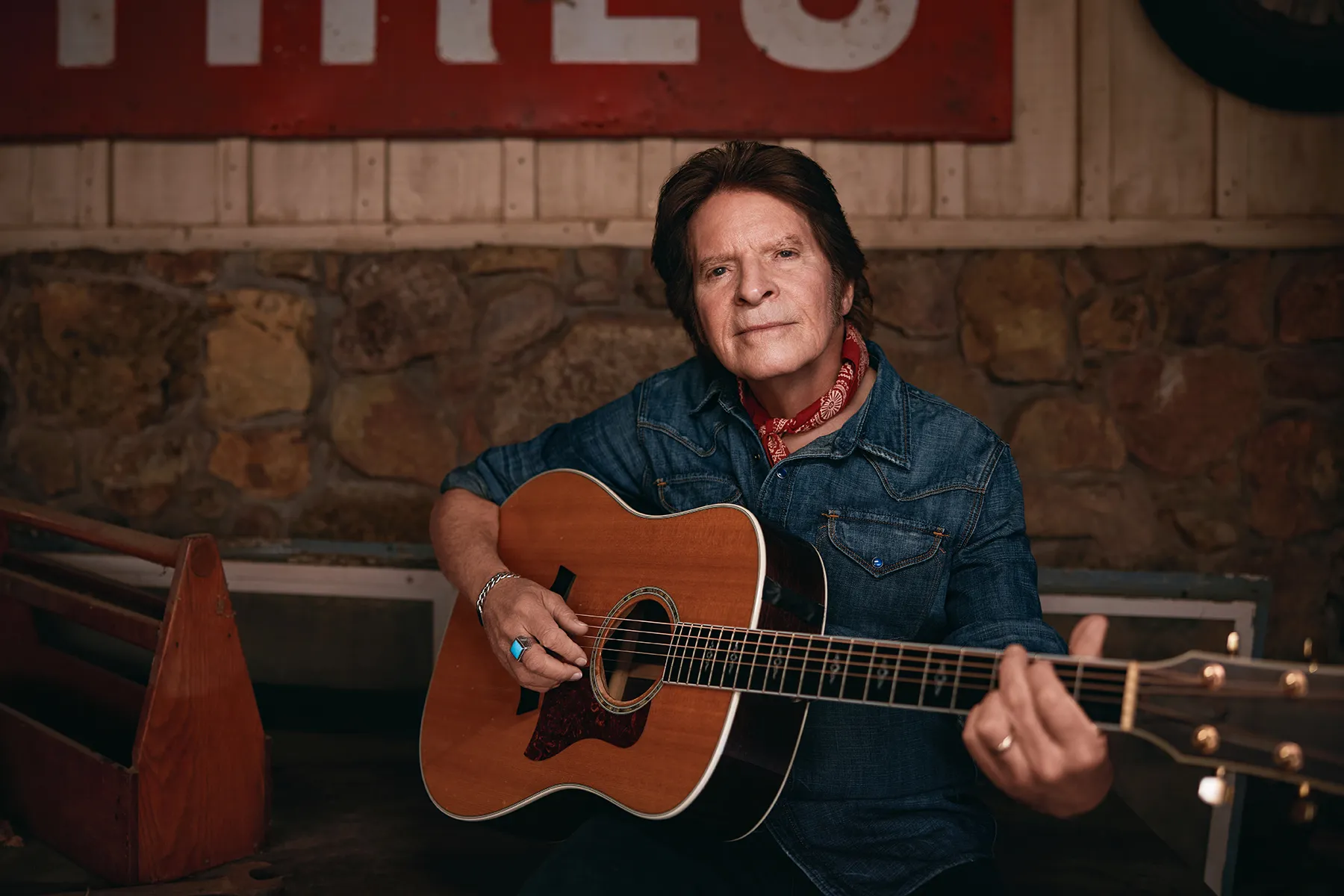
“Run Through the Jungle” is Fogerty’s eerie warning that fear can become a habitat—when society feels armed to the teeth, every shadow starts to look alive.
Released in April 1970 as a double A-side single with “Up Around the Bend,” John Fogerty’s “Run Through the Jungle” arrived at the exact moment American rock was learning to sound like anxiety. The single climbed to No. 4 on the Billboard Hot 100, and it also reached No. 3 on the UK Singles Chart—a reminder that this dark little fever-dream traveled far beyond American headlines. Soon after, it took its place on Creedence Clearwater Revival’s landmark album Cosmo’s Factory, released July 8, 1970—an album recorded at Wally Heider Studios (San Francisco) that went on to spend nine consecutive weeks at No. 1 on the Billboard 200.
It’s easy to understand why so many listeners misheard the song’s target. In 1970, the word “jungle” carried a grim cultural charge, and CCR had already written some of the era’s sharpest Vietnam-era commentary. Yet Fogerty has been explicit about the real subject. In a 2016 Rolling Stone interview, he said: “The thing I wanted to talk about was gun control and the proliferation of guns.” That single clarification changes the air inside the song. What sounds like combat imagery becomes something arguably more chilling: a portrait of everyday America turning dangerous, a place where weapons multiply and trust evaporates.
Musically, “Run Through the Jungle” is crafted like a short film. It doesn’t just play; it stalks. The track opens and closes with unsettling “jungle” atmospherics—effects that bassist Stu Cook described as being made from “lots of backwards recorded guitar and piano.” That’s not decoration; it’s world-building. Fogerty isn’t trying to impress you with studio cleverness—he’s trying to make you feel watched.
Then there’s Fogerty’s own performance, which is a masterclass in tension. He sings as if he’s warning you from just ahead on the trail, glancing back over his shoulder. The guitar tone is swampy but sharpened, the rhythm steady like footsteps you can’t stop hearing, and the **harmonica—played by Fogerty—**cuts through like a nervous breath. The song never needs to “explode,” because its power is claustrophobic. The groove keeps moving, but it moves as if the path is narrowing.
What gives the lyric its lasting bite is how it frames fear as something contagious. The narrator doesn’t sound heroic; he sounds alert, compelled, almost resigned—someone who knows that once a society normalizes violence, everyone starts living as if they’re trespassing on their own street. In that sense, “Run Through the Jungle” becomes a moral parable dressed as a rocker: when too many people carry too much power in their hands, the world begins to resemble the very wilderness we claim we’ve civilized.
Placed on Cosmo’s Factory, the song also gains extra meaning from its neighbors. This album could pivot from playfulness to dread in a heartbeat; it’s one reason it still feels so alive. “Run Through the Jungle” is the record’s shadowed corridor—music that doesn’t reassure, but tells the truth as Fogerty saw it: progress isn’t only highways and television glow; sometimes it’s just new ways to be afraid.
And maybe that’s why the song refuses to age. Its warning isn’t trapped in 1970. The phrase “proliferation of guns” still lands with weight, and Fogerty’s decision to speak directly—without poetic fog, without comfortable ambiguity—keeps the track unsettlingly current.
So when you hear “Run Through the Jungle” today, listen past the myths. It isn’t merely a Vietnam soundtrack staple; it’s something colder and closer to home: John Fogerty turning rock ’n’ roll into a flashlight beam, sweeping across the trees, asking what we’ve allowed ourselves to become—and why we keep calling it normal.