
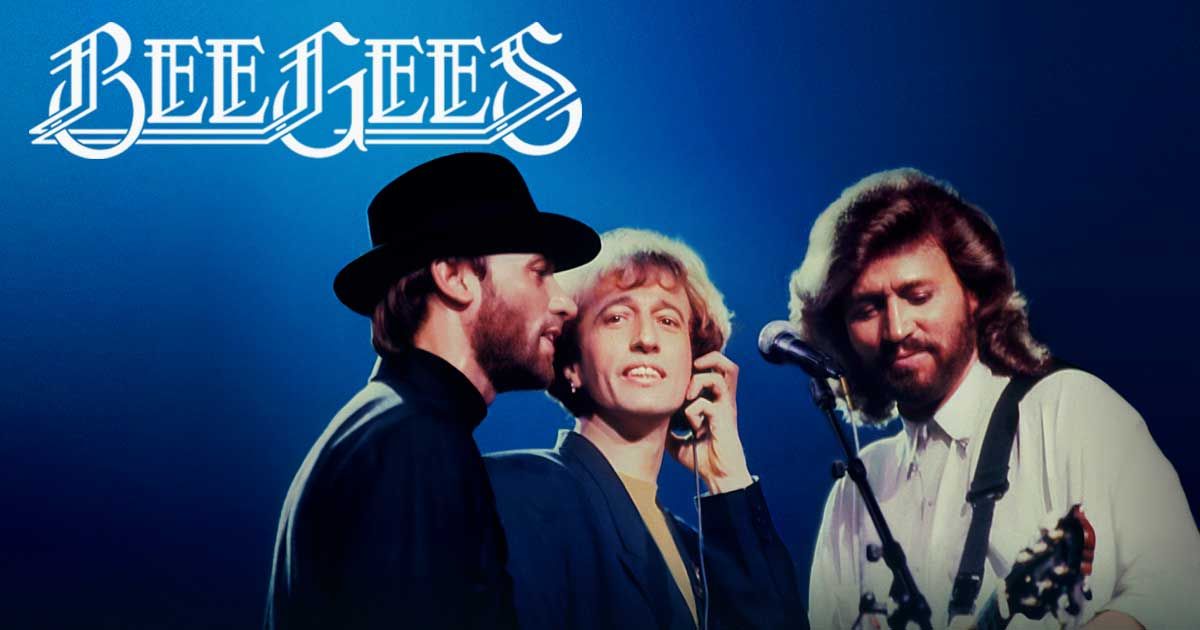
“You Should Be Dancing” is pure permission—three brothers turning heartache into motion, until the body remembers what hope feels like.
Some records don’t just play; they switch the lights on inside you. Bee Gees’ “You Should Be Dancing” is one of those rare singles—built from sweat, falsetto, and a fearless sense of forward motion—where the groove feels less like entertainment and more like instruction. It was released as the lead single from Children of the World (album released 13 September 1976) and it didn’t merely signal a stylistic shift; it announced a new identity.
Let the chart story sit right near the top, because it captures how quickly the song took the room. In the United States, “You Should Be Dancing” reached No. 1 on the Billboard Hot 100 for one week, landing at the top on the chart dated September 4, 1976—after debuting earlier that summer. In the UK, it peaked at No. 5 on the Official Singles Chart, first entering the chart on 31 July 1976 and staying there for 10 weeks. The track wasn’t just a pop success either; it ruled the places where pop becomes physical, going No. 1 on Billboard’s Hot Dance Club Play chart and marking a decisive moment where the Bee Gees’ rhythm-first direction became undeniable.
The “behind the song” details are the kind that make music feel human again. “You Should Be Dancing” was written by Barry Gibb, Robin Gibb, and Maurice Gibb, and produced by the Bee Gees with Albhy Galuten and Karl Richardson—the production partnership that would soon help define their late-’70s dominance. It was recorded across early 1976, at Criteria Studios in Miami and Le Studio in Quebec. And in one of those delicious “only in music” footnotes, Stephen Stills—in the same building working on his own project—added percussion during the sessions.
But facts aside, what you really hear is a band stepping onto a new floor and realizing—almost instantly—that it fits.
By 1976, the Bee Gees had already lived several careers: the early British pop craftsmen, the heartbreak sophisticates of “How Can You Mend a Broken Heart,” then the sleek American reinvention of Main Course. “You Should Be Dancing” is the moment that reinvention stops being a strategy and becomes a natural state. It is, as the song’s own history quietly admits, the first Hot 100 chart-topper where Barry Gibb’s falsetto takes the lead as a full, confident instrument—no longer a color in the arrangement, but the lighthouse itself.
And that falsetto matters because it changes the emotional temperature of the entire record. Falsetto can sound like disguise when it’s used as a trick. Here, it sounds like liberation—like someone finally singing from the part of the chest that had been holding its breath for years. It’s not fragile; it’s bright. It turns desire into momentum. It makes the chorus feel like a smile you can’t quite hide.
Lyrically, the song doesn’t preach philosophy; it speaks in the direct language of nightlife: get up, move, don’t waste the moment. Yet beneath that surface is a deeper message that’s almost tender in its simplicity: you don’t heal by standing still. The title phrase—“You Should Be Dancing”—is a playful command, yes, but it also carries the gentlest kind of rescue. It suggests that even if your day was heavy, even if your thoughts are loud, there is still a place where the burden can loosen: the beat, the crowd, the movement of your own body returning to you.
That’s why the song feels so tied to memory. Not just disco memory—mirror balls, city heat, wide collars—but personal memory: the first time you heard it and your foot moved before you gave it permission. The sound is athletic and clean: a tight, spring-loaded rhythm section, guitars that sparkle without clutter, and a vocal stack that feels like neon layered on neon. It’s polished, but not cold. It sweats.
It also has a fascinating cultural “second life”: the song appears in Saturday Night Fever the film (among several Bee Gees performances heard in the movie), which sealed its association with that era’s most iconic vision of the dance floor—even though listeners sometimes confuse what’s in the film with what appears on the blockbuster soundtrack album. The point is the same either way: “You Should Be Dancing” became part of the mythology of night-as-freedom, the idea that the evening could offer a second self—lighter, braver, more willing to risk joy.
In the Bee Gees’ story, it’s also a hinge of destiny. This was their third Billboard Hot 100 No. 1, but it didn’t feel like a repeat of earlier triumphs; it felt like the opening of a new chapter, one written in rhythm and breath and bright insistence.
Play it now and you can still hear what made it unstoppable in 1976: not just the hook, not just the pulse, but the emotional generosity underneath. It doesn’t ask whether you’re ready. It simply holds the door open and says—warmly, firmly—come on. The night is short. The heart gets tired. But for the length of this song, there is still time to be lifted by something simple and true:
You should be dancing.