
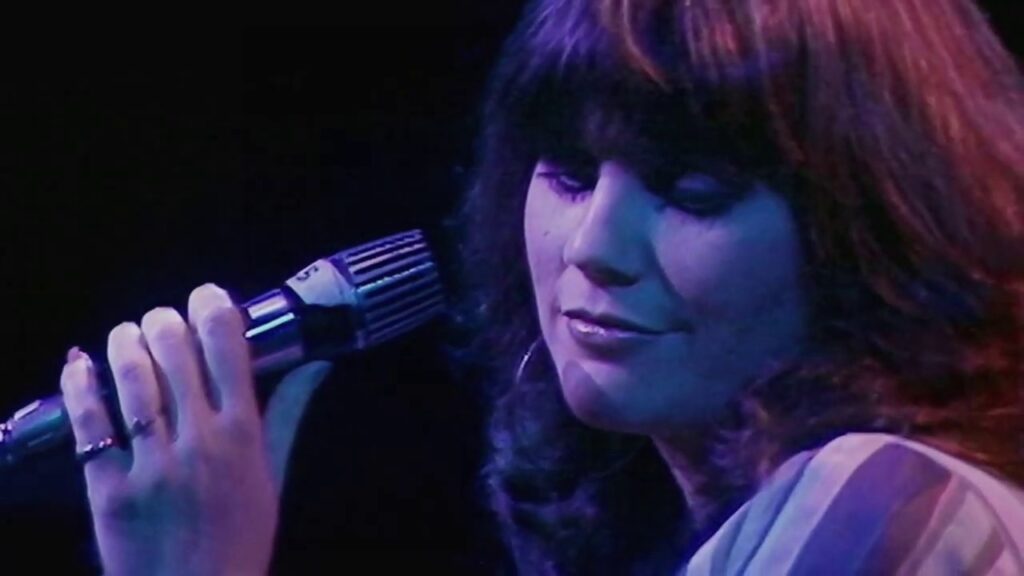
“Y Ándale (Get on with It)” is a hard-smiling toast to endurance – the kind that keeps its chin up, even when the heart is already bruised.
To understand Linda Ronstadt’s “Y Ándale (Get on with It)”, you really have to start with where it lives: not in the world of Top 40 singles, but inside an album that felt like a homecoming carried on a full mariachi breath. The song appears as track 6 on Canciones de mi Padre, released November 24, 1987, produced by Peter Asher and the legendary Mexican composer/arranger Rubén Fuentes. The album’s chart story is unusually clear and unusually moving: it debuted at No. 103 on the Billboard 200 (debut chart date 12/12/87) and eventually peaked at No. 42—a remarkable climb for a Spanish-language mariachi record in the American mainstream.
And the accolades weren’t symbolic—they were tangible. The Recording Academy notes that the album went double platinum, and at the 31st GRAMMY Awards it won Best Mexican-American Performance. Decades later, the album’s cultural weight was formally recognized again when the Library of Congress selected Canciones de mi Padre for preservation in the National Recording Registry (2022).
Inside that larger story, “Y Ándale” is a quick, fiery shot of personality—two and a half minutes that can feel like an entire life philosophy. The song is credited to Minerva Elizondo, and it’s even listed with a plainspoken translation—“And Go on (Get on with It)”—as if the title itself is a gentle shove forward. Yet what makes it unforgettable is the way it sounds like laughter that has learned to live alongside sorrow. “Get on with it” can be an encouragement, a scolding, or a dare. In Ronstadt’s mouth, it becomes all three at once.
Part of the magic is how personal the recording is—not just culturally, but literally familial. A contemporary Cash Box review described “Y Andale” as a traditional Mexican drinking song, and noted that on this “brilliant” track Ronstadt is joined by her niece Melinda Marie Ronstadt. That detail changes the way you hear it. Suddenly, the performance isn’t just a star “doing” a genre; it’s a family voice stepping into the frame, the kind of shared singing that happens in kitchens and back rooms long before it ever reaches a studio microphone. The album’s own personnel listing also credits Melinda Marie Ronstadt on harmony vocals (track 6)—a small line on paper, a huge warmth in the sound.
The broader session philosophy was the same: do it right, honor the tradition, and let the music carry its own dignity. Ronstadt worked closely with Rubén Fuentes, investing real time into language and phrasing—because in this repertoire, pronunciation isn’t a technicality, it’s respect made audible. She was also backed by top-tier mariachi ensembles; reporting around the album highlights groups such as Mariachi Vargas de Tecalitlán and Mariachi Los Camperos as part of the sonic foundation.
So what is “Y Ándale (Get on with It)” about—emotionally, spiritually, as a piece of lived human weather?
Even if you don’t catch every Spanish phrase on first listen, the attitude is unmistakable: it’s a song that refuses to collapse. A drinking song, yes—but not the glossy kind where the bottle solves everything. It’s more like the moment when grief and pride sit at the same table. The narrator’s voice feels half-defiant, half-resigned, warning and pleading in the same breath: life will hurt, people will talk, love will complicate you—so move your feet anyway. Y ándale. Get on with it. Don’t let the pain have the last word.
That’s why Ronstadt’s performance matters. Her gift has always been emotional precision—she can sound strong without sounding cold, vulnerable without sounding small. On “Y Ándale,” she leans into the rhythm like someone who knows that celebration can be a form of survival. The mariachi pulse—bright brass, quicksilver strings—doesn’t “cover up” sorrow; it lifts it, carries it, makes it singable. The song smiles, but it’s the kind of smile that has seen enough to be earned.
And if you place “Y Ándale” back inside Canciones de mi Padre, it becomes one of the album’s essential colors. Not every track is a lament; not every tradition wears black. Some traditions wear red and gold and move forward at a dancer’s pace, even when the story underneath is complicated. The album’s mainstream success—its Billboard 200 climb to No. 42, its double-platinum standing, its Grammy win, its National Recording Registry honor—didn’t come from novelty. It came from the unmistakable feeling that this was real: an artist stepping away from the easy applause of expectation and toward something deeper, older, and truer.
In the end, Linda Ronstadt doesn’t sing “Y Ándale (Get on with It)” as a punchline. She sings it like a proverb. Like the kind of line you repeat to yourself on a difficult night—half to steady your hands, half to steady your heart—until the words stop being advice and start being a way to breathe.