
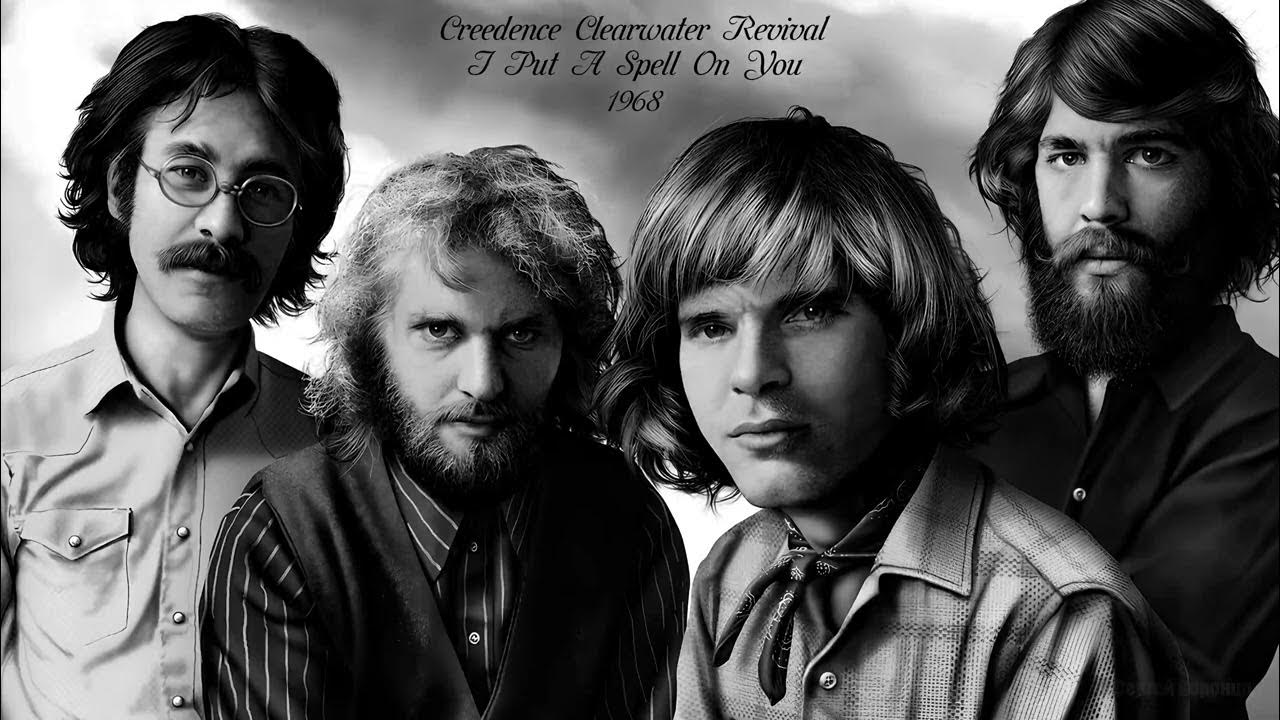
On “Tombstone Shadow,” Creedence Clearwater Revival turned dread into motion—one of those lean, hard-driving songs where trouble never quite arrives in full view, yet you can feel it following close behind every step.
When Creedence Clearwater Revival recorded “Tombstone Shadow,” they were working at a ferocious pace and near the absolute peak of their powers. The song appeared on Green River, the band’s third studio album, released on August 7, 1969, by Fantasy Records. Written by John Fogerty, the track sits on the album as a crucial part of a remarkable run that also included “Green River,” “Commotion,” “Bad Moon Rising,” and “Lodi.” The album itself became CCR’s first No. 1 album on the Billboard chart, which matters because “Tombstone Shadow” belongs not to some minor side chapter, but to the very heart of the band’s greatest period. The version commonly heard today as “Tombstone Shadow (Remastered 1985)” is not a separate hit or alternate 1985 recording; it is the 1969 studio performance, later reissued in remastered form on digital platforms and catalog releases.
That distinction is worth making at the start, because “Tombstone Shadow” did not live its life as a major original 1969 single in the way “Bad Moon Rising” or “Green River” did. Its reputation has always been more album-centered, the reputation of a song that deepens the dark mood of Green River rather than stepping out as the obvious commercial centerpiece. Even so, the song lingered strongly enough that “Tombstone Shadow” b/w “Commotion” was later issued as a U.S. single in 1980, a sign that the track had long been recognized as one of the album’s tougher and more memorable cuts.
What makes the song so gripping is the atmosphere John Fogerty creates almost immediately. “Tombstone Shadow” is one of those Creedence records where menace seems to move faster than explanation. The title alone sounds like a warning, something half-superstitious and half-inescapable. The lyric does not unfold like a neat narrative ballad. It comes in flashes—bad omens, strange signs, the sense that danger is circling without ever fully showing its face. That was one of Fogerty’s great gifts in 1969. He could write songs that felt rooted in old American forms—blues, rockabilly, swamp rock, country-boogie—while letting anxiety seep through them in ways that felt unmistakably modern. On Green River, that tension was everywhere. “Bad Moon Rising” turned apocalypse into a hit single with a smiling beat; “Tombstone Shadow” stays rawer, bluesier, and less disguised.
There is a story behind the song that makes its unease even more vivid. A later post attributed to John Fogerty said “Tombstone Shadow” was inspired by a visit to a fortune teller in San Bernardino, including the eerie lines about avoiding flying machines and the strange warning about “13 months of bad luck.” Whether heard literally or as a piece of personal folklore transformed into song, that backstory fits the track perfectly. It explains why the lyric sounds less like social commentary and more like private dread sharpened into rhythm. This is not abstract darkness. It feels like somebody has been told something they cannot quite laugh off.
Musically, the performance says just as much as the lyric. Creedence Clearwater Revival never needed excess to sound powerful. One of the defining truths about Green River is how disciplined the band was compared with many of their late-1960s peers. While others stretched into long, wandering jams, CCR preferred songs that got to the point quickly and hit hard. On “Tombstone Shadow,” that discipline is everything. The groove pushes forward with that familiar Creedence blend of rock ’n’ roll drive, blues grit, and swampy tension. John Fogerty’s vocal is not theatrical in the psychedelic sense; it is urgent, bitten off, almost hunted. The band sounds locked in, four musicians driving the same dark thought forward until it becomes impossible to escape.
That is why the song still holds up so strongly. “Tombstone Shadow” captures a feeling older listeners know well and younger listeners still recognize at once: the sense that bad news is never far away, that every good turn in life carries a flicker of dread behind it. It is a song about unease, but not paralysis. Creedence never wallows in the fear. They move through it. They turn it into momentum. And perhaps that is the secret of the record’s lasting power. The shadow is there, yes—but so is the beat, so is the stubborn force of the band, so is the feeling that naming the darkness is itself a kind of strength.
So the real story of “Tombstone Shadow (Remastered 1985)” is not about a reinvention in 1985 at all. It is about how a 1969 album track from Green River kept enough bite, mystery, and motion to survive into later reissues without losing any of its original chill. In the world of Creedence Clearwater Revival, that was often enough to make a song immortal: a few minutes, a hard groove, a shadow at your back, and John Fogerty singing as though he already hears trouble coming down the road.