
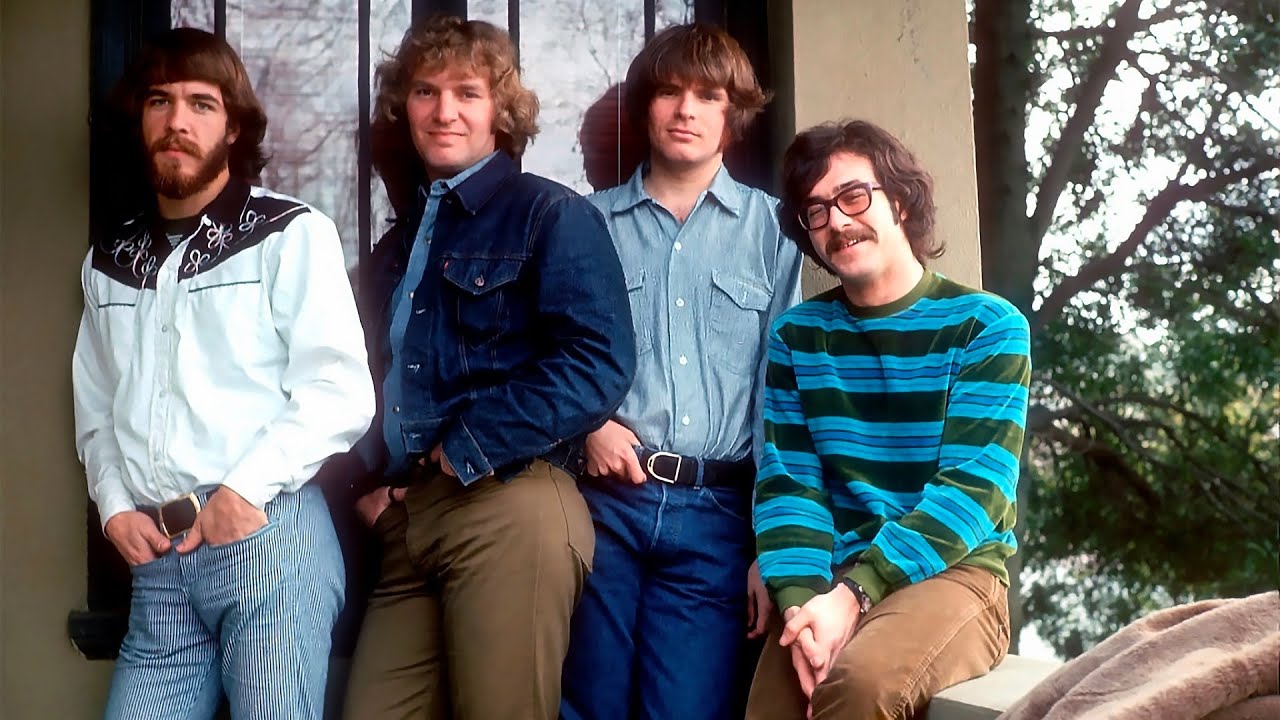
On “Wrote a Song for Everyone,” Creedence Clearwater Revival found a quieter kind of greatness—less a shout from the road than a weary, compassionate look at the broken places where ordinary lives keep trying to endure.
When Creedence Clearwater Revival recorded “Wrote a Song for Everyone,” they were already moving through one of the most astonishing creative bursts in American rock. The song appeared on Willy and the Poor Boys, the band’s fourth studio album, released on October 29, 1969, by Fantasy Records. That album went on to reach No. 3 on the Billboard 200, and today it is widely regarded as one of the central statements of Creedence’s great 1969 run. The version now commonly listed as “Wrote a Song for Everyone (Remastered 1985)” is not a different performance from a later era; it is the original 1969 recording, later remastered for reissue and digital release.
That distinction matters, because the heart of the song belongs completely to that late-1960s Creedence moment. “Wrote a Song for Everyone” was not one of the album’s headline singles in the way “Fortunate Son” or “Down on the Corner” were. It lived instead as one of the album’s deep emotional anchors, the kind of track that does not necessarily seize the radio first, but stays with listeners longer because it reveals another side of John Fogerty’s writing. On an album full of muscular, concise songs, this one feels more reflective, more burdened, and somehow more human in its sadness.
The lyric itself gives the song its power. Fogerty writes not from a place of triumph, but from exhaustion and uneasy recognition. The opening images—“county welfare line,” “going down to war in June”—immediately place the song among people under pressure, people worn thin by poverty, duty, and the blunt machinery of American life. And then comes the aching center: “I wrote a song for everyone / I couldn’t even talk to you.” It is one of the most revealing lines in the Creedence catalog. The singer can address the world, but not the one person who matters most. That emotional contradiction is what makes the song linger. It is social and intimate at once, public and painfully private.
This is where Creedence Clearwater Revival showed a depth that is sometimes overlooked when people remember only the toughness and speed of their biggest hits. The band could drive hard, and often did, but “Wrote a Song for Everyone” proves that their strength also included restraint. The arrangement does not rush. It moves with a slow, heavy grace, giving Fogerty room to sound worn rather than merely forceful. In that setting, the song becomes something larger than complaint. It feels like a portrait of a country full of strain, where even empathy has limits and communication breaks down at the very moment it is needed most. That is part of why the song still sounds so modern.
There is also something especially moving about where the song sits on Willy and the Poor Boys. This was an album that carried some of Creedence’s most enduring and outward-facing statements: “Fortunate Son” with its class anger, “Down on the Corner” with its street-level joy, “The Midnight Special” with its folk-blues heritage. In that company, “Wrote a Song for Everyone” feels like the inward glance, the moment when the record stops to consider the human cost beneath the noise of the era. It does not protest as directly as “Fortunate Son,” but it may hurt more quietly because it catches people after the slogans, after the speeches, after the energy has drained away.
What makes the song timeless is that it never confines itself to one historical crisis. Yes, it unmistakably carries the pressure of the late 1960s—war, hardship, social fracture—but the feeling inside it is broader than that. It is about the loneliness of speaking outward while failing inward. It is about wanting to reach everyone and discovering that one necessary conversation still cannot happen. That is an old sorrow, and John Fogerty captured it with unusual plainness. He did not wrap the idea in mystery. He just let it stand there, exposed.
So “Wrote a Song for Everyone (Remastered 1985)” endures not because 1985 transformed it, but because the original song was already so strong that it needed only clearer sound to keep traveling forward. It remains one of Creedence Clearwater Revival’s most compassionate performances: less about swagger than weariness, less about rebellion than recognition, less about the myth of America than the people trying to survive inside it. And that may be why the song stays with listeners so deeply. It does not ask to be admired from a distance. It asks to be felt. Even now, it sounds like a man looking out at the whole troubled world, then turning back toward one unfinished human ache he still cannot mend.