
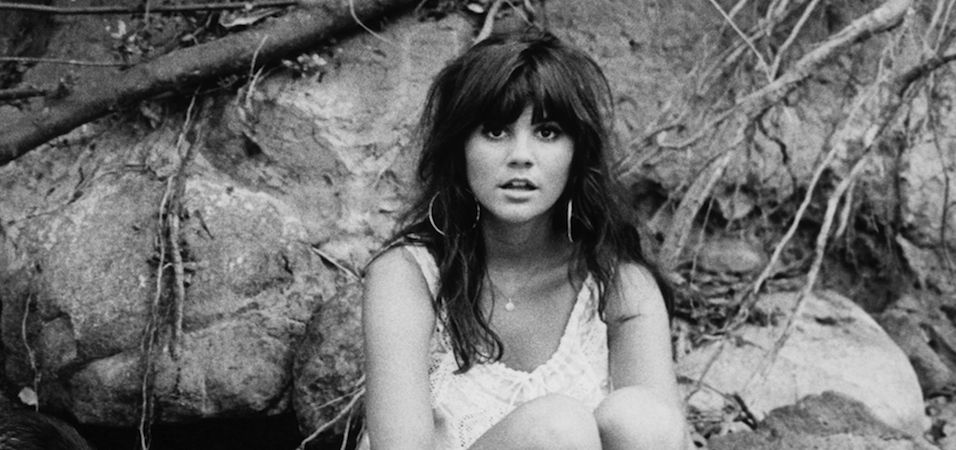
“Ooh Baby Baby”: a soft confession where pride steps aside and love asks—quietly—to be forgiven.
In the long, glittering corridor of late-’70s radio, Linda Ronstadt didn’t need to shout to be heard. With “Ooh Baby Baby” (often heard today as the 1999 Remaster), she simply opened the door—and let a bruised heart walk in. Released as a single from her roller-skate-sleek, era-defining album Living in the U.S.A. (released September 19, 1978), the song arrived on the Billboard Hot 100 with a debut at No. 59 on November 11, 1978, then climbed with steady, human inevitability to a peak of No. 7. On the softer side of the dial, it reached even higher—peaking at No. 2 on Billboard’s Adult Contemporary chart.
Those numbers matter—not as trophies, but as proof that a tender, remorseful ballad could still command attention in a noisy time. The late ’70s had its mirror balls and neon pulse, yet here was Ronstadt, returning to a classic wound: the moment you realize you’ve hurt someone you can’t bear to lose.
The song itself is older than her recording—written by Smokey Robinson and Pete Moore, and first made famous in 1965 by The Miracles as a confession steeped in shame and longing. The premise is disarmingly simple: the singer has done wrong, and love is suddenly not a guarantee but a fragile gift that must be asked for again. What Ronstadt does—what she has always done at her best—is translate that emotional truth into a voice that feels both immediate and inevitable, as if the lyric has been waiting years for her particular clarity.
Her version is also a masterclass in arrangement-as-storytelling. It famously begins with a saxophone statement—David Sanborn stepping forward like the first tear you try to hide but can’t. And behind the scenes is the steady hand of producer Peter Asher, shaping the track so it doesn’t wallow; it moves, slowly, like someone walking back to a house where the lights are still on, not knowing if the door will open.
What makes “Ooh Baby Baby” endure is that it doesn’t treat apology as performance. Some singers beg; Ronstadt admits. There’s a grown-up restraint in her phrasing—no melodrama, no forced tremble—just the quiet gravity of consequences. The tenderness isn’t decorative; it’s moral. In her hands, the song becomes less about romance in the abstract and more about the delicate labor of repair: saying the hard thing plainly, and then waiting.
And then there’s the 1999 Remaster—a modern window into a vintage room. Many listeners meet this recording through reissued editions where the album tracks are explicitly labeled as remastered, including listings that tag songs from Living in the U.S.A. as “1999 Remaster.” A remaster can’t change what was sung in 1978, of course, but it can bring you closer to the breath between the lines: the softened edges of the band, the sheen on the sax, the way Ronstadt’s voice sits in the mix like a hand resting gently on a shoulder. It’s not about making the past louder—it’s about letting the past feel nearer.
It’s also worth remembering what kind of cultural moment this came from. Living in the U.S.A. landed in 1978 with blockbuster confidence—so much so that the label could talk about extraordinary demand even before release, and the album went on to dominate the conversation. Yet “Ooh Baby Baby” is the opposite of swagger. It’s a pause in the middle of momentum, a reminder that beneath the headlines and chart runs, people were still living ordinary private dramas: regret at midnight, the ache of a phone that doesn’t ring, the hope that love might be merciful.
That’s the real legacy here. Linda Ronstadt didn’t just revive a Smokey Robinson classic—she gave it a different kind of dignity, one that suits the long view of life. “Ooh Baby Baby” remains a song for anyone who has ever looked back and wished they’d spoken more gently, listened more closely, returned sooner. And when that chorus comes around—soft, pleading, almost prayerful—you don’t just hear a hit from 1978. You hear the sound of pride dissolving, and something more important taking its place.