
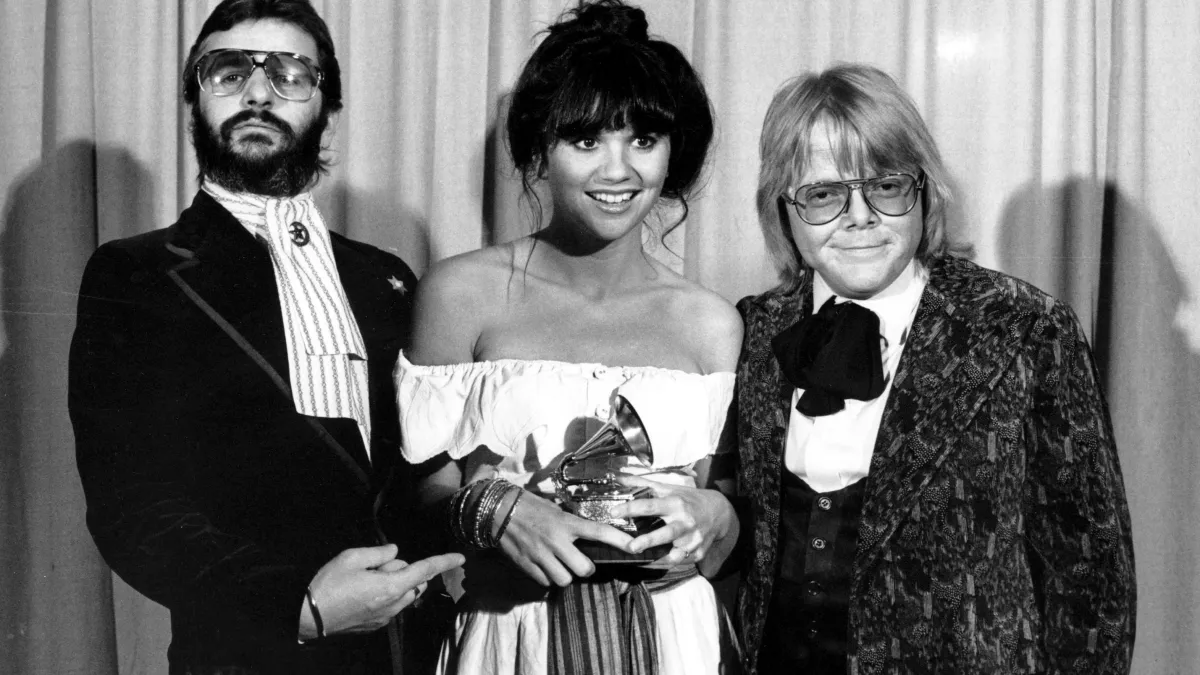
“In My Reply” is a hush of conscience—a song about the small lies we tell to soften life’s hardest corners, and the quiet weight those lies still carry.
“In My Reply” is one of those Linda Ronstadt performances that doesn’t announce itself with a radio fanfare—it simply stays. The song appears on Linda Ronstadt’s self-titled 1972 album Linda Ronstadt (released January 17, 1972). On Billboard’s Top LP’s chart, that album’s first clear “arrival” came soon after: in the February 12, 1972 issue, Linda Ronstadt is listed at No. 182, with “1” week on chart—a modest debut, but a real one. The album ultimately peaked at No. 163 on the Billboard pop album chart.
And yet “In My Reply” itself had no separate chart debut to brag about—because it was not released as a single. Its life is the deeper kind of life: an album track you meet when the room is quiet and you’re willing to listen past the obvious titles.
The writer matters here. “In My Reply” was penned by Livingston Taylor—noted in contemporary summaries as James Taylor’s brother—and you can feel a songwriter’s empathy in the structure: it isn’t a “me, me, me” love lament, but a series of human sketches, each one turning on the same fragile refrain. The lyric is built like a chain of encounters—people in trouble, people in denial, people reaching out at the last second—and the narrator responding with a kind of gentle evasiveness. The song’s central confession is almost unbearably plain: “In my reply I lied a bit / and said I did not know.” It’s a line that lands like a folded letter you find years later in a drawer—creased, honest, and still warm with regret.
What makes Linda Ronstadt such an extraordinary interpreter is that she never treats a story-song like theater. She doesn’t “act” the scenes; she inhabits the moral weather inside them. In “In My Reply,” she sings as if she’s holding back—not because she’s timid, but because she understands the subject: those small mercies we offer, the half-truths we use as blankets when someone is shivering. The song isn’t celebrating deceit. It’s asking the harder question: what do you do when the truth is cruel, and kindness requires a compromise?
The recording context deepens the feeling. Linda Ronstadt was produced by John Boylan and cut across multiple locations—Muscle Shoals, Quadrafonic Sound (Nashville), and United Western (Hollywood), with some tracks captured live at The Troubadour. This was the era when West Coast country-rock was still forming its identity in real time, and Ronstadt—whether she meant to or not—was standing near the center of the room where it all started to happen.
And yes, the personnel around her tells that story. The album is famously intertwined with the early orbit of the Eagles. A detailed retrospective notes that all four future Eagles appear on the record, and specifically points out that Randy Meisner and Bernie Leadon are heard on “In My Reply.” Even if you don’t go hunting for credits, you can hear that California blend: the clean acoustic shimmer, the country-leaning touch, the feeling that heartbreak can be delivered with velvet harmony instead of raised fists. (Wikipedia’s personnel listing likewise places Meisner and Leadon among the album’s key players, reinforcing how deeply this record sits inside that formative scene.)
So what does “In My Reply” mean, when you live with it a little?
It’s a song about responsibility—specifically, the responsibility of answering people. Not everyone who calls out to you is looking for facts. Sometimes they’re looking for permission to keep going. Sometimes they’re looking for a direction because the road has gone dark. In the lyric, figures drift through—someone dying, someone lost, someone posturing and brittle—and the narrator keeps offering that same soft deflection: I don’t know. It’s a heartbreaking stance, because it sounds like cowardice until you recognize the tenderness inside it: the narrator refuses to play God, refuses to pronounce judgment, refuses to hand out certainty like a weapon.
And Ronstadt’s gift is that she makes that ambiguity feel human, not philosophical. Her voice doesn’t wag a finger. It doesn’t preach. It simply holds the stories up to the light and lets you see the outlines—how easily people break, how often they bluff, how desperately they want an answer that won’t hurt.
That’s why “In My Reply” remains one of those quietly essential cuts in the Ronstadt canon: not because it conquered the charts, but because it tells a truth charts can’t measure. Sometimes the most lasting songs aren’t the ones that shout “I’m right.” They’re the ones that admit, softly, that kindness is complicated—and that the letters we send back into the world often carry a little mercy… and a little guilt… sealed together in the same envelope.
Linda was the leader and curator of her genre because she was respectfully in touch with the best artists of the time. They listened to her every lyric and voice written by them for the ultimate performance without disappointment ever.