
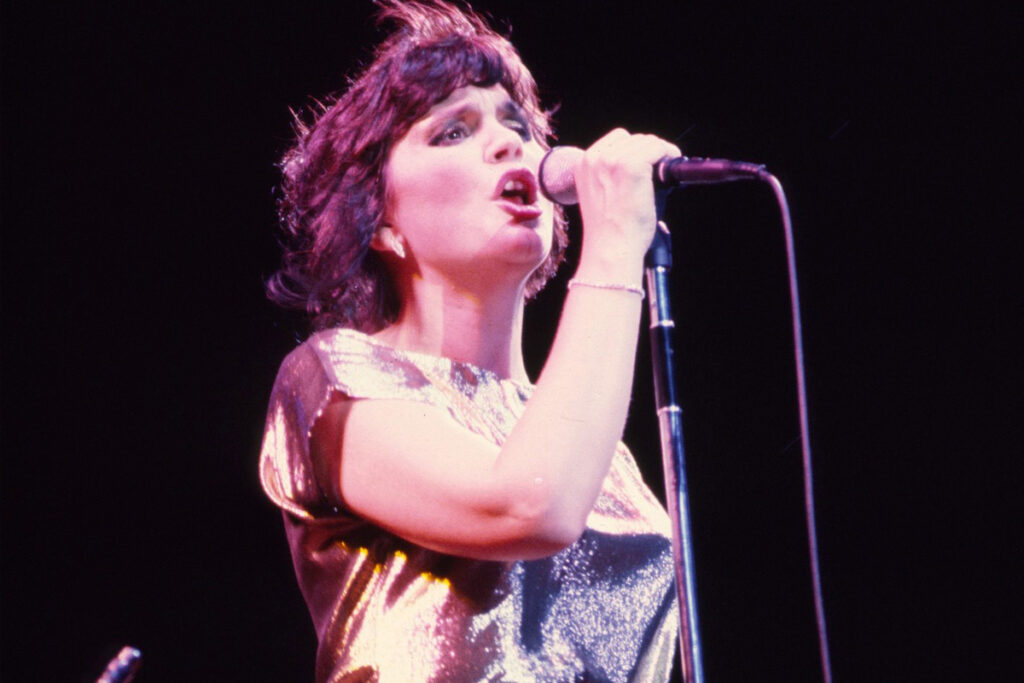
“The Only Mama That’ll Walk the Line” is a playful but pointed vow of loyalty—love with its boots on, daring temptation to try its luck.
Before Linda Ronstadt became the defining voice of 1970s American pop, she was already out there in the dust and neon glow of country bars—testing songs like they were roads, learning which ones could carry her. “The Only Mama That’ll Walk the Line” belongs to that early, crucial chapter. It appears on her first solo studio album credited solely to her, Hand Sown … Home Grown, released in March 1969, produced by Chip Douglas. That matters right up front: this recording isn’t a late-career curio or a retro throwback. It’s Ronstadt at the starting line—young, fearless, and already fluent in the emotional grammar of honky-tonk.
The song itself is a clever transformation. The original hit template was Waylon Jennings’ 1968 single “Only Daddy That’ll Walk the Line,” written by Jimmy Bryant (and first recorded by Jim Alley in 1967). Jennings’ version was a major country success—peaking at No. 2 on Billboard’s Hot Country Singles. Ronstadt didn’t simply cover it; she gender-reversed it—turning “Daddy” into “Mama”—so she could sing it from a woman’s point of view. Wikipedia’s album history notes that the song was reworked so Ronstadt could sing it from a woman’s perspective, a small publishing/lyric adjustment that becomes a big artistic statement.
And then there’s the moment that gives the track a kind of period perfume: Ronstadt performed “The Only Mama That’ll Walk the Line” on The Johnny Cash Show in June 1969—with documentation pointing specifically to June 21, 1969—nearly a year before Jennings performed the song on the same program. Imagine that: a young singer stepping onto that national stage, carrying a tough, teasing country number, and making it sound like she’s been living inside it for years.
So what does the song mean—beyond its quick sparkle?
At heart, it’s about commitment in a world that expects wandering. The phrase “walk the line” is a plainspoken promise: stay true, stop stepping out, quit playing games. In Jennings’ version, the narrator draws a boundary and insists he’s the one man who’ll stay faithful—if she stops pushing him. A contemporary write-up of the Jennings lyric captures that stance bluntly: he’s tired of being “stepped on” and “messed with,” and he demands she remember what she used to say—that he was the only one for her. Ronstadt flips the power without losing the humor. When she sings “Mama,” she’s not begging to be chosen; she’s declaring that she is the one woman who will hold the line—steady, loyal, not fooled by theatrics.
That inversion is more radical than it looks. In 1969, country music still often framed women as the ones being judged, chased, forgiven, or left. Ronstadt’s “Mama” isn’t fragile; she’s firm. There’s a wink in her delivery, yes—but it’s the wink of someone who knows her worth. It’s flirtation with a spine.
Placed within Hand Sown … Home Grown, the song also reveals Ronstadt’s early artistic mission: blending country tradition with a West Coast edge, not aiming for “purity” so much as personality. The album drew notice even then—Billboard remarked that Ronstadt had lost none of the excitement she brought from her Stone Poneys days, and Rolling Stone called the approach distinctive—country music as rock, without apology. In that light, “The Only Mama That’ll Walk the Line” feels like a thesis statement in two and a half minutes: twang plus attitude, tradition plus independence.
And maybe that’s why it lingers. It doesn’t need a Hot 100 peak of its own to feel “important.” It’s important because it captures a young Linda Ronstadt choosing her stance early: standing close to the old songs, but never shrinking inside them—turning a man’s warning into a woman’s declaration, and making loyalty sound not like submission, but like strength.