
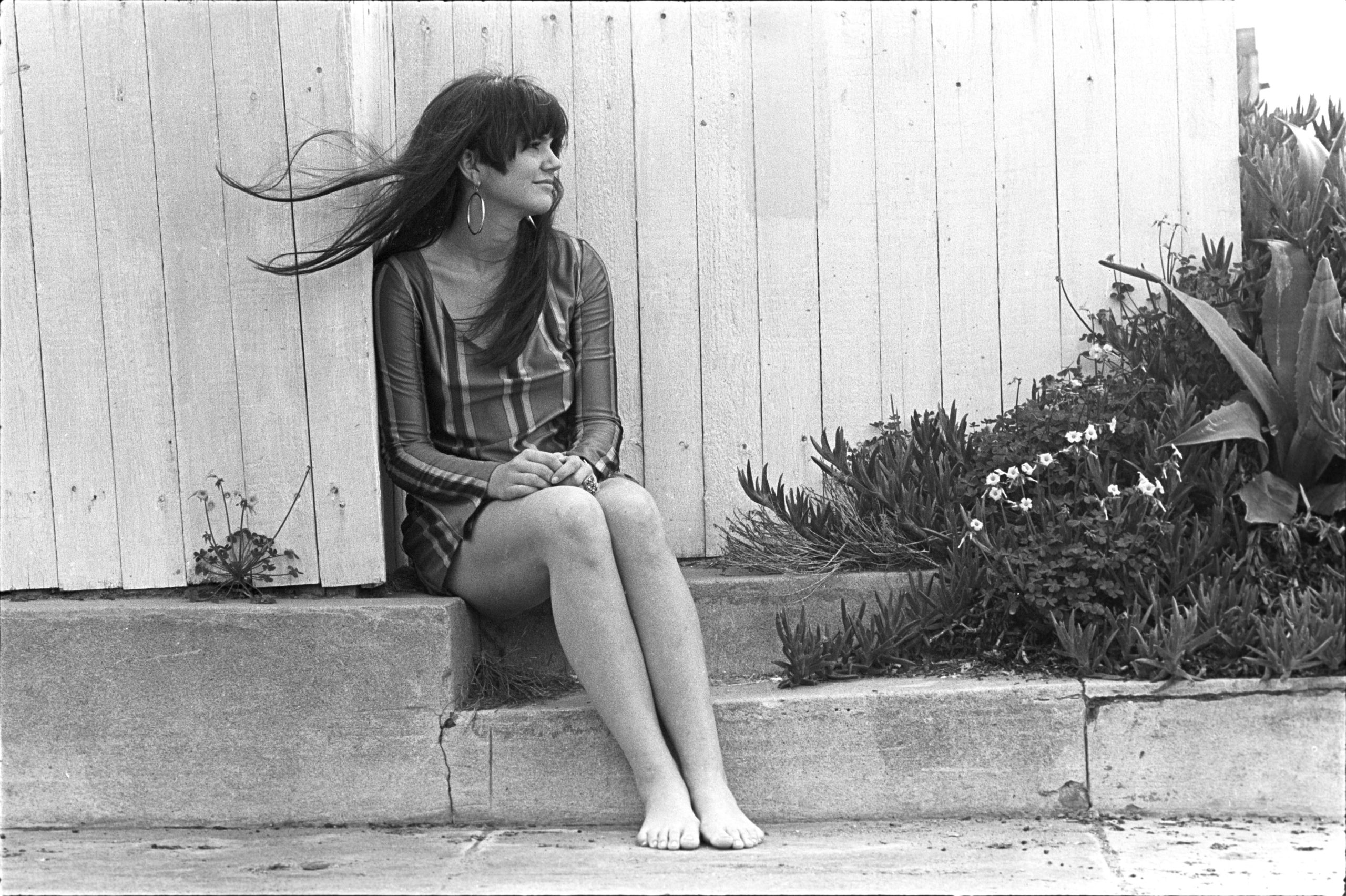
“Guess I’ll Hang My Tears Out to Dry” turns heartbreak into ritual—grief laid out in the open air, hoping time and light will do what a lover no longer will.
When Linda Ronstadt sang “Guess I’ll Hang My Tears Out to Dry”, she wasn’t merely borrowing a classic torch song—she was stepping into a different room of American music and speaking in a voice that sounded both fearless and wonderfully vulnerable. Her recording appears as track 3 on What’s New, released September 12, 1983, the first of her celebrated standards albums with Nelson Riddle’s elegant, full-bodied arrangements.
The commercial context is striking, and it belongs at the top because it explains why this performance mattered so much: What’s New reached No. 3 on the Billboard 200, holding that position for five consecutive weeks, and it stayed on the main Billboard album chart for 81 weeks—an extraordinary run for an album of pre-rock pop standards released in the MTV era. It also reached No. 2 on Billboard’s jazz albums chart, and it was RIAA-certified Triple Platinum for U.S. sales. In other words: this wasn’t a nostalgia side-project. It was a cultural event—an act of musical conviction that the public, surprisingly and beautifully, followed.
The song itself has deep roots. “Guess I’ll Hang My Tears Out to Dry” was written in 1944, with music by Jule Styne and lyrics by Sammy Cahn—a standard born in an era when popular songs often carried the emotional weight of short stories. Its central image is devastating in its simplicity: tears “hung out to dry,” like laundry after a storm. It’s the kind of line that sounds almost quaint until you realize how human it is—because anyone who’s ever tried to “get over it” knows the strange impulse to treat sorrow like a household task. Fold it. Air it. Put it away. Pretend it’s manageable.
That’s where Ronstadt’s version becomes quietly extraordinary. On What’s New, she is surrounded by the luxurious discipline of Riddle’s orchestra—arranged and conducted by the man who helped define the sound of classic American vocal albums. Yet Ronstadt never sounds dwarfed by that elegance. She sounds exposed in it—like a person dressed beautifully while still carrying a bruise under the fabric. Her phrasing doesn’t over-perform despair; it admits it. The song becomes less about theatrical heartbreak and more about the private aftermath: what you do with yourself after the goodbye, when nobody is watching and you have to decide how to survive the quiet.
There’s also a subtle “behind the song” story in the very existence of What’s New. This album represented a major, even risky change in direction—Ronstadt was widely known as a rock star, and yet she insisted on recording a set of Great American Songbook standards anyway, despite hesitations around her. That insistence matters when you listen to “Guess I’ll Hang My Tears Out to Dry”: it isn’t sung like a museum piece. It’s sung like a decision—an artist choosing older language because it still tells the truth.
And what is that truth? The lyric suggests that love, once lost, doesn’t simply vanish—it leaves evidence everywhere. “The sun in my heart has gone away.” The world still moves, but the inner climate changes. In Ronstadt’s hands, the song becomes a meditation on dignity. She doesn’t beg. She doesn’t rage. She tries to cope—almost politely—by placing her sorrow where it can be seen, aired, acknowledged. If there is hope here, it’s not the sugary promise that everything will be fine. It’s the quieter hope that time might do what people sometimes cannot: soften the sharp edges.
For anyone keeping track of “release-era ranking,” remember: this track wasn’t released as a major pop single, so it doesn’t come with its own Hot 100 debut story. Its impact traveled through the album—an album so successful that even its singles (“What’s New?” and “I’ve Got a Crush on You”) mainly lived on adult formats rather than Top 40 dominance. The real triumph was that What’s New proved a voice could cross decades and still feel immediate.
In the end, “Guess I’ll Hang My Tears Out to Dry” is not just about sadness. It’s about what we do with sadness when it becomes part of the furniture of our lives. Linda Ronstadt sings it as if she’s standing at an open window—letting the air in, letting the past breathe out—trusting that even the most carefully tended sorrow will, someday, dry.