
“What’ll I Do?” is the soft panic that follows love—when the room goes quiet, the future goes blank, and all you can do is ask the question again, a little more softly each time.
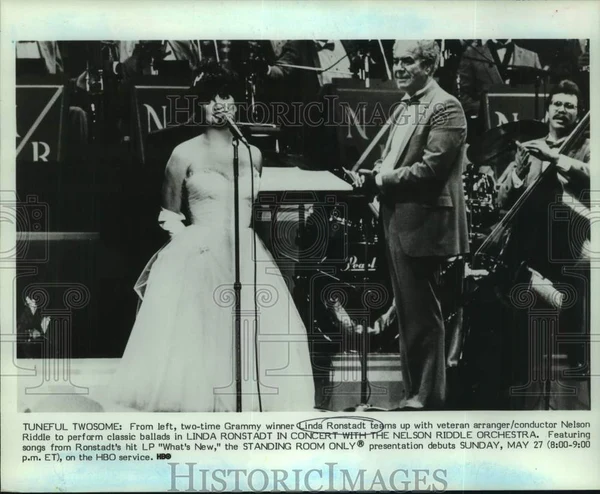
Few recordings capture that particular kind of after-midnight loneliness as elegantly as Linda Ronstadt’s “What’ll I Do?”—her tender reading of Irving Berlin’s 1923 standard. On paper it’s “just” track 7 on What’s New (runtime 4:06), the first of Ronstadt’s celebrated big-band standards albums with arranger-conductor Nelson Riddle, released September 12, 1983 and produced by Peter Asher. But in the heart, it’s something far more personal: the moment your pride has nothing left to say, and only the question remains—what will I do now that you’re gone?
The chart story belongs primarily to the album that carried it into the world, and it’s one of the most dramatic “career turns” pop ever rewarded. What’s New rose to No. 3 on the Billboard 200 and famously held that position for five consecutive weeks, while Michael Jackson’s Thriller and Lionel Richie’s Can’t Slow Down occupied the top two slots. It also reached No. 2 on Billboard’s jazz albums chart, stayed 81 weeks on the main Billboard album chart, and was RIAA-certified Triple Platinum in the U.S. This matters because “What’ll I Do?” itself was not pushed as a pop single—so it doesn’t arrive with a neat “debut at No. X” statistic of its own. Its impact is quieter and, in a way, more enduring: it lives inside a classic album that proved a rock superstar could step into the Great American Songbook and be believed.
To understand why this song fits Ronstadt so well, it helps to remember where it came from. “What’ll I Do” was written and published in 1923 by Irving Berlin, introduced in the Music Box Revue by Grace Moore and John Steel—the kind of theatrical world where heartbreak had to sound beautiful enough to survive the night. Berlin’s genius here is his restraint. He doesn’t dress sorrow in fancy metaphors. He simply asks the question we all recognize: what does a person do with all that love when there’s nowhere left to put it?
Ronstadt’s gift—especially on What’s New—is that she never treats these songs like antiques. This album was, by every account, a major change in direction, one her label and even her manager-producer Peter Asher initially resisted, until her determination carried it through. You can hear that resolve in “What’ll I Do?”: she sings as if she’s choosing the emotional truth over the easier career move. Her voice doesn’t show off; it confides. It’s the sound of someone who has lived long enough to know that a question can be both simple and unanswerable.
And then there’s Nelson Riddle—not merely “lush strings,” but a master of emotional framing. On a great torch song, the arrangement is the room: the lamplight, the shadow at the edge of the curtain, the distance between the singer and the door that won’t open again. Ronstadt stands in that room with remarkable poise. She lets the melody carry her the way a slow tide carries a thought you can’t outrun. The ache is present, but it isn’t dramatized. It’s dignified—almost conversational—like someone writing a letter they’ll never send.
That’s the deeper meaning of “What’ll I Do?” in Ronstadt’s catalog. In her rock years, she could turn pain into power. Here, she turns pain into clarity. There’s no victory lap, no bright ending. Just the honest recognition that love leaves behind a kind of practical ruin: the everyday habits, the empty spaces, the future that suddenly needs rewriting.
So when you play Linda Ronstadt singing “What’ll I Do?”, you aren’t just hearing a classic standard. You’re hearing a fearless artistic pivot, preserved on a landmark album—What’s New, No. 3 for five weeks, 81 weeks on the chart, Triple Platinum—and inside it, a single small question that still feels uncomfortably human: What will I do… with all this feeling… now that you’re gone?