
“I’ll Meet You Halfway” is sunshine-pop with a sincere, grown-up promise at its center—love not as drama, but as the gentle art of compromise.
Released in May 1971 on Bell Records, “I’ll Meet You Halfway” became one of The Partridge Family’s most enduring hits, reaching No. 9 on the Billboard Hot 100 and No. 4 on Billboard’s Adult Contemporary chart. It wasn’t a novelty record, and it wasn’t just TV-soundtrack fluff either; it was a carefully built pop single—warm, melodic, and emotionally direct—written by Wes Farrell and the legendary Gerry Goffin, and produced by Farrell. On the B-side sat “Morning Rider on the Road,” a pairing that placed “Halfway” firmly in the tidy, self-contained world of early-’70s Partridge releases.
The song came from the group’s second album, Up to Date, released in February 1971—an album that would peak at No. 3 on Billboard’s Top LPs chart and confirm that the Partridge phenomenon wasn’t a one-week TV miracle, but a full-blown pop engine. That context matters because “I’ll Meet You Halfway” doesn’t sound like it’s trying to conquer the world; it sounds like it’s trying to hold a feeling steady while the world is noisy. The album’s recording logs even pin the track to a specific moment: it was recorded on November 12, 1970, months before its spring 1971 release—pop craftsmanship assembled with precision, then delivered right on schedule.
If you want a snapshot of its reception at the time, one period touch is telling: Cash Box praised it as the Partridge Family’s “strongest to date,” also noting the string and horn arrangement credited to Mike Melvoin. That’s not just trade-paper chatter. It points to what the record does so well: it wraps its promise in a soft orchestral glow that feels both youthful and strangely comforting—like a night light for the heart.
What makes “I’ll Meet You Halfway” emotionally durable is its central idea: love as mutual movement. Not “I’ll change you.” Not “I’ll win.” Just: I’ll meet you. Halfway implies two people with their own pride, their own fear, their own stubborn corners—yet willing to step forward anyway. In a genre of pop that often leans on grand gestures, this is a smaller, more believable romance: the kind that happens in daily decisions, the kind that survives because both people refuse to make the other do all the walking.
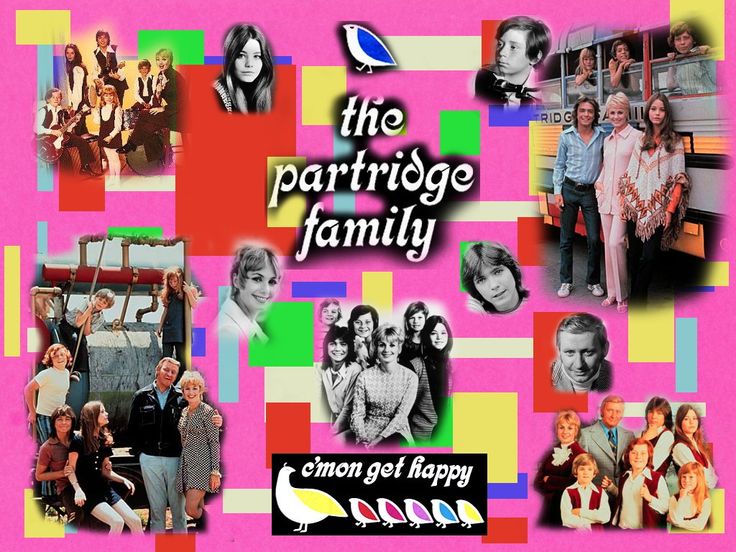
That theme also suited the Partridge moment perfectly. The group was born from television—bright, familial, safe—yet its records succeeded because they were staffed by serious pop professionals and carried by a charismatic lead vocal presence (chiefly David Cassidy) that could sell sincerity without sounding theatrical. The “family band” image promised wholesome warmth, but “I’ll Meet You Halfway” adds something subtler: a hint of emotional maturity, a willingness to admit that closeness takes effort. It’s the sound of innocence growing a backbone, without losing its sweetness.
And sweetness is still the song’s calling card. Even at its most pleading, it doesn’t turn bitter. The melody keeps its head up; the arrangement stays bright. This is longing that believes in a solution. That optimistic tone—so very early ’70s, so perfectly tuned to AM radio’s comforting glow—is why the record remains easy to return to. It doesn’t demand you relive heartbreak; it invites you to remember a time when a pop song could offer a simple bargain: come toward me, and I’ll come toward you too.
So yes, the charts tell a respectable story—Top 10 pop, Top 5 adult contemporary—and the release facts are neat and verifiable. But the deeper “ranking” of “I’ll Meet You Halfway” lives in its emotional design: a bright record built around a humble truth. Love, at its best, isn’t a spotlight. It’s two people closing the distance—step by step—until the halfway point becomes home.
Was Cassidy the only one singing and everybody else pantomime?