
The Anthem of Working Women’s Resilience and the Irrepressible Spark of Self-Worth
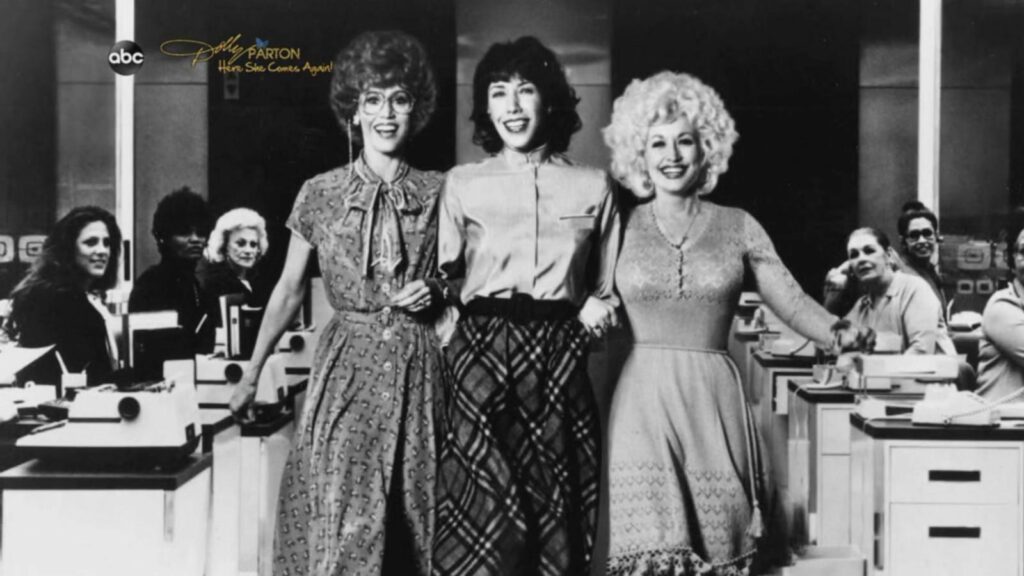
When Dolly Parton released “9 to 5” in late 1980, the song quickly became more than a soundtrack to a film—it was an anthem for every woman clocking in under fluorescent lights, dreaming of recognition and fair pay. Featured on both the 9 to 5 and Odd Jobs album and the soundtrack for the hit film 9 to 5, which starred Parton alongside Jane Fonda and Lily Tomlin, the single shot to number one on the Billboard Hot 100, topped the country charts, and earned Parton Grammy Awards for Best Country Song and Best Female Country Vocal Performance. The song’s commercial triumph mirrored its cultural resonance: it captured, with infectious rhythm and wit, a working-class frustration that had long gone unsung in mainstream pop music.
At its core, “9 to 5” embodies the spirit of perseverance within a system designed to keep dreamers in their place. Written by Parton herself—famously during downtime on the movie set, using her acrylic nails as makeshift percussion—the track fuses her country storytelling roots with a driving pop sensibility. The result is a perfect sonic metaphor for ambition constrained by circumstance: bright, brisk piano lines chug like an office typewriter, while horns punctuate each measure with a sense of determination barely contained. Beneath its buoyant melody lies a quietly radical message—an assertion that dignity belongs not only to the boardroom elite but to those who make the machinery of daily life turn.
Parton’s lyrical craftsmanship shines in her portrayal of everyday injustice rendered palatable through charm. She articulates exhaustion without surrender, humor without cynicism. Each verse becomes a mirror reflecting the unheralded labor of millions—mostly women—who find themselves “working nine to five,” striving for independence yet boxed in by bureaucracy and inequality. It’s protest delivered with a smile; a soft revolution wrapped in rhinestone optimism. The brilliance of Parton’s songwriting lies in this duality: she transforms struggle into song, pain into propulsion.
The cultural timing of “9 to 5” was no accident. Released at the dawn of a new decade, it resonated against the backdrop of second-wave feminism’s hard-won gains and the economic anxieties facing working women as they entered offices in unprecedented numbers. The film’s comedic tone softened its critique, but Parton’s music carried an authenticity that transcended Hollywood satire. Her voice—warm yet steely—embodied both empathy and empowerment. By melding feminist consciousness with country-pop accessibility, she opened doors for future generations of artists who sought to speak truth from within the mainstream.
More than forty years later, “9 to 5” remains emblematic of a uniquely American ethos: resilience forged in routine, hope humming beneath fatigue. It is both a time capsule and a torchlight—reminding us that even within the grind of daily labor, there beats an indomitable human rhythm that refuses to be mechanized.