
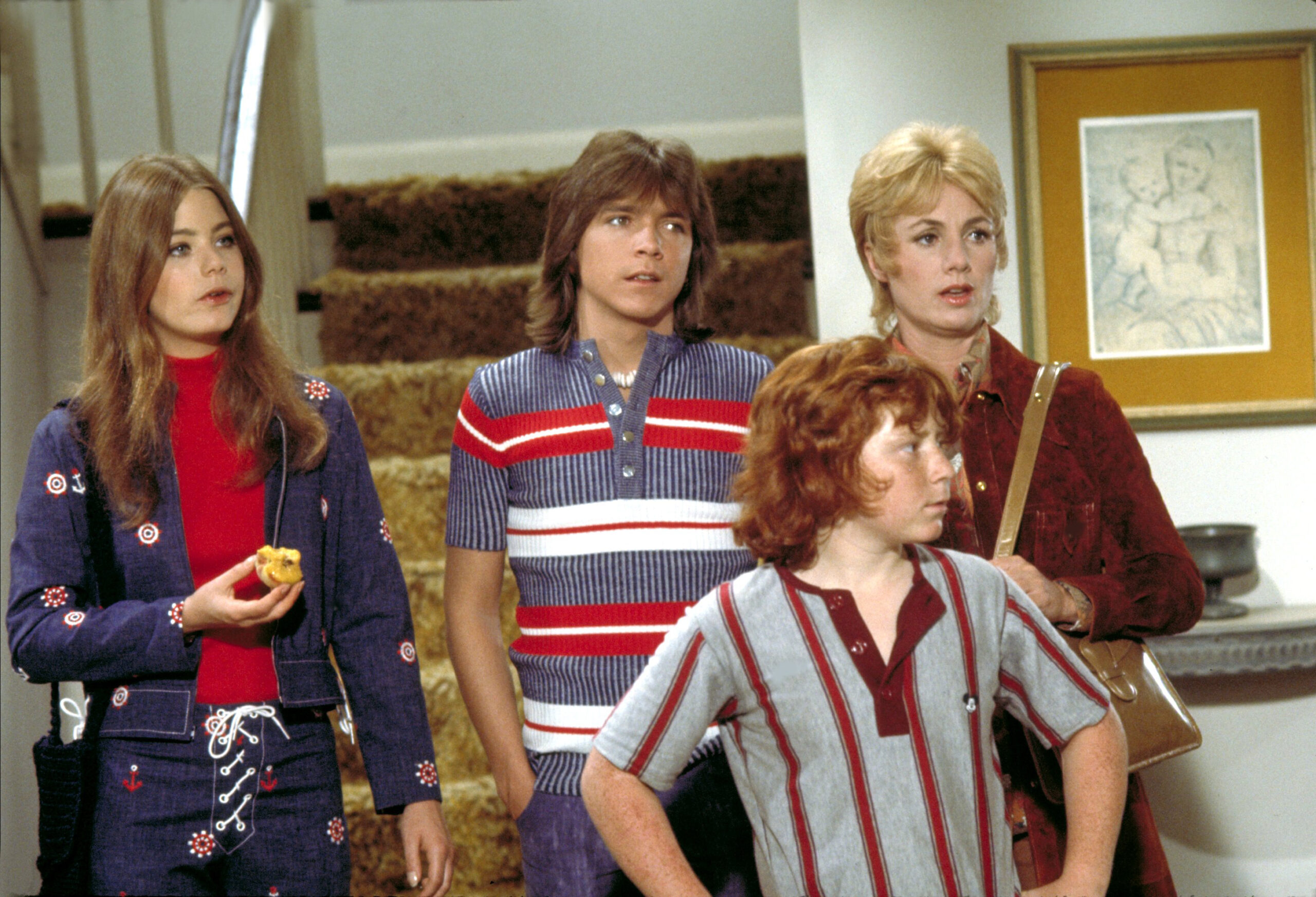
“It Means I’m in Love with You” is one of those bright, tender Partridge Family songs that turns young certainty into melody—where happiness feels simple, immediate, and almost innocent enough to last forever.
One of the most important facts to place right at the beginning is that “It Means I’m in Love with You” was not a hit single on its own, but an album track from The Partridge Family’s 1973 album Crossword Puzzle. That album was released in June 1973, and it marked a late chapter in the group’s recording story—significant because it was the last Partridge Family studio album to chart in the United States, though only modestly, peaking at No. 167 on Billboard’s Top LP’s chart. Bell Records, by that point, did not issue a U.S. single from the album, which means songs such as “It Means I’m in Love with You” had to live through the album itself rather than through radio glory. That detail matters, because it helps explain why the song feels a little hidden today: not unworthy, not slight, simply tucked into the quieter corner of the Partridge Family catalogue, where some of their sweetest music has remained waiting to be rediscovered.
The song’s writing credits are also worth bringing forward, because they reveal the careful pop craftsmanship behind it. Discogs and 45cat credit “It Means I’m in Love with You” to Tony Romeo and Ralph Landis. Tony Romeo, of course, was one of the defining writers of the Partridge sound, the man behind “I Think I Love You” and several other records built around clarity, melodic lift, and an instinct for feelings that could be expressed in a direct, unforgettable way. With Ralph Landis, he shaped this song not as a dramatic confession, but as something lighter on its feet—an affectionate, glowing declaration that captures the emotional shorthand of pop at its most charming.
There is no great scandal or tragic legend attached to “It Means I’m in Love with You,” and in a way that is part of its appeal. Its story is really the story of its placement in the Partridge timeline. According to the recording data preserved with the album’s session history, the song was first recorded on May 1, 1972, and then re-recorded on May 23, 1972, suggesting that the producers heard something in it worth refining. That small studio detail gives the song a quiet dignity. It was not tossed off carelessly. It was worked on, polished, and made to fit the emotional world of Crossword Puzzle, a record released when the television phenomenon had already passed its wildest commercial peak, but the musical machinery behind it was still capable of real polish and warmth.
And what does the song mean? Its meaning is carried right there in the title, with almost disarming simplicity. “It Means I’m in Love with You” belongs to that old, honorable class of pop songs in which emotion arrives before analysis. It does not brood. It does not hedge. It does not wrap itself in ambiguity. Instead, it offers the kind of straightforward romantic certainty that pop music once embraced so beautifully: the feeling of recognizing that all the little signs—restlessness, excitement, sleeplessness, joy—add up to one unmistakable truth. In songs like this, love is not presented as torment or philosophy. It is presented as revelation. A person discovers that life has changed color, that ordinary hours feel lighter, and that the heart has already understood something the mind is still trying to name.
That emotional directness was one of The Partridge Family’s great strengths. The group is often remembered chiefly for its biggest hits and for the bright, glossy optimism of the television series, but beneath that commercial image there was a real skill for shaping songs that felt clean, melodic, and deeply accessible. On Crossword Puzzle, that quality becomes especially poignant, because the record comes from a moment when the phenomenon itself was beginning to fade. There is something quietly moving about late-period Partridge Family songs for that reason. They still carry the sunny sheen of earlier years, but one can also hear the end of an era approaching. That gives a song like “It Means I’m in Love with You” an extra tenderness now. What may once have sounded simply cheerful can, with time, sound almost wistful.
The arrangement and spirit of the song also reflect the particular magic of Partridge Family recordings: that carefully engineered blend of youthful lead vocals, polished studio playing, and harmonies that made even album tracks feel radio-ready. By 1973, the formula was familiar, but familiarity was part of the comfort. A song like “It Means I’m in Love with You” does not survive because it reinvents pop music. It survives because it reminds listeners of a world where melody could still carry innocence without embarrassment. It belongs to a time when a love song could smile openly, and that smile was enough.
So “It Means I’m in Love with You” deserves to be heard not as a forgotten leftover, but as one of those graceful late Partridge Family recordings that reveals the enduring softness at the center of their music. It came from Crossword Puzzle, was written by Tony Romeo and Ralph Landis, and lived on an album that barely touched the American charts before the group’s recording era drew toward its close. Yet the song’s real value lies beyond chart positions. It captures the old pop miracle of saying something emotionally complete in the plainest possible words. And sometimes those are the songs that linger longest—the ones that do not argue with the heart, but simply let it sing.