
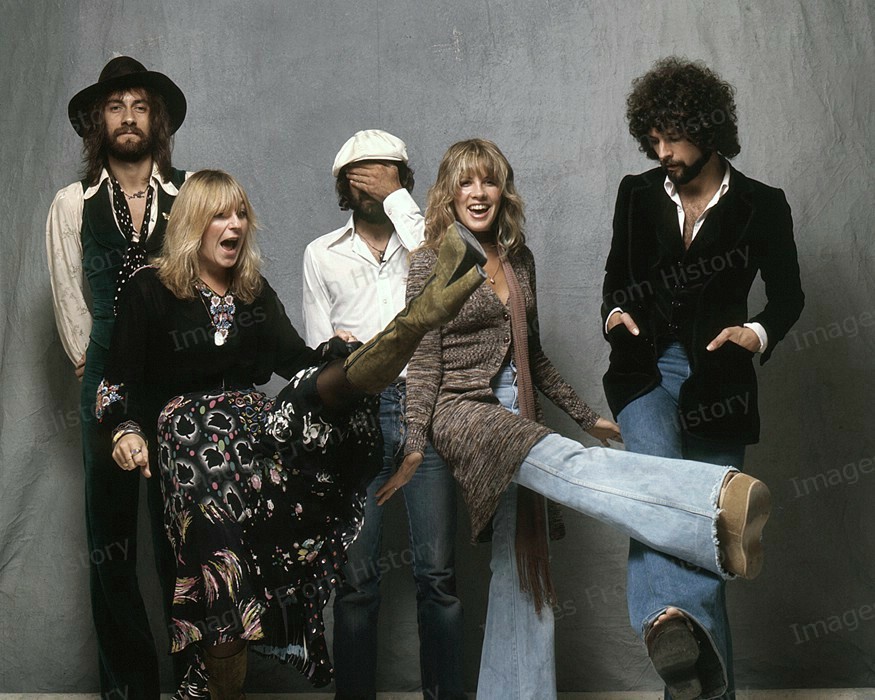
The Restless Beauty of a Soul Forever in Motion
When Fleetwood Mac released “Gypsy” as a single in 1982, drawn from their shimmering album Mirage, it reached the Top 20 on the Billboard Hot 100, reaffirming the group’s enduring power even in the shifting musical landscape of the early ’80s. Emerging after the turbulent brilliance of Tusk, Mirage offered a softer, more reflective sound—a delicate return to form that nonetheless carried the ache of experience. At its center stood Stevie Nicks, whose composition of “Gypsy” distilled nostalgia, loss, and self-renewal into one of her most personal and poetic statements.
The origins of “Gypsy” reach deep into Nicks’s own past, long before fame reshaped her world. The song revisits her bohemian beginnings with Lindsey Buckingham, when they shared small apartments furnished with dreams instead of luxuries. In interviews, Nicks described “going back to the gypsy that I was”—a yearning to reconnect with that unadorned spirit who wore velvet and lace not for spectacle, but because she was chasing magic in its purest form. There is an echo of innocence there, but also an acceptance that innocence cannot be reclaimed—only remembered, perhaps ritualistically reinhabited through song.
Musically, “Gypsy” is deceptively restrained, gliding on a luminous weave of Buckingham’s crystalline guitar lines and the rhythm section’s gentle propulsion. The production captures that quintessential Fleetwood Mac alchemy: lush yet intimate, layered yet translucent. Beneath its surface shimmer lies an undercurrent of melancholy—the sense that beauty is fleeting, and that even freedom can become a memory one must fight to keep alive. Christine McVie’s keyboards provide a soft emotional cushion, while Mick Fleetwood’s drums move like quiet footsteps across old wooden floors—a heartbeat both steady and wistful.
Lyrically, Nicks folds her reflections in gauzy imagery: mirrors and shadows, paper flowers and fading lights. These are not mere adornments but symbols of identity constantly refracted through time and fame. The “gypsy” becomes both archetype and alter ego—a nomadic self who refuses domestication, who seeks meaning not in stability but in motion. Yet for all its mythic texture, the song feels profoundly human. It acknowledges how the passage from youthful idealism to adult reality carries its own quiet sorrow: to have everything you once dreamed of and still feel something missing.
In this tension between nostalgia and survival lies the enduring power of “Gypsy”. It is not simply a remembrance; it is a ritual of self-reclamation. Each listen feels like stepping back into candlelight after neon—an invitation to rediscover what first made us believe that music could hold both memory and magic at once.