
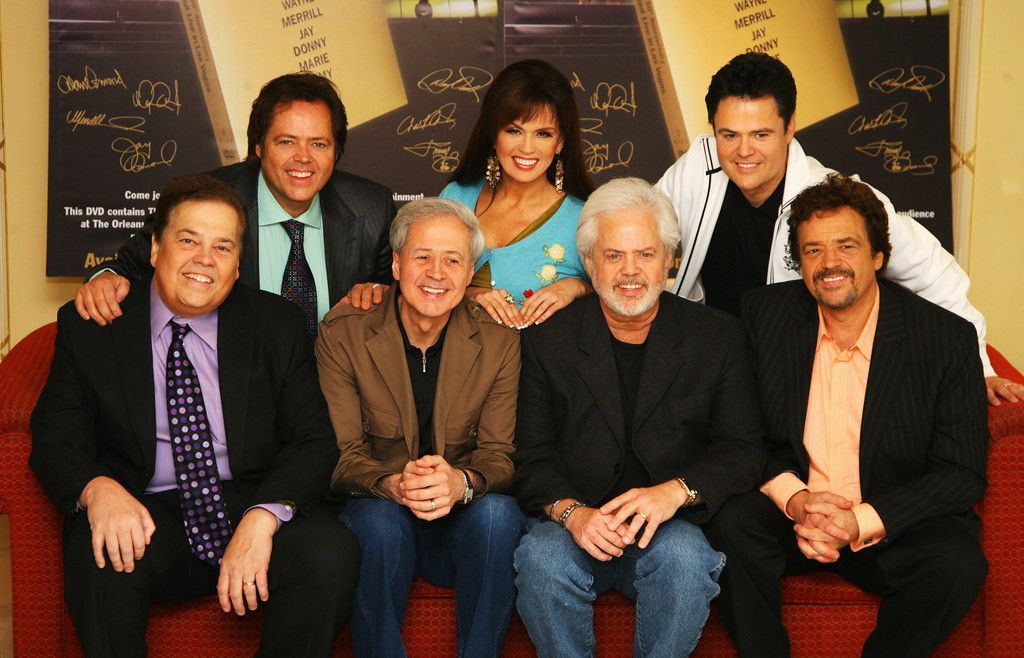
Innocence Meets Rebellion in a Pop-Soul Collision That Defined a Generation’s Turning Point
When The Osmonds released “One Bad Apple” in November 1970, the song became an unexpected cultural detonator—an explosion of youthful exuberance dressed in the groove of Motown polish. Featured on their debut studio album Osmonds, the single soared to the top of the Billboard Hot 100, where it held the No. 1 position for five consecutive weeks in early 1971. This success marked the family’s transition from clean-cut television regulars to bona fide pop sensations, transforming them into one of the most dominant acts of the early ’70s. Produced by Rick Hall at his legendary FAME Studios in Muscle Shoals, Alabama, “One Bad Apple” bridged two worlds: the polished harmony pop of white suburban America and the deep-swinging rhythms of Black soul. It was a marriage few could have predicted—and one that resonated across generational and racial lines with surprising power.
What makes “One Bad Apple” so fascinating, even decades later, is its perfect embodiment of crossover ambition. The track was originally intended for The Jackson 5, whose own string of chart-toppers at Motown had redefined what youthful pop could sound like. When that group passed on the tune, The Osmonds seized the opportunity—and in doing so, they stepped boldly into a space that was both homage and reinvention. The result is a record that pulses with playful swagger yet never loses its sense of purity. Donny Osmond’s lead vocal—barely adolescent but brimming with conviction—carries a tone of earnest apology and romantic sincerity that softens the song’s funky backbone. His performance captures that fragile balance between innocence and experience, between the boyish desire to please and the dawning awareness of heartbreak’s complexity.
Lyrically, “One Bad Apple” delivers a timeless parable about trust and redemption. Its message—don’t judge future love by past betrayal—is simple, yet it resonates with emotional clarity. The track becomes less about romantic missteps than about resilience itself: how one can learn from pain without letting bitterness take root. Musically, Hall’s production layers crisp horns, syncopated basslines, and handclaps that recall Motown’s golden era while granting The Osmonds their own distinctive rhythmic edge. It’s an American hybrid—soul music filtered through the lens of wholesome pop—that hints at a country learning to blur its cultural lines during an era of deep division and change.
Half a century on, “One Bad Apple” still shimmers as more than just an infectious chart-topper; it stands as a cultural artifact from a moment when boundaries were being tested—in music, in youth identity, in race, and in innocence itself. In its joyful defiance and irresistible groove lies something rare: a moment when pop simplicity brushed against social transformation and found harmony there.