
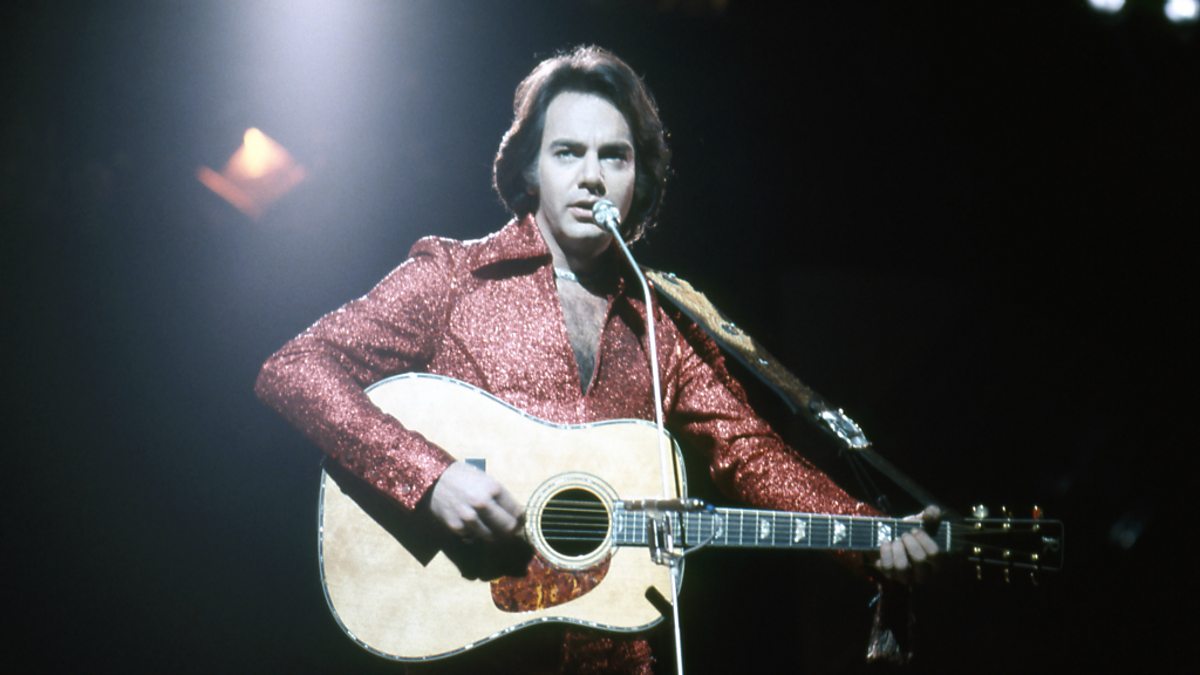
“Glory Road” is a traveler’s prayer—part suitcase, part confession—where the promise of “somewhere else” keeps pulling you forward even when freedom never quite arrives.
If you want the most important truth first: “Glory Road” is an original Neil Diamond deep cut from his early Uni years, first released on the 1969 album Brother Love’s Travelling Salvation Show (released April 4, 1969). It wasn’t launched as the headline A-side of that era—so it doesn’t have a neat “debut at No. X / peak at No. Y” singles-chart story of its own. Instead, it lives inside the album’s world: a collection written entirely by Diamond, assembled quickly in the wake of his rising fame, and later re-pressed and re-packaged when “Sweet Caroline” exploded and was appended to later editions.
And yet, for listeners who care about the soul of Diamond’s writing—not just the radio anthems—“Glory Road” is one of those songs that feels like a private page left open. Streaming-era track listings consistently place it on the original album sequence, and it’s there you can hear what he was doing in 1968–69: writing about motion, hunger, and the uneasy bargain between ambition and belonging.
The song’s story becomes even more interesting when you look at how quickly it traveled beyond Diamond himself. The Everly Brothers recorded “Glory Road” on March 28, 1969, and issued it on their album Chained to a Memory—a striking bit of timing, considering Diamond’s album release date was only days later. That overlap suggests something you can almost feel in the music business of that era: a good Diamond song didn’t just “belong” to one voice. It could be handed around like a shared piece of craft—because the bones were strong enough to survive different harmonies, different heartbreaks, different rooms.
So what is “Glory Road” actually about?
On the surface, it’s a travel song—boots on, worldly goods in a sack, the narrator moving on with a kind of stubborn forward momentum. But Diamond rarely wrote “travel” as postcard scenery. His roads are psychological. His roads are spiritual. Here, “glory” isn’t applause; it’s the mirage of arrival—the belief that if you just keep walking, the next town will finally deliver what the last one withheld. And then comes the hard, adult turn: the recognition that even the glory road might not “set me free.” That’s not cynicism. It’s experience. It’s the moment you realize that motion can be addictive—because stopping means you have to face what you were running from.
That theme lands with special weight in 1969, because Diamond was living a version of it in real time. He was no longer the hungry Brill Building songwriter trying to be heard; he was the star learning what it costs to be everywhere at once. Brother Love’s Travelling Salvation Show is often remembered for its title track’s chart success and for the later addition of “Sweet Caroline,” but “Glory Road” feels like the backstage corridor—where the bright suit comes off and the human truth remains.
Musically, the song carries that restless gait Diamond does so well: a steady push that sounds like a person keeping themselves upright by moving. It’s not ornate. It doesn’t plead. It simply goes. That’s why it has kept showing up across decades of live recordings and compilations—because it works the way certain older songs work: it becomes more convincing the older you get, when you’ve learned that “someday” can be both a promise and a trap.
In the end, “Glory Road” doesn’t glamorize the journey. It sanctifies it—then questions it in the same breath. It’s a song for anyone who has ever packed up not because they were sure, but because staying felt like surrender. And it leaves you with a quietly haunting idea: maybe the road isn’t where freedom lives… maybe freedom is what you bring with you, or what you finally choose when the road runs out.