
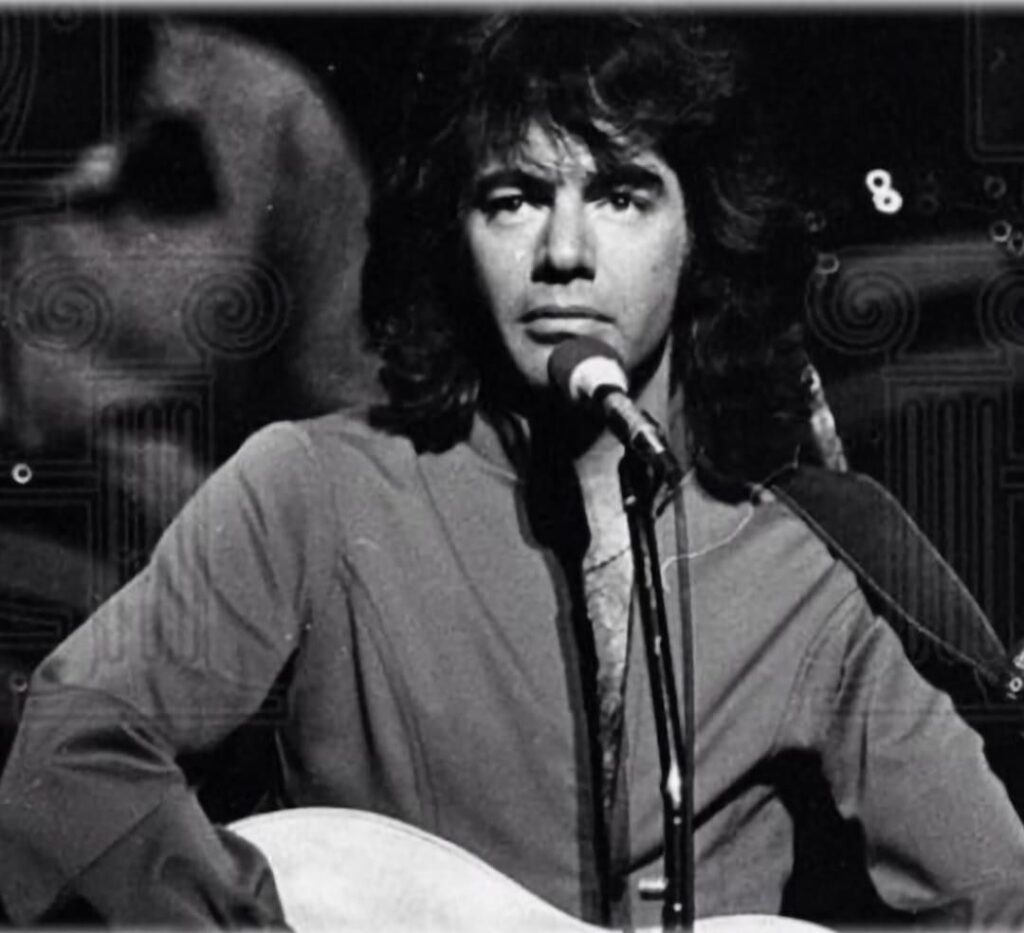
“Happy Xmas (War Is Over)” in Neil Diamond’s hands feels like a candle set in a drafty room—still warm, still stubborn, still insisting that peace is a choice we keep making.
When Neil Diamond chose to record “Happy Xmas (War Is Over)”, he wasn’t trying to outshine a classic—he was stepping into a song that already carried the weight of history. His version appears on The Christmas Album (released September 22, 1992), his first full holiday record, produced by Peter Asher, built around orchestral and choir arrangements that lean into reverence rather than novelty.The album itself had real “arrival power”: it reached No. 8 on the Billboard 200, proof that Diamond’s voice—by then a familiar companion to decades of listeners—could still gather people in close for something quieter and seasonal. And tucked into that warm, traditional setting is this song, credited (as it must be) to John Lennon and Yoko Ono—a peace anthem wearing Christmas clothes.
To understand what Diamond is doing here, you have to remember what the song was born to do. John Lennon and Yoko Ono released “Happy Xmas (War Is Over)” in the U.S. on December 1, 1971, with the Harlem Community Choir, produced by Phil Spector alongside Lennon and Ono. In the UK, it arrived later—November 24, 1972—and reached No. 4 on the UK Singles Chart. That delay, the uneven chart story, the way it kept resurfacing in public consciousness—none of that is accidental. This isn’t simply a “holiday tune.” It’s the musical extension of a message Lennon and Ono had already blasted across billboards around the world: “WAR IS OVER! If You Want It.” The song’s genius is that it smuggles a protest into a greeting card—sweet on the surface, morally urgent underneath.
So why does Neil Diamond fit it?
Because Diamond has always been at his best when he sounds like a man speaking plainly—no clever mask, no ironic distance—just the direct heat of sincerity. On The Christmas Album, surrounded by familiar seasonal standards, “Happy Xmas (War Is Over)” becomes a different kind of centerpiece: not nostalgia for snow, but nostalgia for the possibility that people might choose kindness over cruelty. The lyric’s opening—so famous it almost feels like public property—doesn’t land as theatrical in Diamond’s mouth. It lands as something closer to lived experience: the weary recognition that another year has gone by, and the world is still trying to learn the same lesson.
There’s also something quietly moving about the timeline. Lennon and Ono wrote their song in the early 1970s, in the shadow of Vietnam and global unrest. Diamond records it in 1992, another era of headlines and conflict, another era where “peace” could feel like a word people used more than a practice. The decades between those dates make the song’s central claim more poignant, not less: if we’re still singing it, we’re still needing it.
Musically, Diamond’s approach tends toward the dignified and full-bodied—seasonal music as comfort, as ritual. That changes the emotional color of “Happy Xmas (War Is Over)”. Lennon’s original has a rougher edge, a pop-single immediacy, and that communal-choir urgency. Diamond’s version, by contrast, feels like it’s been carried indoors, placed near the hearth, offered as a shared prayer rather than a street-corner slogan. The “war is over” line becomes less of a chant and more of a wish said slowly—because wishes, when you’ve lived long enough, are rarely casual.
And that is the meaning that lingers after Diamond’s last note fades: peace as a human habit, not a miracle that falls from the sky. The song asks us to imagine a world where the holiday spirit isn’t decoration—where it becomes behavior. It’s a hard ask, which is why the song keeps returning each December like an unresolved conversation. Diamond doesn’t solve it. He doesn’t pretend to. He simply sings it with the kind of conviction that makes you pause and think: maybe the first step is still the simplest one—treat the message as real.
In the end, Neil Diamond doesn’t turn “Happy Xmas (War Is Over)” into a spectacle. He turns it into something older and more durable: a reminder. The season comes around again. The lights go up again. And underneath the celebration, the question remains—quiet, persistent, and completely unavoidable:
If we want it… will we choose it?