
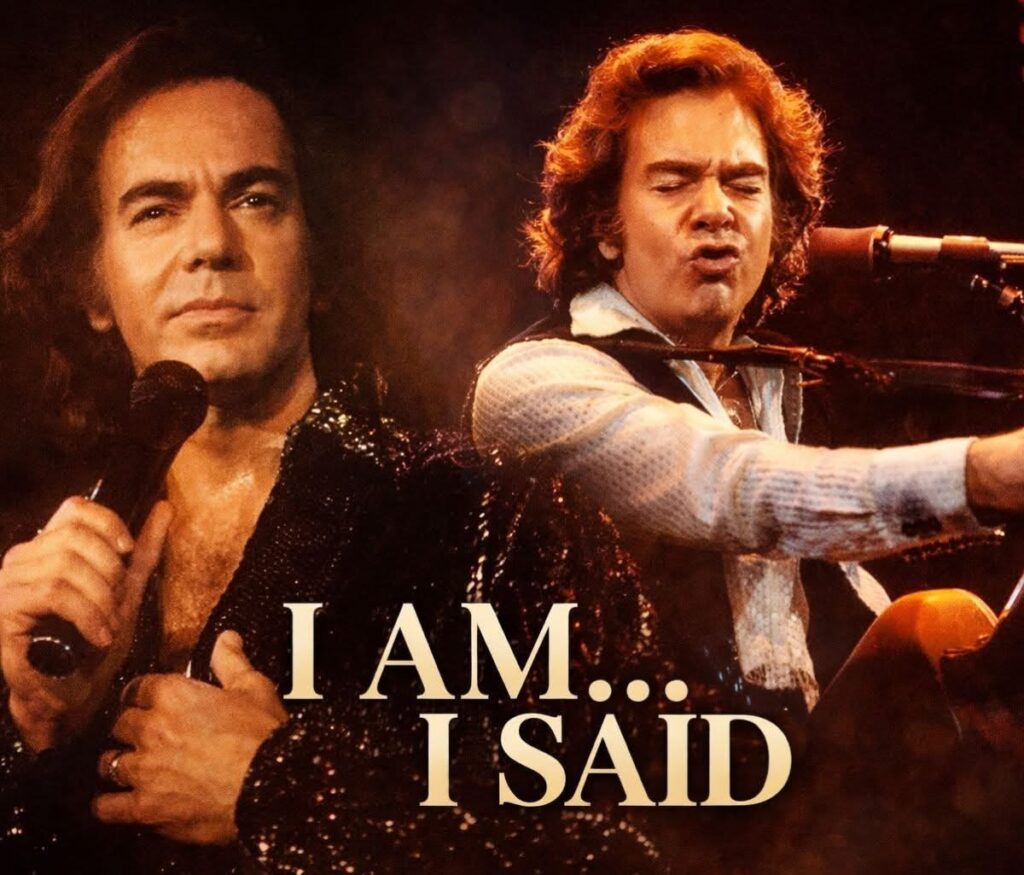
“The Long Way Home” is Neil Diamond’s tender confession that wandering can be a kind of education—but love is the place you finally stop pretending you don’t need.
If you’ve lived long enough to know that “going out to find yourself” often means “learning what you should have cherished sooner,” then “The Long Way Home” lands with a special, quiet weight. This song comes from the early Bang Records period—when Neil Diamond was still writing in sharp, compact bursts, as if every lyric had to earn its space on a two-and-a-half-minute single. It appears on his 1967 album Just for You (track 2, running 2:29).
In terms of “where it sat when it first arrived,” the song’s chart story is unusual and revealing. “The Long Way Home” was initially released in 1967 as the B-side to “Thank the Lord for the Night Time,” a single that reached No. 13 in the U.S. That detail matters, because B-sides were where artists often tucked away something more personal—songs not built to shout from the radio, but to wait patiently for the listener who flips the record over and keeps listening after the hit has made its point.
And what a gentle point this one makes.
“The Long Way Home” is, at heart, a homecoming song—but not the sentimental kind where everything is magically fixed by walking back through the door. It’s a homecoming with road dust still on the shoes. The narrator doesn’t brag about where he’s been; he admits the wandering was real—necessary, even—and yet the revelation is almost embarrassingly simple: everywhere he went, the one thing he kept finding was the person he left behind, living in his mind.
If I were telling this on late-night radio, I’d say the song begins like a man leaning on the hood of his car after a long drive, the engine ticking as it cools. He’s not triumphant—he’s relieved. The lines carry that particular tone you only get after you’ve stopped trying to win: “Had to go, had to know…” It’s the language of someone who wanted proof that the world held something more dazzling than what he already had. Then the song turns—softly, without dramatics—into the most adult admission of all: the search didn’t fail because the world was empty; it failed because what mattered was already “right here.”
That’s the deeper meaning tucked inside the title. The “long way” is not only literal miles. It’s pride taking the scenic route. It’s curiosity mixed with restlessness. It’s the stubborn human need to touch the edges of possibility—only to discover that love, the real kind, doesn’t glitter; it steadies.
Placed on Just for You, the song also tells you something about early Neil Diamond as a writer. The album is a remarkable snapshot of his first run of originals, and the track list reads like a workshop where future standards are being forged: “Girl, You’ll Be a Woman Soon,” “Red Red Wine,” “Shilo,” “Solitary Man.” In that company, “The Long Way Home” may not have become the headline, but it carries the same signature: plainspoken, melodic, emotionally direct—built to sound like truth even on first listen.
Years later, the song would reappear as its own non-album single in 1973, charting modestly in the U.S. (peaking at No. 91). But its real “success” has always been quieter than numbers: it’s the way the song keeps finding people at the exact moment they understand what leaving costs.
Because “The Long Way Home” isn’t really about romance as fireworks. It’s romance as recognition. The narrator comes back not only to a person, but to a self he temporarily misplaced—returning with the simple promise that feels like the most honest line a traveler can offer: I’m home to stay. And when Neil Diamond sings it, you can almost hear the unspoken coda: sometimes the longest journeys aren’t about distance at all—they’re about learning, at last, where your heart has been waiting.