
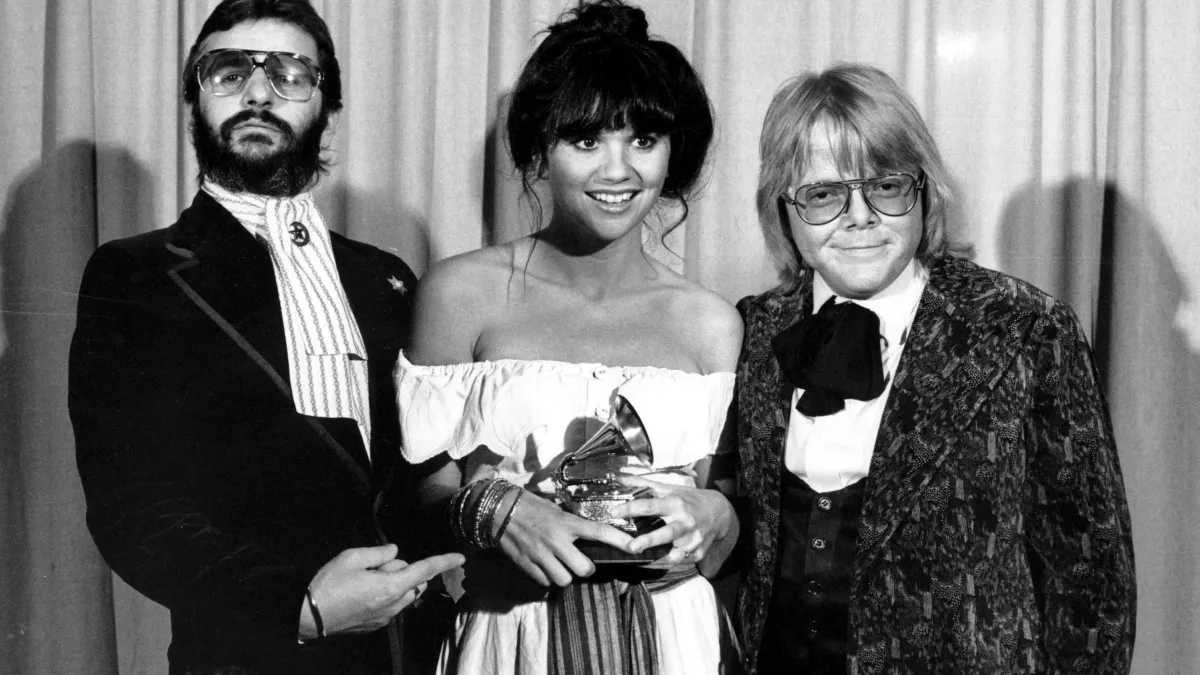
“Long, Long Time” on The Johnny Cash Show (1970) is yearning made visible—Linda Ronstadt singing the kind of love that survives rejection, not with drama, but with endurance.
By the time Linda Ronstadt sang “Long, Long Time” on The Johnny Cash Show on October 14, 1970, the song was already doing what great ballads do: slipping past fashion, past noise, past whatever the week insisted mattered, and settling into the listener’s quieter rooms. That particular broadcast—an episode credited with Ronstadt performing “Long, Long Time” and sharing the stage with Johnny Cash—aired from a series famously taped at Nashville’s Ryman Auditorium, the old “Mother Church” where the wood and balconies seem to remember every note. There’s something fitting about that setting. A song this intimate needs a room with history in its bones.
The performance also belongs to a very precise moment in her rise. “Long, Long Time” was written by Gary White, released by Ronstadt as a single in June 1970 on Capitol Records, and included on her second solo album Silk Purse (released April 13, 1970), produced by Elliot F. Mazer. And this was no minor album cut that later got “discovered.” It was her early calling card—the record that proved, in public, that her voice could carry a story all the way to the farthest seats.
On the charts, the story is clear and quietly significant. “Long, Long Time” debuted on the Billboard Hot 100 at No. 82 (debut chart date August 15, 1970). It would ultimately peak at No. 25—a breakthrough that Billboard notes as the song’s Hot 100 high point in October 1970. It also spent 12 weeks on the Hot 100. That arc matters because it wasn’t a sudden, flashy pop event. It was a climb—steady, human, word-of-mouth strong—like the feeling in the song itself, which doesn’t explode so much as it persists.
Then came the industry’s formal nod: at the 13th Annual GRAMMY Awards (honoring 1970 releases), Ronstadt’s “Long, Long Time” appears among the nominees in the category then known as Best Contemporary Vocal Performance, Female. Even without the trophy, that nomination reads like a timestamp: the music world recognizing that something rare had arrived—an instrument (that voice) capable of turning private ache into shared experience.
But charts and nominations only frame the real miracle. The true story sits inside the lyric’s emotional posture: “Long, Long Time” is not a breakup song in the usual sense. It isn’t about the moment love ends; it’s about the long season after, when love refuses to leave. The narrator isn’t bargaining for a second chance with charm or seduction—she’s admitting a truth she can’t prettify: she has loved someone for a long time, and that love has not been rewarded with the life she imagined. The ache is not merely “I miss you.” It’s “I have carried you, quietly, for years.”
That is why the Johnny Cash Show performance lands with such poignancy. Television variety stages can encourage brightness—smiles, applause cues, quick transitions. Yet here is Ronstadt, in 1970, offering a ballad that moves like slow water, asking the audience to sit still inside a feeling that doesn’t resolve neatly. The Ryman setting deepens it: a hall built for songs that tell the truth plainly, without needing to pose. And the date—October 14, 1970—places her at that delicate intersection where a singer is no longer unknown, but not yet fully mythologized. She’s still close enough to the ground that you can hear the effort of becoming.
In that performance, Linda Ronstadt doesn’t “act” heartbreak. She inhabits it. She sings as if the ache has weight—something you set down only for the length of the song, then pick up again when the lights change. And that is why this rendition stays with people who find it years later: because it doesn’t beg for attention. It simply offers a quiet, devastating companionship—proof that some loves don’t end cleanly, and some voices are brave enough to admit it out loud.